What are the causes of tiller death in rice and wheat?
Q: I am from Sihong County. Here, many wheat tillers do not grow and eventually wither and die; the same happens with rice. In addition, several grains are missing at the base of the wheat ears, or the small branches at the base of the rice ears look as if they have been stripped, bearing no grains. What is the reason? A: The death of large numbers of tillers during the mid-to-late growth stages of wheat and rice...
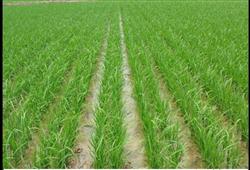
Q: I am from Sihong County. Here, many wheat tillers do not grow and eventually wither and die; the same happens with rice. In addition, several grains are missing at the base of the wheat ears, or the small branches at the base of the rice ears look as if they have been stripped, bearing no grains. What is the reason?
A: The death of large numbers of tillers during the mid-to-late growth stages of wheat and rice is usually a normal phenomenon. Generally speaking, when wheat and rice begin stem elongation, small tillers with fewer than 3 leaves cannot form ears and will die relatively quickly after stem elongation. These tillers are ineffective tillers. When the peak seedling number is too high and the field population is too large, many large tillers that have more than 3 leaves at stem elongation also cannot form ears and will eventually die; these are also ineffective tillers. During cultivation, the population of wheat and rice should be controlled at an appropriate level according to local conditions, and the mid-to-late population must not be too large; otherwise, there will be too many ineffective tillers, which is unfavorable for large ears and high yield and also easily causes lodging in the later stage. Under normal circumstances, the peak seedling number of wheat should preferably not exceed 500,000 per mu, and an ear-bearing number of about 350,000 per mu is more suitable; the peak seedling number of medium japonica rice should preferably not exceed 300,000, and an ear-bearing number of 220,000-240,000 per mu is more suitable.
The spikelets at the lower part of the rachis of wheat ears and rice ears differentiate and develop late and are in a nutritionally inferior position. When conditions such as light, density, fertilizer, and temperature are unsuitable for the growth of rice and wheat and for ear differentiation and development, these spikelets often develop poorly.