Detailed Explanation of Key Techniques for Rush-Planting Autumn Sweet Potato
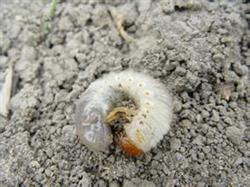
Sweet potato is susceptible to damage by underground pests, which form tunnels, causing the sweet potato to rot, reducing quality, and in severe cases making it inedible, resulting in reduced yield or total crop failure. In production, the following methods can be promptly adopted for poisoning and control to improve yield and quality. 1. During the rapid tuber enlargement period of sweet potato, apply a root drench of 25-30 times diluted superphosphate...
 Autumn sweet potato has a short whole growth period, does not demand strict soil fertility conditions, and is simple to cultivate and manage, making it a short-cycle, high-efficiency product among autumn crops. Using mid-season rice fields, flood-damaged fields, and idle fields to plant autumn sweet potato generally yields about 1000 kg of sweet potato per mu.
Select good varieties. Generally, any variety that can be planted on a large scale can be used as seed stock for autumn sweet potato. However, after "Start of Autumn" (Liqiu), temperatures gradually drop and the effective growing time is short, so it is best to select early-maturing, high-yielding varieties with strong stress resistance, vigorous vine and leaf growth, early tuber formation, rapid tuber root enlargement, high yield, and good quality. Currently, excellent varieties suitable for cultivation in our province include: edible varieties Xiangshu No. 15, Xiangshu No. 17, Xiangshu No. 19; stem-tip vegetable variety Xiangshu No. 18; high-starch varieties Ys86, Ys14, Xushu 22; purple sweet potato varieties Zijinshu No. 1-3; and fruit-type sweet potato Huangmeigui.
Plant early to seize the time. Autumn sweet potato is generally required to be fully planted by "End of Heat" (Chushu). For fields arranged for autumn sweet potato planting, if not restricted by the need to clear the previous crop, plant as early as possible. If there is a previous crop, harvest the previous crop and plant sweet potato at the same time, striving for early planting. When planting sweet potato in early and mid-season rice fields, open ditches for drainage after the rice grains have set, and immediately after harvest open deep ditches, divide into narrow beds, and prepare the land for planting sweet potato. Ensure smooth drainage to prevent waterlogging damage.
Rational close planting. Because autumn sweet potato has a relatively short growth period and poor individual development, it mainly relies on the yield-increasing effect of the population, so density should be appropriately increased, with 5000 plants per mu being suitable. Autumn sweet potato planting coincides with the season of high temperature and strong sunlight, so choose cloudy days or sunny evenings for planting, and water thoroughly after transplanting to ensure survival.
Strengthen management. Autumn sweet potato is generally cultivated twice. The first cultivation is carried out after the sweet potato seedlings survive, with a cultivation depth of about 7 cm; combine cultivation with the application of decomposed human manure or quick-acting nitrogen fertilizer to promote seedling growth and early tuber formation. The second cultivation is carried out about 20 days after planting, and apply a compound fertilizer once according to the growth of the sweet potato seedlings; after cultivation, earth up and repair the edges of the ridges. If autumn sweet potato encounters long-term drought, irrigate 1-2 times; in places with insufficient water sources, cultivate more frequently, or spread more grass and increase the application of organic fertilizer. Irrigation should preferably be carried out in the morning or evening, with the irrigation depth reaching 2/3 of the ridge height, and the irrigation time should not exceed 4 hours. For each irrigation, loosen the soil once to prevent water evaporation. The stems and leaves of autumn sweet potato are relatively tender and are susceptible to damage by sweet potato tobacco caterpillar, sweet potato hornworm, and flea beetles. If the above pests cause damage, spray pesticides promptly for control.