What are the symptoms of nutrient deficiency and excess nutrients in rice?
I. Overview of the occurrence In 2001, southern rice black-streaked dwarf disease was first discovered in late rice in Guangdong. In recent years, the affected area has expanded rapidly in Vietnam and the rice-growing regions of southern China. In 2009, it occurred in 9 provinces including Guangxi, Guangdong and Hunan, with an affected area of 5 million mu, and it is expected to exceed 10 million mu in 2010 (there is not yet an accurate...
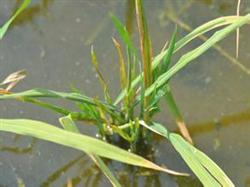 During the growth and development of rice, if a certain nutrient element is lacking, the metabolism within the plant will be hindered and disrupted, causing distinctive symptoms in the roots, stems, leaves, flowers and grains.
Nitrogen deficiency: the plant is short and small, with few tillers, small and upright leaves, yellow-green leaf color, short and thin stems, small panicles with few grains, and a high rate of unfilled grains.
Phosphorus deficiency: "stunted seedlings" often form in the early growth stage, showing slow growth, no tillering or delayed tillering, and weak seedlings that fail to grow vigorously. The leaf color is dark green or gray-green with a purple tinge, the leaf shape is narrow and long, the leaves are small, and the leaf blade is slightly curled in a ring shape. Old roots turn yellow, new roots are few and slender, and in severe cases they turn black and rot. Maturity is uneven, panicles are small with few grains, the 1000-grain weight is low, and the rate of empty shells is high.
Potassium deficiency: brown spots often appear on the leaves. Generally after tillering, smoky brown small spots first appear at the tips of old leaves and scorch along the leaf margins in an inlaid pattern. At the peak tillering stage, the brown spots develop into brown patches, irregular in shape but with clearly defined margins, often distributed in patches or blocks between the leaf veins. The brown patches continuously spread from old leaves to adjacent new leaves. In severe potassium deficiency, the brown patches merge together, and the entire leaf turns red and dies, as if scorched.
Zinc deficiency: seedling growth stagnates, there is no tillering, brown patches appear in the middle of the underside of old leaves, the leaf veins turn white, and in severe cases the leaf sheaths also turn white.
Excess nitrogen: the rice plant grows excessively, the leaf color is deep green, the leaves are thick and large, the stems are soft, making it prone to lodging and infection by pests and diseases, it stays green and matures late, and there are many blighted grains.
Excess phosphorus: it often induces zinc deficiency in rice, so the symptoms of excess phosphorus are similar to those of zinc deficiency: few tillers, "stunted seedlings" that fail to grow, leaf chlorosis, gradually turning yellow-white along the midrib toward the margins, brown patches appearing on old leaves, the entire leaf turning brown in the late growth stage, slow root growth, and in severe cases the whole plant dies.