Detailed Explanation of the Causes of Mass Asparagus Death and Prevention and Control Methods
The causes of asparagus plant death are as follows: 1. Asparagus likes light. In September-October 2007, just when the aboveground parts of asparagus were growing vigorously and accumulating nutrients to lay the foundation for a high yield the following year, there was an unexpected continuous rainy period the likes of which had not been seen for many years. Light was severely insufficient, causing asparagus growth to stagnate, nutrient accumulation to decrease, and stress resistance to...
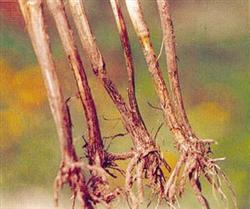
The causes of asparagus plant death are as follows:
1. Asparagus likes light. In September-October 2007, just when the aboveground parts of asparagus were growing vigorously and accumulating nutrients to lay the foundation for a high yield the following year, there was an unexpected continuous rainy period the likes of which had not been seen for many years. Light was severely insufficient, causing asparagus growth to stagnate, nutrient accumulation to decrease, and stress resistance to drop greatly.
2. Asparagus originated in the eastern Mediterranean coast and Asia Minor, where the climate is dry with little rain. In addition, asparagus has a well-developed root system, and its aboveground leaves are reduced; the modified branches, the cladodes, are small and needle-like, so transpiration is very low. Therefore, it is very drought-tolerant and extremely intolerant of waterlogging. Several days of standing water in the field can cause root rot and death. After asparagus is planted, it grows continuously for many years, the land cannot be plowed, and manual harvesting involves frequent trampling. Combined with heavy application of chemical fertilizers, this destroys soil structure, and soil compaction becomes very severe. In particular, the soil below 20 cm has extremely poor water permeability and air permeability. This not only affects root growth and development, weakens absorption performance, and reduces plant stress resistance, but also, after rain or irrigation, water cannot seep into the ground and remains on the surface for a relatively long time, making root rot and plant death from waterlogging very likely. Because water cannot seep into the ground in large amounts, surface water evaporates quickly, so irrigation must be repeated many times, which not only increases labor for watering but also increases the chance of waterlogging damage. Under these conditions, the continuous rain in September-October 2007 was the main cause of mass asparagus death.
3. Spring and early summer are the harvest season for asparagus, and people manage it more carefully. In autumn, the aboveground parts grow vigorously, management is more neglected, and heavy application of nitrogen fertilizer plus high density of the aboveground parts affects ventilation and light penetration. This not only reduces plant stress resistance but also provides favorable conditions for a major outbreak of disease.
4. In continuous rainy weather, air humidity is very high, making leaf transpiration nearly stop and severely reducing the water absorption function of the root system. Nitrogen, phosphorus, potassium, and medium and trace elements such as zinc, boron, and calcium brought to the leaves by water are also greatly reduced. As a result, nutrient deficiency symptoms such as yellowing, scorching, and chlorosis of branches and leaves occur obviously, reducing plant stress resistance and creating conditions for disease occurrence.
5. In a humid air environment, diseases such as brown spot, rust, stem blight, and fusarium wilt occur severely. Because it rained often, the general public could not spray pesticides and relaxed disease control, intensifying the damage from disease.
Under the combined effect of the above factors, asparagus dried up and turned yellow over large areas, and finally the whole plant died.
The measures to prevent asparagus plant death are as follows:
1. In early spring, along with watering, apply a soil conditioner, Mianshengeng, at 200-400 grams per mu, to make the soil 30-50 cm deep loose and permeable. This not only benefits root growth and development and strengthens absorption capacity, but also improves the soil's water-holding capacity. After rain or watering, water quickly seeps into the lower soil layer, no water remains on the surface, and waterlogging damage is reduced. In drought, because the lower soil layer stores water, drought damage will not occur, the number of waterings is reduced, and the drawbacks of having to water during continuous rainy days are avoided.
2. In continuous rainy weather, roots cannot normally absorb metal elements such as potassium, calcium, magnesium, iron, and zinc, so soil topdressing should not be used. Instead, the above fertilizer elements should be applied as a foliar supplement once every 5-10 days at a concentration of about 0.3%. Through foliar fertilization, the problem of fertilizer element deficiency is solved.
3. During rainy weather, a plant growth regulator, the natural brassin Shofeng 481, should be sprayed once every 10-20 days to promote photosynthesis, improve the nutritional production status of asparagus, and enhance stress resistance.
4. For summer topdressing, nitrogen, phosphorus, and potassium should be applied in combination, and nitrogen fertilizer should not be applied alone, so as to avoid excessive growth. For excessively vigorous plants, some thin, weak, diseased, and damaged branches should be properly pruned to improve ventilation and light penetration and reduce field humidity.
5. During the rainy season, pay attention to timely drainage to avoid waterlogging damage.
6. During rainy weather, pesticides should also be sprayed in a timely manner to prevent disease occurrence. For asparagus diseases such as rust, stem blight, brown spot, damping-off (fusarium wilt), crown rot, anthracnose, stem rot, and root rot, phosphorus and potassium fertilizers should be appropriately increased. At harvest, cut along the soil surface, bury or burn the withered, old, diseased, and residual plant parts deeply, and pay attention to removing weeds. After rain, drain promptly to reduce soil moisture. At the early stage of disease, the following can be used: 20.67% Wanxing emulsifiable concentrate at 2000-3000 times dilution; or 72% Kelu wettable powder at 600 times dilution; or 68.75% DuPont Yibao water-dispersible granules at 800-1000 times dilution; or DuPont Yikuaijing at 2000 times dilution; or 50% iprodione wettable powder at 1500 times dilution; or 50% benomyl wettable powder at 1000 times dilution; or 70% thiophanate-methyl wettable powder at 600 times dilution; or 40% polysulfide suspension concentrate or 50% mixed sulfur suspension concentrate at 500 times dilution; or 64% sandofan wettable powder at 500 times dilution; or 2% BO-10 aqueous solution at 100 times dilution. Spray once about every 10 days, for 3-4 consecutive treatments.