How to prevent wheat frost damage? Save these clever tips
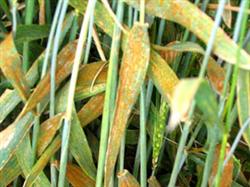
What does wheat rust look like? Wheat rust is also called jaundice. It is divided into 3 types: stripe rust, leaf rust, and stem rust. It is the most widespread and most damaging type of disease on wheat. After wheat is infected with rust, faded green spots first appear on the surface of wheat leaves or stems, and later yellow or reddish-brown powdery pustules grow, namely the pathogen's uredinia...
 Wheat frost damage is one of the disasters in wheat production in the vast northern wheat regions, especially in years with low temperatures and drought, when frost damage is more severe, greatly affecting wheat yield. To prevent frost damage during the wheat overwintering period, in addition to selecting varieties with strong cold resistance, the following seven agricultural measures should also be taken.
1. Apply additional fertilizer in appropriate amounts. For wheat fields that received insufficient fertilizer before sowing, applying additional fertilizer before wheat overwintering can consolidate the effective tillers of wheat, increase the sugar content of the tillering nodes, and enhance the plant's own cold resistance. When applying additional fertilizer, nitrogen, phosphorus, and potassium should be mixed and applied, and the ratio should be appropriate. Special attention should be paid to increasing phosphorus fertilizer, and excessive application of nitrogen fertilizer alone should be strictly avoided, so as not to cause excessive vegetative growth, making the plant stem tissue too tender and reducing cold resistance and lodging resistance.
2. Cover with bran and manure. In dryland wheat fields, spread 300-400 kg of wheat bran and chopped wheat straw per mu between the rows. This method both preserves soil moisture and prevents freezing, and after the mulch decomposes it can also improve the soil and build up soil fertility, making it an effective measure for drought resistance, freeze prevention, and yield increase in wheat. In addition, after wheat enters the overwintering period, spread a layer of manure along the rows, commonly known as "warm ditch manure," which can shelter from wind, preserve soil moisture, raise temperature and prevent freezing, and supplement nutrients for wheat seedlings' green-up growth. The thickness of the manure cover should preferably be 3-4 cm. When manure is insufficient, priority should be given to spreading it in late-sown wheat fields, shallow-sown wheat fields, sandy wheat fields, and wheat fields sown with weakly spring-type varieties.
3. Hill up soil around the roots. Before overwintering, when wheat seedlings are about to stop growing, hilling up soil around the roots in combination with shallow hoeing can effectively prevent wheat from freezing during the overwintering period. In colder years with drought and frequent wind, the freeze-prevention effect of hilling up soil around the roots is especially obvious, and it can generally increase yield by 5%-10%.
4. Timely winter irrigation. For wheat fields with straw returned to the field or in years with winter drought, carry out one winter irrigation before the arrival of cold air. Timely winter irrigation of wheat has a significant effect on preserving seedlings and increasing yield. Note that after winter irrigation, timely cultivating and compacting should be carried out to help preserve soil moisture.
5. Timely cultivating. Timely cultivating can prevent drought, preserve soil moisture, and prevent frost damage. Therefore, timely cultivating should be carried out in combination with winter irrigation, especially on clay soil, where it is even more important. For late-sown wheat fields and low-lying wet wheat fields, more cultivating and earlier cultivating can play a role in preserving soil moisture and raising temperature.
6. Timely smoking. After the beginning of winter, closely monitor weather changes. Before the arrival of a cold wave, pile wheat bran, straw, and other materials at the field edges from evening to early morning and set them smoking, which can reduce frost damage.
7. Spray hormones. If wheat grows excessively before overwintering, especially if there are signs of jointing before winter, spray 0.3%-0.5% chlormequat on the leaves before the arrival of cold air. After spring begins, promptly compact the soil on sunny days to control the growth of the aboveground part of wheat, or apply additional farmyard manure or mud slurry to protect the wheat's tillering nodes and young spikes.