How to Cope with Disastrous Weather in Asparagus Cultivation
Asparagus can generally begin to be harvested in the second year after planting, twice a year: the first time from April to June, and the second time from September to November. In summer, when the weather is hot, the quality of asparagus is poor and the yield is low, so it is not suitable for harvesting. For white asparagus cultivation, soil should be mounded up 1-2 weeks before harvest. In spring, after the soil temperature rises but before the young shoots emerge...
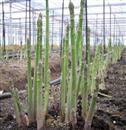 Asparagus is a perennial herbaceous plant with a persistent root system and is a highly adaptable crop that can be grown at latitudes from 20° to 60°. However, high yield and good quality of asparagus can only be achieved under suitable environmental conditions. To better guide asparagus production, the technical measures for coping with disastrous weather are introduced below.
I. Flooding
(1) Impact of the Disaster
Excessive rainfall in summer and autumn causes waterlogging in asparagus fields, which harms asparagus by causing poor soil aeration, seriously affecting root respiration and leading to root rot. At the same time, because the absorption function of the roots is reduced while the aboveground temperature is too high and evaporation is relatively large, the aboveground stems of asparagus suffer from physiological water deficiency, leading to wilting and yellowing of the aboveground stems and degeneration of physiological functions, causing severe stem blight and resulting in the death of asparagus or serious yield reduction the following year.
(2) Preventive Measures
1. Choose sandy loam soil with high terrain that can be irrigated in drought and drained in waterlogging for planting asparagus; such plots have good aeration and do not accumulate water.
2. Improve the water conservancy facilities of asparagus fields and build field drainage ditches well, so that standing water in the field can be promptly discharged out of the field when it rains, ensuring smooth drainage and preventing waterlogging in asparagus fields.
(3) Remedial Measures after the Disaster
1. During prolonged rainy periods, hoe and loosen the soil in a timely manner to increase soil aeration.
2. Strictly control diseases and apply fungicides in a timely manner to reduce the occurrence of stem blight and root rot. The specific method is: spray a fungicide once every 7 days, and promptly spray once more after rain, ensuring the aboveground stems are thoroughly and evenly sprayed. You can use 50% Shuangjisheng at 400 times dilution + 80% Bidelili at 500 times dilution, or 50% Shuangjisheng + 70% mancozeb at 300 times dilution for spraying.
3. Use more potassium fertilizer to enhance the disease resistance of asparagus.
II. Drought
(1) Impact of the Disaster
Because the absorbing roots of asparagus are not well developed and their water absorption capacity is weak, drought easily causes yield reduction in asparagus. This is especially true when drought occurs during the harvest period: the tender stems become thinner and are not easy to send up, resulting in more hollow asparagus and deformed asparagus, a high rate of loose heads, and easy aging, which seriously affects yield and quality.
(2) Preventive Measures
When the soil moisture content is below 16%, water promptly. In our province, spring rainfall is relatively low. To prevent spring drought, after entering winter, when the aboveground stems of asparagus have died and aboveground growth and development have basically stopped, irrigate thoroughly to solve the problem of spring drought.
(3) Remedial Measures after the Disaster
When drought occurs during the stem and leaf growth period, especially during the peak period of assimilate accumulation, and photosynthesis cannot proceed, water promptly.
III. Wind Disaster
(1) Impact of the Disaster
The aboveground stems of asparagus are relatively tall, reaching more than 1.5 m, and are prone to lodging in strong winds, affecting growth.
(2) Preventive Measures
1. Drive 1.5 m high wooden stakes at both ends of each row, and stretch two fiber ropes at a height of 70-80 cm, trapping the mother stems between the two ropes to prevent the mother stems from lodging.
2. Select and retain robust mother stems. When the scale disk expands, multiple new growth points will appear; select and retain strong stems with a diameter of more than 1 cm and a height of 1.4-1.6 m.
(3) Remedial Measures after the Disaster
Clear away the lodged plants and rebuild the ridges properly.
IV. Hail Disaster
(1) Impact of the Disaster
After asparagus is hit by hail, large numbers of wounds are easily caused, resistance declines, and it becomes susceptible to invasion by pathogens.
(2) Preventive Measures
Awareness of hail disaster prevention should be strengthened, and active preventive measures should be adopted.
(3) Remedial Measures after the Disaster
Spray pesticides promptly to prevent and control the occurrence of diseases. You can use mancozeb at 600 times dilution or carbendazim at 500 times dilution, spraying once every 7 days for 3 consecutive sprays.