What is Brassica napus? A guide to the basics
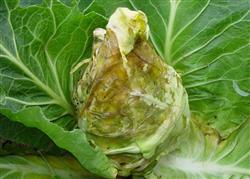
Control of soft rot in cabbage A vegetable grower asked: the base of the cabbage stem is rotting and smells bad, what disease is this and how should it be controlled? This is cabbage soft rot, a bacterial disease. It is prone to occur under conditions of high temperature and high humidity, and this disease generally occurs during the head-forming stage, initially appearing on the outer leaves or at the base of the head...
 Brassica napus is a fertilizer-demanding crop, with a relatively large requirement for N and K, and it is sensitive to P and B. Fertilization is the most flexible and most important measure for regulating its nutritional physiological processes and thereby affecting the yield and quality of the rapeseed. Rational fertilization must determine the fertilization level according to the yield target, and the specific fertilizer amount and the ratio of various elements must be adapted to the soil nutrient content and maintain soil nutrient balance. The results of optimized cultivation trials show that: for medium-fertility fields, on the basis of applying sufficient organic fertilizer and applying micronutrients well, for a rapeseed target yield of 220-240 kg per mu, 35-37 kg urea, 25-28 kg calcium superphosphate, and 10-11 kg potassium sulfate per mu are needed; for a target yield of 240-260 kg per mu, 42-43 kg urea, 27-30 kg calcium superphosphate, and 10-11 kg potassium sulfate per mu are needed; for a target yield of 260-280 kg per mu, 45-47 kg urea, 44-47 kg calcium superphosphate, and 11-12 kg potassium sulfate per mu are needed. In addition, the benefits of applying various fertilizers at different periods also differ greatly. Rapeseed fertilization should be based mainly on base fertilizer, combining base fertilizer with topdressing, and adopt the technique of "heavy application of base fertilizer, sufficient application of seedling fertilizer, appropriate application of bolting fertilizer, and skillful application of micronutrient fertilizer."
The method is: use 1500-2000 kg of decomposed organic fertilizer per mu, and mix it into the soil by plowing during land preparation as base fertilizer; mix the full amount of P and K fertilizer and 50-60% of the total urea amount evenly, and apply them concentrated in the 5-10 cm plow layer as middle-layer fertilizer in combination with soil bedding; apply 30% of the total urea amount topdressed with water in a timely manner at the five-leaf stage to promote effective flower bud differentiation; apply 10-20% of the urea amount as appropriate, timely, and in an appropriate amount when the bolting height is 10-20 cm, to increase the success rate of differentiated flower buds, strengthen the bolting, increase branching, and increase the number of effective siliques.
The amount of N fertilizer in the middle-layer fertilizer is determined according to the soil's fertilizer-retention capacity and the fertilization level. If the soil has good fertilizer retention and the fertilization level is high, more can be applied, but it is best not to exceed 70% of the total N application amount; otherwise, less should be applied. Brassica napus is relatively sensitive to boron, and the requirement for water-soluble boron content in the soil is above 0.5 PPm. When it is below 0.4 PPm, rapeseed shows obvious boron deficiency symptoms, ultimately leading to "flowers but no seed." On severely boron-deficient soil, applying 0.5-1 kg borax per mu as base fertilizer can meet the rapeseed's boron needs for the entire growth period, with a significant yield-increasing effect; on generally boron-deficient soil, spraying a 0.2% borax or rapeseed-specific micronutrient fertilizer aqueous solution once each at the seedling stage and the bud-bolting stage can also produce a good yield-increasing effect.