Detailed Explanation of Key Techniques for Pest and Disease Control During the Cotton Seedling Stage
During the transplanting period, cotton is often affected by factors such as abnormal climate, weak seedlings, and inadequate cultivation measures, which lead to a long slow-seedling period after transplanting, stiff seedlings that fail to grow, delayed reproductive progress, and reduced cotton yield. The causes of stiff cotton seedlings and their control are described below: 1. Causes 1. Cotton seedlings...
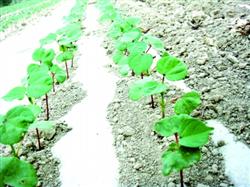 Due to the influence of ecological conditions, meteorological factors, and other factors, pests and diseases during the cotton seedling stage are characterized by many species, rapid development, and severe damage, often causing missing seedlings and broken rows in cotton fields, and in severe cases, large areas of death. The main diseases that occur include black root rot, red rot, damping-off, anthracnose, cotton aphids, cutworms, and others. For control, scientific pesticide application should be carried out at the appropriate time for integrated pest management.
1. Agricultural measures: For cotton cultivation, high-quality, high-yield, disease-resistant varieties should be selected and sown at the appropriate time; secondly, management should be strengthened, base fertilizer should be increased, seedlings should be thinned early and timely final thinning should be carried out, irrigation should be strengthened during the dry season, and deep intertillage should be carried out after rain to increase soil temperature, reduce soil moisture, and enhance soil aeration; thirdly, weeds in the cotton field and around it should be cleaned up to reduce the number of pest and disease sources.
2. Early prevention of seedling diseases: In the early stage of disease onset in cotton seedlings, 50% carbendazim wettable powder at 600 times dilution or 70% thiophanate-methyl wettable powder at 800 times dilution can be used for spray control; for fields with more severe disease, 40% carbendazim suspension concentrate or 65% mancozeb wettable powder can be sprayed once a week for 2 consecutive sprays.
3. Scientific aphid control: After the summer harvest, large numbers of natural enemies migrate from wheat fields to cotton fields. At this time, the use of chemical pesticides can be reduced, giving full play to the control effect of natural enemies on aphids. When aphids occur severely, 10% imidacloprid wettable powder at 1500 times dilution or 50% pirimicarb wettable powder at 1000 times dilution can be sprayed for control, while attention should be paid to alternating pesticides to slow the development of resistance.
4. Control of cutworms: When cutworms are causing damage in the cotton field, 50 grams of 50% phoxim can be mixed with 1 kg of water and sprayed onto 5 kg of roasted fragrant wheat bran or crushed cottonseed cake to make poisoned bait, which is then broadcast along the rows in the evening to trap and kill the larvae; or 20% fenvalerate at 1500 times dilution, or 50% phoxim at 1500 times dilution, or 800 times dilution of kungfu plus 800 times dilution of decis can be used for spray control.