Detailed Explanation of Key Points for Autumn Cultivation Techniques of Water Bamboo
Autumn planting of water bamboo can make full use of idle medium (single-crop) late rice fields, double late rice fields, medium- and low-yield fields, low-lying waterlogged land, and water bamboo rotation fields in autumn, and can increase the yield and benefits of the first harvest year. Compared with traditional spring-planted water bamboo, autumn-planted water bamboo not only uses fields left idle in winter but also fully utilizes the long...
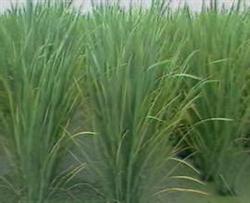
Autumn planting of water bamboo can make full use of idle medium (single-crop) late rice fields, double late rice fields, medium- and low-yield fields, low-lying waterlogged land, and water bamboo rotation fields in autumn, and can increase the yield and benefits of the first harvest year. Compared with traditional spring-planted water bamboo, autumn-planted water bamboo not only uses fields left idle in winter but also fully utilizes the long time available in autumn. Spring-planted water bamboo can be harvested for 2 seasons in the same year. The key points of autumn-planted water bamboo techniques are introduced as follows:
1. Timely transplanting. Autumn planting is generally around mid-October, and at the latest no later than early November.
2. Select high-quality, fine pure water bamboo roots. The variety currently used in production is mainly Zhonglatai, with a small amount of other varieties as well. The criteria for selecting seed roots are: on clumps that conform to the original characteristics of the Zhonglatai variety, are required to be early-maturing, not overly vigorous in growth, uniform in the height of the clasping stems, neat in tillering, not scattered in the clump, have already formed more than 20 shoots, and are uniform in maturity, further select divided plant roots that have plump shoot buds, thick and white flesh, no male shoots or gray shoots in the whole clump, and carry 2 tillers.
3. Planting method. When transplanting, plant in large and small rows. The large row spacing is 1 m, the small row spacing is 0.8 m, and the hill spacing is 0.5-0.6 m, with no more than 1500 hills per mu. Oblique insertion can be used for planting, with the depth based on the rhizome and tiller base entering the soil.
4. Water and slurry management. Water and slurry management is the key to high yield and high efficiency in autumn-planted water bamboo. The sprouting, tillering, and shoot bearing of water bamboo are all related to temperature. To bring water bamboo to market earlier, it is necessary to rely on water management to regulate temperature. The general principle is: shallow water and shallow planting in the early stage to promote early development, field drying in the middle stage to control tillering, deep water in the late stage to promote shoot bearing, and shallow water in winter without drought. The specific standards are: during the transplanting survival period, maintain 1.5-3 cm to facilitate root survival and prevent root rot. During the winter dormant period, maintain a shallow water layer of 3-5 cm to maintain soil temperature and prevent clump rot. Around the Beginning of Spring, that is, the early stage of sprouting and tillering, irrigate a water layer of 5-6 cm, and keep the soil temperature above 5°C to promote early sprouting, early tillering, and early rooting. In the late stage of vigorous tillering, irrigate a deep water layer of 10-14 cm to control ineffective tillering. At this time, field drying should also be carried out in a timely manner, with attention to the quality of field drying. This can not only control ineffective tillering and prevent excessive growth, but also promote root setting and establishment of water bamboo. After field drying is completed, from shoot bearing to the early harvest stage, irrigate deep water to 16 cm, and increase it over time to 23-27 cm, but note that the water depth must not exceed the "water bamboo white eye," so as not to affect shoot bearing. In the later stage, use the deep water layer to transform the shoot flesh so that it becomes white and does not turn green. During the first harvest period, the water level can be lowered to 3-7 cm to facilitate harvesting. During the high-temperature period from July to August in summer, maintain the water level at 13-17 cm to prevent high-temperature damage to water bamboo.
5. Fertilization method. Fertilization of water bamboo should not only vary according to the field and the seedlings, but also be mastered in a "steady, accurate, and skillful" way, and the use of organic fertilizer and base fertilizer is advocated. "Steady" means that after rice harvest, in combination with plowing and land preparation, apply 1250-1500 kg of concentrated manure or barnyard manure per mu, 30 kg of ammonium bicarbonate or 10 kg of urea; when organic fertilizer is insufficient, phosphate and potassium fertilizer may also be applied appropriately. "Accurate" means that after transplanting, seedling-promoting and tillering fertilizer should be applied early to new seedlings, and fertilization should be timed accurately. Generally, about 7 days after transplanting, apply 1000 kg of human and livestock manure per mu; in the early tillering stage, apply 750 kg of human manure or 10 kg of urea per mu; after 20 days, in the peak tillering stage, apply fertilizer once more as appropriate. "Skillful" means that during the shoot-bearing period, shoot-bearing fertilizer should be applied skillfully, with manure-based fertilizer as the main topdressing; apply 1500-2000 kg of human and livestock manure per mu or 20-25 kg of urea per mu, which can make water bamboo plump, tender, white, and strong.