What are the key measures for managing cotton during the boll-opening stage?
The appearance of high-yielding cotton during the boll-opening stage is early maturity without premature senescence, which requires the lower part of the cotton plant to have open bolls, the upper part to continue flowering, and very few late buds. In robustly growing cotton, the top fruiting branches extend horizontally, with fruiting branches 20-30 cm long and 3-4 large buds. If the top fruiting branches extend upward too long, with clusters of superfluous buds and flowers that stop too late, this indicates excessive vegetative growth and late maturity due to greedy green...
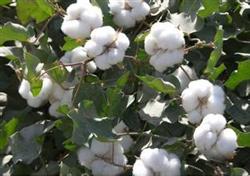
The appearance of high-yielding cotton during the boll-opening stage is early maturity without premature senescence, which requires the lower part of the cotton plant to have open bolls, the upper part to continue flowering, and very few late buds. In robustly growing cotton, the top fruiting branches extend horizontally, with fruiting branches 20-30 cm long and 3-4 large buds. If the top fruiting branches extend upward too long, with clusters of superfluous buds and flowers that stop too late, this indicates excessive vegetative growth and late maturity due to greedy green. At the early boll-opening stage, the leaf area index should remain around 2.5 and gradually decrease. If the leaf area is too large, it easily causes field closure and delays boll opening; conversely, it easily causes premature senescence and reduces boll weight.
The main contradictions in production during the boll-opening stage are: first, premature senescence; second, late maturity due to greedy green; third, damage from pests and diseases. The environmental requirements for cotton entering the boll-opening stage are clear weather, abundant sunshine, relatively low air humidity, and temperatures above 20°C, which are favorable for cotton development and boll opening. However, severe autumn drought often blocks root water uptake and leaf photosynthesis, forcing the middle and lower bolls to open too early, while the upper young bolls stop growing; especially when the first frost comes too early, the seeds and fibers cannot mature normally, causing yield reduction. In some years, continuous autumn rain causes boll rot due to low temperature, high humidity, and insufficient sunlight. In other cases, late sowing, long growth periods of varieties, excessive nitrogen fertilizer application, and other reasons cause late maturity due to greedy green. During the boll-opening stage, cotton pests and diseases often cause explosive damage.
Field management during the boll-opening stage. Irrigation and waterlogging prevention: in mid to late August, when soil moisture falls below 60% of field capacity, irrigate immediately; in severe drought, irrigation can continue into mid to late September. Use small amounts of water to soak thoroughly and prevent flood irrigation. Irrigation should not be too late, otherwise cotton will become late-maturing due to greedy green. Pruning: late-stage pruning can improve ventilation and light penetration in the cotton field, reduce nutrient consumption, and help increase autumn bolls, increase boll weight, promote early maturity, and prevent boll rot. Generally, buds appearing after August 5 and flowers appearing after September 1 are ineffective buds and flowers and should be removed in time. For individual cotton fields with vigorous late growth and severe shading, also remove old leaves, cut empty branches, push plants together into ridges, and prevent boll rot. Pest and disease control: after cotton enters the boll-opening stage, there are many sudden outbreaks of pests and diseases, mainly the fourth-generation cotton bollworm, which mainly damages summer cotton and late-maturing cotton; cotton semilooper and beet armyworm are sudden-outbreak pests, with the initial period in mid to late August and the peak damage period in September. The above pests should be inspected in time, and control should be seized during the peak hatching period, eliminating them before the 3rd instar. In addition, whitefly, red spider mite, thrips, autumn aphids, and others should also be controlled in time. Diseases are mainly boll rot caused by boll blight and other agents. For cotton fields where boll rot has already occurred, to reduce losses, pick cotton bolls that have already shown black spots as early as possible, soak them in a 1% ethephon solution, then remove and dry them in the sun to obtain relatively good seed cotton.
Adopt corresponding ripening methods according to local conditions. Due to various reasons, some cotton bolls cannot mature normally every year, especially summer-sown cotton, late-maturing cotton, transplanted cotton, and cotton on saline-alkali land, which not only affects yield but also reduces quality. Therefore, adopting corresponding ripening methods can accelerate cotton boll development, make them open earlier, and increase the yield of pre-frost cotton. Ethephon ripening: suitable for high-yielding cotton fields with relatively vigorous late growth and many green bolls. The appropriate timing for use depends on the following three conditions:
First, the boll period of the outer bolls on the cotton plant is more than 40 days; second, 15-20 days before the killing frost; third, the daily maximum temperature is greater than 20°C. If used too early, the cotton bolls open before ripening, which reduces boll weight and causes yield reduction; if used too late, low temperatures slow ethylene release and reduce the ripening effect. Use 150-200 mL of ethephon per mu, diluted in 50-60 kg of water, and spray evenly, trying to spray it on the green bolls to improve the ripening effect. If rain occurs 6 hours after spraying, spray again. Gramoxone ripening: suitable for cotton fields that mature late due to late sowing and for intercropping or relay-cropping cotton fields, to promote early defoliation of cotton plants and facilitate ventilation and light penetration in the field. Use 50 mL of Gramoxone per mu, diluted in 30-40 kg of water, and spray. Leaves can fall off completely in about 7 days, and the peak boll-opening period can be reached after 8 days. When spraying, take care to protect the eyes and strictly prevent the spray liquid from entering the eyes. Pull-dry ripening: suitable for directly sown cotton fields after wheat and cotton or cotton and rapeseed double-cropping. The key is to master the timing of pulling dry; with good timing, the stubble can be cleared early without affecting cotton yield. The timing of pulling dry is determined not only by calculating according to the boll period, but mainly by checking the time when temperature steadily drops to 15°C over the years, because below 15°C cotton fiber has already stopped developing and yield will not be affected.