What causes frequent cotton root rot?
Cotton may have cotton anthracnose. Symptoms: cotton seeds can be damaged right after germination, rotting in the soil. Those lightly affected can still emerge from the soil, and purplish-red streaks appear at the base of the seedling stem, later expanding into spindle-shaped lesions that are slightly sunken; in severe cases, the tissue loses water and splits lengthwise, finally causing the seedling to wither and die. People call it root rot disease. The lesions on the cotyledons are mostly...
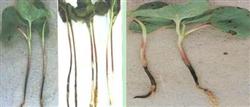
Cotton may have cotton anthracnose. Symptoms: cotton seeds can be damaged right after germination, rotting in the soil. Those lightly affected can still emerge from the soil, and purplish-red streaks appear at the base of the seedling stem, later expanding into spindle-shaped lesions that are slightly sunken; in severe cases, the tissue loses water and splits lengthwise, finally causing the seedling to wither and die. People call it root rot disease. The lesions on the cotyledons are mostly at the leaf edge, semicircular in shape, while those in the middle of the leaf are round, grayish-brown, with a reddish-brown outer edge. The lesions on the bolls are very small at first, reddish-purple, then expand, turn black and become sunken; in rainy and humid weather, a reddish-brown sticky substance is produced on the lesions, which is the spores of the pathogen, called conidia. Affected bolls often rot or form hard, unginned locks. Leaves, stems and flowers are also occasionally infected.
Disease pattern: the pathogen survives in seeds and in the residual stems, leaves and rotten bolls in the cotton field. After sowing, it infects the seedlings, then produces conidia, which spread and infect again. When bolls are damaged later in the season, the pathogen can invade the interior of the seeds. After sowing, low temperatures and rainy weather make seedling disease severe; frequent rain before harvest increases boll disease.
Control methods:
(1) Strengthen agricultural control measures, improve sowing quality, and level the land before sowing. Sow at the proper time, with a sowing depth of 3.5-5 cm being appropriate, avoiding too deep or too shallow. Thin the seedlings appropriately early, control insects in time, cultivate frequently and deeply, and combine this with applying quick-acting fertilizer to lower soil moisture, raise soil temperature, and grow strong seedlings.
(2) Carefully select cotton seeds, and sun the seeds for more than half a month before sowing. In northern cotton regions, soak the seeds in warm water at 55-60°C (three parts boiling water to one part cold water) for 30 minutes, stirring 2-3 times during soaking, then continue soaking at room temperature until the seeds have absorbed enough water; remove them, pile them up to promote sprouting, and then sow.
(3) Treat cotton seeds with chemicals. Mix seeds with 0.5% of seed weight of quintozene, daojiaoqing, and banzhongling plus thiram, which also controls damping-off and red rot; or mix seeds with quintozene plus carbendazim, or quintozene plus thiram (or anthracnose thiram), which can also control damping-off and red rot.