Detailed Explanation of Lettuce Cultivation Techniques in Greenhouses
Growers who have greenhouses can cultivate lettuce and other leafy vegetables in the open space outside the greenhouse, making full use of land resources and improving economic returns. Lettuce is also known as leaf lettuce, butterhead lettuce, qianjin cai, etc., and is named for being edible raw. It is an annual herbaceous plant of the genus Lactuca in the Asteraceae family that can form a head or tender leaves for consumption. Lettuce leaves...
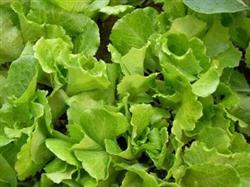 Growers who have greenhouses can cultivate lettuce and other leafy vegetables in the open space outside the greenhouse, making full use of land resources and improving economic returns. Lettuce is also known as leaf lettuce, butterhead lettuce, qianjin cai, etc., and is named for being edible raw. It is an annual herbaceous plant of the genus Lactuca in the Asteraceae family that can form a head or tender leaves for consumption. The leaves and head of lettuce are crisp and tender with a sweet taste, good flavor, and rich nutrition.
1. Land preparation, fertilization, and ridging. Apply 4000-5000 kg of decomposed farmyard manure, 15 kg of urea, 25 kg of phosphate fertilizer, and 30 kg of diammonium phosphate per mu, and apply them under the ridges in combination with plowing and ridging. The ridge width is 50 cm, the ditch width is 40 cm, and the ridge height is 15-20 cm.
2. Transplanting. When the seedlings are 25-35 days old and have three to four true leaves, water them one day before planting, and lift the seedlings the next day to transplant them into the field. Plant two rows per ridge. For head lettuce, the row spacing and plant spacing are 20 cm x 30 cm, and for non-heading lettuce, 20 cm x 25 cm. Do not plant the seedlings too deep; keep the soil surface of the seedling block slightly lower than the ground level, then water each planting hole to settle the seedlings (or irrigate after planting).
3. Field management, topdressing, and irrigation. Immediately after transplanting, water with the transplanting water. Apply the first topdressing 5-7 days after transplanting, applying 10 kg of urea per mu, and then water a second time. 15-20 days after transplanting, to promote plant growth and the formation of rosette leaves, apply the second topdressing with 15-20 kg of nitrogen-phosphorus-potassium compound fertilizer per mu, and then water a third time. 30 days after transplanting, to promote tight heading and large heads, carry out the third topdressing, still using 10-15 kg of compound fertilizer per mu, and then water a fourth time. Cultivation and weeding. After 2-3 waterings following transplanting, cultivation is suitable. After watering again, if the rows have not yet closed, a second cultivation should be carried out.
4. Pest and disease control. Viral disease: Viral disease is a common disease of lettuce, widely distributed, and causes severe damage in open-field cultivation, with an incidence rate reaching 60% or even higher. Control measures: (1) Select disease-resistant and heat-tolerant varieties; generally, loose-leaf varieties are more disease-resistant than heading varieties. (2) Timely control aphids to reduce virus transmission and curb disease development. Spray 50% pirimicarb at 2000-3000 times dilution, or Yibianjing wettable powder (10% imidacloprid) at 1500-2000 times dilution. (3) In the early stage of disease, spray 20% Virus A wettable powder at 500 times dilution or Kangduji No. 1 aqueous solution at 300 times dilution, once every 10 days or so, for 3-4 consecutive applications, and stop spraying 10-15 days before harvest.