Symptoms, Characteristics and Control Methods of Lettuce Soft Rot
Pathogens Pseudomonas cichorii, P. marginalis, P. viridiflava Symptoms Also known as lettuce Pseudomonas rot or bacterial leaf spot, it is a bacterial disease. Plants in the early head-forming stage are susceptible. First, the leaf margins become water-soaked and gradually change from light brown to dark green, and part of the mesophyll tissue dies...
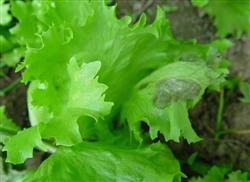
Pathogens Pseudomonas cichorii, P. marginalis, P. viridiflava
Symptoms Also known as lettuce Pseudomonas rot or bacterial leaf spot, it is a bacterial disease. Plants in the early head-forming stage are susceptible. First, the leaf margins become water-soaked and gradually change from light brown to dark green, part of the mesophyll tissue dies, and the leaves shrivel. During the head-forming stage, light brown water-soaked lesions appear on the midribs or leaf margins of the outer leaves. Soon afterward the veins turn brown and the lesions spread rapidly, but there is no mold layer. The inner leaves turn brown and become soft-rotted, and the surface of the head is covered by thin paper-like brown dead leaves.
Disease development The pathogen overwinters on diseased plant residues, survives in the soil for more than 1 year, and is transmitted through the soil. In the field it spreads by rain, irrigation water and insect pests. The optimum temperature for disease development is 25-27°C. The disease occurs easily in low-temperature seasons and during continuous rainy weather, and when harvest is delayed the disease increases rapidly. In addition, continuous cropping can promote the occurrence of the disease. Therefore, continuous cropping should be avoided in plots where the disease occurred heavily the previous year.
Control methods
① Agricultural measures Remove and burn diseased plants immediately, adopt high-ridge cultivation, strengthen field drainage, and harvest at the proper time.
② Chemical control In the early stage of the disease, spray with 47% Kasumin wettable powder at 700 times dilution, or 78% mancozeb wettable powder at 500 times dilution, or 40% Xijun Kuaike wettable powder at 600 times dilution, or 14% copper-ammonia complex aqueous solution at 350 times dilution, or 50% Xiaojunling soluble powder at 1200 times dilution, or 60% copper succinate·diethyl aluminum·zinc wettable powder at 500 times dilution, or 72% agricultural streptomycin sulfate soluble powder at 3000 times dilution, or 53.8% Kocide dry flowable at 1000 times dilution. Spray once every 7 days for 2-3 consecutive applications.