Detailed Explanation of Key Techniques for Open-Field Lettuce Cultivation
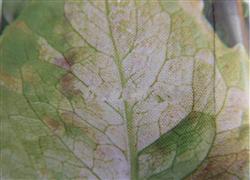
1. Disease symptoms: Both seedlings and mature plants can be affected, with mature plants suffering more severely, mainly damaging the leaves. Diseased leaves spread from the lower part of the plant upward. Initially, pale yellow nearly round to polygonal lesions appear on the leaves. When humid, white mold, which is the pathogen's sporangiophores and sporangia, grows on the lesions on the underside of the leaves, sometimes spreading to the upper surface of the leaves. In the later stages...
 Lettuce prefers a cool environment; it is neither cold-tolerant nor heat-tolerant. The suitable growing temperature is 15°C to 20°C, and the growth period is 90 to 100 days. In open-field cultivation, mainly two crops are grown, in spring and autumn. Growers can sow in stages for sequential harvests. In March, raise seedlings in a solar greenhouse or cold frame, with a seedling age of 30 to 40 days, transplant in early April, and harvest from early May to early June; from late April to early May, raise seedlings in the open field, transplant in late May, and harvest in late June; from late June to late July, raise seedlings in the open field, transplant from early July to early August, and harvest from mid-August to late September.
I. Selecting and Sowing Good Seeds
According to leaf growth form, lettuce can be divided into heading lettuce and loose-leaf lettuce (loose-leaf lettuce is further divided into curly-leaf lettuce and upright lettuce). Heading lettuce: leaf margins are entire, serrated, or deeply lobed; leaf surfaces are smooth or wrinkled; the top leaves form a head that is round or nearly round. Curly-leaf lettuce: leaves are deeply lobed, and the head is loose or absent. Upright lettuce: leaf margins are entire or serrated; outer leaves are narrow, long, and upright; it does not form a head or forms a loose conical head. Suitable varieties should be selected according to need, such as Glass Lettuce, Emperor, Caesar, heading lettuce, mosaic lettuce, Great Lakes 659, etc. (1) Glass Lettuce. Leaves are light green, wrinkled, and glossy. Leaf margins are wavy, the midrib is white, and the leaves curve slightly inward but not tightly, making them easy to break off and convenient for garnishing. They are crisp and refreshing, slightly sweet, and of superior quality. (2) Emperor. Introduced from the United States, leaves are green, outer leaves are relatively small, wrinkled, with notched leaf margins, and the quality is excellent. It has relatively strong heat tolerance and is early-maturing, suitable for open-field cultivation in early spring and shaded cultivation in summer. (3) Caesar. An early-maturing lettuce variety introduced from Japan. The plant is compact and grows uniformly. The head is tall and round, light yellow-green, heat-tolerant, and has good heading performance.
II. Preparing the Seedbed
For raising lettuce seedlings, choose fertile sandy loam with good water and fertilizer retention. Seedbed soil preparation: for 10 sq m of seedbed, use 10 kg of decomposed organic fertilizer, 0.3 kg of ammonium sulfate, 0.5 kg of superphosphate, and 0.2 kg of potassium sulfate. Mix thoroughly, spread evenly, rake fine, water sufficiently, and sow after the water has infiltrated.
III. Sowing and Raising Seedlings
To sow evenly, a small amount of fine sandy soil can be mixed into the seeds when sowing. After sowing, cover with 0.3 to 0.5 cm of moist soil and cover with plastic film to retain moisture. The sowing rate is 30 to 50 grams per mu. When seedlings begin to emerge, promptly remove the plastic film from the bed surface to prevent leggy growth. The seedbed temperature should be controlled at 18°C to 20°C during the day and 12°C to 14°C at night. Pay attention to ventilation. If exposed to strong sunlight, shade is needed. When seedlings grow to 2 to 3 true leaves, prick out seedlings at a spacing of 6 to 8 cm between plants and rows. When they grow to 4 to 5 true leaves, they can be transplanted. During the seedling stage, generally do not water unless there is a lack of water. To prevent seedling-stage diseases, spray 1 to 2 times with a 600-fold dilution of 75% chlorothalonil solution.
IV. Scientific Fertilization
Lettuce requires clay loam rich in organic matter with strong water and fertilizer retention. Lettuce prefers slightly acidic soil, with a suitable soil pH of 5 to 7. For every 1000 kg of lettuce produced, it absorbs 2.5 kg of nitrogen, 1.2 kg of phosphorus, and 4.5 kg of potassium. Heading lettuce requires more potassium. During the growing period, nitrogen, phosphorus, and potassium fertilizers need to be used in combination. The plot for transplanting lettuce should be deeply plowed and carefully prepared. Before transplanting, apply sufficient base fertilizer, with 3000 to 3500 kg of decomposed farmyard manure per mu. After application, plow deeply, water sufficiently, and make beds after the soil dries.
V. Careful Transplanting
One day before transplanting, irrigate the seedbed to moisten the seedling blocks. On the second day, lift the seedlings with as much soil as possible to reduce root damage. When transplanting, first open furrows on the bed surface, with a furrow depth of 4 to 6 cm. On a 70 cm bed surface, plant 3 rows. After opening the furrows, apply 25 kg per mu of compound fertilizer and then irrigate. After the water infiltrates, place the seedlings at a spacing of 24 cm, cover with soil, and close the furrows. Rake the bed surface level, cover with plastic film, and guide the seedlings out through the film.
VI. Management After Transplanting
Lettuce likes moisture and requires a sufficient water supply throughout the growing period. Water once 5 to 7 days after transplanting to help the seedlings recover. After watering for seedling recovery, plots without plastic film should be cultivated, loosened, and weeded twice. After that, water 3 to 4 times, and apply nitrogen and phosphorus fertilizers in stages along with watering, at 15 to 20 kg per mu. Stop watering before harvest to facilitate storage and transport.
VII. Scientific Harvesting
Non-heading lettuce can be harvested flexibly according to market prices. Heading lettuce is best harvested after the head is compact. Harvesting too early will affect yield, while harvesting too late will cause the inner stem of the head to elongate, the head to become loose, and quality to decline.