Key Techniques for Open-Field Cultivation of Broccoli in Spring
When broccoli is grown in open fields in spring, its growth and development take place in a season of gradually rising temperatures and increasingly severe pests and diseases. However, in cultivation, as long as the following five key techniques are mastered, high yield and high efficiency can be achieved while also meeting market demand. 1. Sow at the right time. For open-field cauliflower cultivation in spring, varieties with strong disease resistance and tolerance to high temperatures...
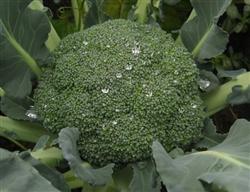
When broccoli is grown in open fields in spring, its growth and development take place in a season of gradually rising temperatures and increasingly severe pests and diseases. However, in cultivation, as long as the following five key techniques are mastered, high yield and high efficiency can be achieved while also meeting market demand.
1. Sow at the right time. For open-field cauliflower cultivation in spring, varieties such as Heilu and Dongjinglu, which have strong disease resistance, tolerance to high temperatures, and compact, uniform heads, can be used. In the middle and lower reaches of the Yangtze River, sow in small arched sheds from late March to early April, using about 15 grams of seed per mu, with a seedling bed of 7-8 sq m. After sowing, cover with 1 cm of sieved fine soil, and sprinkle water once each morning and evening. When the seedlings have 2-3 leaves, transplant them once into separate pots, and when they have 5-6 leaves, they can be transplanted.
2. Transplant at the right seedling age. When transplanting, select strong seedlings 25-30 days old with 5-6 true leaves, thick stems, well-developed root systems, and no pests or diseases, and water them thoroughly to settle the roots, then water again the next day to help them establish. The plant spacing is 40-45 x 50 cm, with about 3,000 plants per mu.
3. Scientific cultivation and management. About 10 days after transplanting, apply 10 kg of urea as a seedling-promoting fertilizer; about 20 days later, when the plants enter the vigorous growth stage, apply 20 kg of compound fertilizer as a growth-promoting fertilizer; after budding, apply 15 kg of urea as a bud fertilizer. At the same time, spray the leaves with 0.3% boron fertilizer and 0.05-0.1% ammonium molybdate twice each. After the main head is harvested, fertilize and water to promote the development of side heads. This requires watering "three waters": first, water thoroughly to settle the roots; second, 4-5 days later, water with 1,000 kg of diluted manure water as green seedling water; third, water to promote budding, watering promptly when the main head grows to 3-6 cm. If rainy weather occurs, clear the ditches promptly to prevent waterlogging. At the same time, do a good job of the "three grasps": first, grasp intertillage and earthing up, carrying out intertillage and appropriate earthing up 3-4 days after watering to help the seedlings recover. Second, grasp bud removal, harvesting only the main head and removing early side shoot buds by hand. Third, grasp pruning, keeping 4-5 side branches for plants harvested for side heads and removing the rest.
4. Prevent diseases and control pests. Cauliflower mainly has three diseases and two pests, namely black spot, downy mildew, and black rot, and cabbage caterpillar and diamondback moth. To control black spot, use 3% Duoyangqing 600-1,000 times solution or 4% Nongkang 120 aqueous solution 1,200-1,500 times solution; to control black rot, use 72% agricultural streptomycin 200 mg/kg plus 10% superphosphate extract or Xinzhimeisu 100 mg/kg; to control downy mildew, use Telike or Lutaitai 600-800 times solution; to control cabbage caterpillar and diamondback moth, use "Chongwen No. 1" virus type B 800-1,500 times solution or use Bacillus thuringiensis 100-150 grams mixed with 30-50 kg of water for spraying, with quite good control results.
5. Harvest at the right time. The harvest period for broccoli is relatively short, so it must be harvested at the right time. The general harvest standard is that the head has fully grown, is emerald green in color, slightly concave on the surface, with tight buds and a firm head. Harvesting too early will affect yield, so it is best to harvest after the morning dew has dried. Use a small knife to cut diagonally at the base of the head, leaving 7 cm of tender flower stalk, and for side heads leave 7-10 cm of tender flower stalk. Broccoli does not store or transport well, so after harvest, package or sell it promptly, and protect it from vibration and pressure during transport.