Detailed Explanation of Cauliflower Planting Techniques and Management Key Points
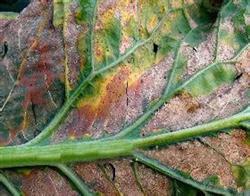
Cauliflower downy mildew is a fungal disease caused by infection with the parasitic downy mildew of the subphylum Mastigomycotina. The oospores of the pathogen overwinter in the soil along with diseased plants, and after overwintering they spread in the field with wind and rain. The most suitable climatic conditions for the disease are a temperature of 20-24 and a relative humidity above 90%. The disease is more severe during rainy or foggy periods or when water accumulates in the field; sowing...
 Cauliflower transplanting should be carried out on a cloudy day or in the afternoon of a sunny day, and after transplanting, water thoroughly. Transplanting should not be too deep; it is sufficient for the soil of the nutrient cup to be level with or slightly higher than the soil surface, and sufficient rooting water should be applied. If there is a long period of clear weather and the soil is dry, it is best to fill the furrow ditches with enough water before transplanting and moisten the bed surface, so as to help lower the soil temperature.
After the seedlings have recovered, cultivate once and water. If there is too much rain and the field is too wet, cultivate more often to keep the root area dry, loose, and breathable. Many cauliflower fields often grow slowly or even stop growing because they are too wet. Cauliflower fields should be kept moist regularly, and the soil should be loosened and weeds removed in a timely manner.
Cauliflower is prone to downy mildew during the seedling stage and under high-temperature, high-humidity conditions in the field. It can be controlled by spraying fungicides such as chlorothalonil, zineb, metalaxyl, Duofan, Kelu, and Anke. During the growing period, cauliflower is prone to pests such as cabbage caterpillar, diamondback moth, and yellow-striped flea beetle. For control, insecticides such as deltamethrin, dimehypo, chlorpyrifos, fipronil, abamectin, Bt, and Nongdile can be used.