Key Technical Points for High-Efficiency Cultivation of Eggplant, Lettuce and Broccoli
Broccoli, also known as green cauliflower, is a health vegetable with a complete range of nutrients and relatively high economic value. Its products have a long supply period; besides being eaten fresh, it can also be quick-frozen and dehydrated, giving relatively high production returns. 1. Variety selection ① Lvling: growth period 100-120 days, strong growth vigor, tall plant, moderate lateral branch growth...
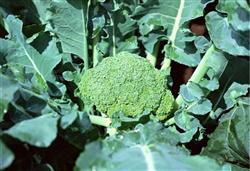 In the Nanjing area, the author explored and studied a high-efficiency three-crop-a-year cultivation model of early spring eggplant, summer-autumn lettuce and autumn-winter broccoli, suitable for application in new and old vegetable bases in the middle and lower reaches of the Yangtze River. Early spring eggplant is sown in mid-to-late October, transplanted from late February to early March the following year, and harvested from early May to early July; summer-autumn lettuce is sown in early-to-mid June, transplanted in early-to-mid July, and harvested from late August to early-to-mid September; autumn-winter broccoli is sown and raised as seedlings from late July to mid-to-late August, transplanted from late August to mid-September, and harvested from mid-to-late November to February of the following year. Over the whole year, per mu, early spring eggplant yields 4000 kg with an output value of 6000 yuan, summer-autumn lettuce yields 2000 kg with an output value of 2000 yuan, and autumn-winter broccoli yields 1500-2000 kg with an output value of 4000 yuan. The total output value per mu reaches as high as 12000 yuan, with a net income of more than 8000 yuan.
Early spring eggplant
Variety selection: Choose early-maturing eggplant varieties with tolerance to low temperature and weak light, strong disease and stress resistance, and that suit market consumption habits, of the black shiny long club-shaped or long strip type, such as Heibiao, Heichanglong, Changyuelang, Yanlichang, etc.
Field management: Early-maturing cultivation of eggplant generally adopts multiple covers of "large greenhouse + small arched tunnel + plastic film". After transplanting until seedling recovery (about 7 days), ventilate little, with daytime temperature 28-32 degrees C and nighttime 15-18 degrees C. When the lowest temperature is stably above 15 degrees C, do not close the greenhouse at night; when above 30 degrees C, remove the greenhouse skirt film and add a shade net. Water promptly after transplanting; after seedling recovery, apply 3 kg of urea and 15 kg of 25% solanaceous fruit compound fertilizer per mu in holes. Before the first eggplant flowers, control water appropriately to restrain seedling growth, raise soil temperature and promote root development; 8-10 days after the first eggplant sets, water once together with topdressing, applying 20-30 kg of 25% solanaceous fruit compound fertilizer per mu in holes. To increase early yield, pruning must be done promptly; early spring cultivation mainly adopts the double-stem pruning method, promptly removing old leaves and diseased leaves, and when growth is excessively vigorous, remove part of the functional leaves at the base to reduce nutrient consumption.
Summer-autumn lettuce
Variety selection: Choose early-maturing lettuce varieties of the loose-leaf or semi-heading type with tolerance to high temperature and bolting, strong disease and stress resistance, and that suit local market consumption, such as Italian heat-tolerant and bolting-tolerant lettuce, American Dasusheng lettuce, Siji Youmai lettuce, etc.
Field management: Lettuce likes moisture and has a high fertilizer requirement, needing sufficient fertilizer and water supply throughout the whole growth period. 5-7 days after transplanting, water once for seedling recovery and topdress a small amount of quick-acting nitrogen fertilizer; afterward water once every 5-7 days, and after 15-20 days, combine with watering to topdress 15-20 kg of compound fertilizer per mu; in the middle and late stages, do not topdress with human and animal manure and urine, and do not overwater. For summer lettuce cultivation, areas with conditions should build sheds for shading or interplant under melon and bean trellises.
Autumn-winter broccoli
Variety selection: Choose varieties that are mid-to-late maturing, high yielding, strongly cold resistant, with fine buds, good market quality and strong disease and stress resistance, such as Youxiu, Lvling, Meilv 90, Shenglv, Wansheng Shenglv, Mantuo Lv, etc.
Field management: Broccoli likes fertilizer and water, and timely fertilization and watering are the key to achieving high yield. Water and fertilizer management should follow the principle of promoting at the beginning and end and controlling in the middle. In the early growth stage, drench 1250-1500 kg of decomposed manure and urine water or 8-10 kg of urea per mu each time, topdressing 2-3 times. During the curd formation stage, apply heavy fertilizer, 25-30 kg of compound fertilizer per mu, plus an appropriate amount of magnesium, calcium, sulfur, boron fertilizers, etc., combined with intertillage and hilling. Entering the harvest stage, apply fertilizer once after each harvest, 15-20 kg of compound fertilizer per mu each time. Broccoli has a relatively large water requirement, especially during the curd formation stage, so it should be irrigated promptly to keep the soil moist, and drained promptly in the rainy season to avoid causing root rot.