To achieve high yields in winter and spring wheat, building a solid foundation is key
Henan Province is a major wheat-producing province. In recent years, the state and the province have introduced a series of policies beneficial to farmers, supporting the development of wheat production, which has greatly improved the agricultural production conditions in our province and continuously raised the production level. The total wheat output and per-unit yield have hit record highs for 5 consecutive years. In 2007, the wheat sown area reached 75.66 million mu, and in 200...
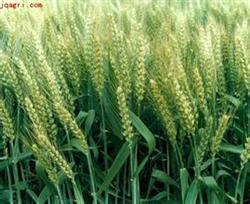
Henan Province is a major wheat-producing province. In recent years, the state and the province have introduced a series of policies beneficial to farmers, supporting the development of wheat production, which has greatly improved the agricultural production conditions in our province and continuously raised the production level. The total wheat output and per-unit yield have hit record highs for 5 consecutive years. In 2007, the wheat sown area reached 75.66 million mu, and in 2008 the wheat sown area will be further expanded. Doing a good job of wheat sowing is the foundation for high and stable wheat yields. First is variety selection; only by choosing superior varieties can increased yield be guaranteed. Second are the details of land preparation, fertilization, watering and sowing; only by finely preparing the land, applying good base fertilizer, building good soil moisture before sowing, and sowing at the right time can full emergence be ensured and a foundation laid for high yields the following year. Finally, there is the prevention of wheat diseases, insect pests and weeds. The sowing period is a critical time for preventing many wheat diseases, insect pests and weeds. Doing a good job of preventing diseases, insect pests and weeds during the sowing period can not only directly and effectively control underground pests and weed damage, but also effectively control the occurrence of many diseases in the early stage of wheat growth, reduce their severity, and ease the pressure of later control. This year's wheat sowing work is about to begin. In order to strive for continued record-high wheat yields, we specifically consulted relevant experts from the Provincial Seed Management Station, Henan Agricultural University and some frontline agricultural technicians, and introduce practices ranging from variety selection, land preparation, sowing and fertilization to the prevention of diseases and insect pests during the sowing period, so as to ensure full emergence, achieve the goal of uniform, even and strong seedlings, and lay a good foundation for high wheat yields the following year.
The guiding ideology for the use of wheat varieties in this year's autumn sowing is to take high-yield and stable-yield varieties as the leading factor, focus on high-quality special-purpose varieties, carefully carry out layout planning, select varieties according to local conditions, and combine superior varieties with good methods. In the variety layout, the general principle is to reasonably adjust the proportion of semi-winter varieties and weak-spring varieties. The northern wheat region should be dominated by semi-winter varieties, with weak-spring varieties for late stubble; the central and southern wheat regions should be dominated by weak-spring varieties, with semi-winter varieties for early stubble. For varieties participating in this year's improved seed subsidy, the principle of "expert recommendation, market recognition, farmer welcome, promoting the superior without one-sidedly seeking novelty and difference" should still be adhered to. The wishes of farmers should be fully respected, and high-quality, high-yield varieties that have passed approval and performed well in trials and demonstrations should be designated as the local leading varieties to ensure the safety of seed used in the field.
In the northern Henan wheat region, high-quality strong-gluten wheat fields are mainly planted with Zhengmai 366, Jimai 20, Gaomai 9415, Xinmai 19 and Xinong 979. For high- and medium-yield wheat fields, early stubble is mainly planted with Zhoumai 18, Aikang 58, Yumai 49-198 and Zhoumai 16, with Xinmai 18, Yunong 202, Zhongmai 1, Wenmai 19, Luomai 21, Zhoumai 22, Ping'an 3 and Hengguan 35 as companions, and Bainong 160, Zhengyumai 9987 and Xuke 1 for demonstration; late stubble is mainly planted with Yanzhan 4110, Ping'an 6, Pumai 9, Xinmai 208 and Taikong 6, with Xinyuan 958, Yujiao 2, Zhongmai 2, 04 Zhong 36, Huapei 5 and Yunong 949 as companions. For hilly, dry and thin land, Luohan 2, Luohan 3, Yumai 25 and Yumai 65 are mainly used, with Jimai 2, Anmai 7, Luohan 6 and Luoyou 7 as companions.
In the southeastern and central Henan wheat regions, high-quality strong-gluten wheat fields use Zhengmai 366, Xinmai 19 and Xinong 979 as the main varieties for early stubble; for late stubble, Zhengmai 9023 is the main variety. For high- and medium-yield wheat fields, early stubble is mainly planted with Zhoumai 18, Fanmai 5, Zhoumai 16, Aikang 58, Yumai 49-198, Xinmai 18 and Zhongmai 1, with Xunong 5, Zhoumai 22, Hengguan 35, Luo 4-168, Zhengmai 9694, Fumai 2008 and Ping'an 3 as companions, and Bainong 160, Zhengyumai 9987 and Yunong 202 for demonstration; medium and late stubble is mainly planted with Yumai 18-99, Yumai 70-36, Xinmai 208, Yanzhan 4110 and Taikong 6, with Ping'an 6, Xiangmai 969, Xinyuan 958, 04 Zhong 36, Jinfeng 3, Yunong 949 and Huapei 3 as companions.
In the western Henan wheat region, high-quality strong-gluten wheat fields use Xinong 979, Xinmai 19 and Zhengmai 366 as the main varieties for early stubble; for late stubble, Zhengmai 9023 is the main variety. For high- and medium-yield wheat fields, early stubble is mainly planted with Yumai 49-198, Aikang 58, Yumai 41, Zhoumai 16 and Zhoumai 18, with Yumai 25, Luomai 21, Xunong 5 and Kaimai 18 as companions, and Yunong 202 and Zhengnong 17 for demonstration; medium and late stubble is mainly planted with Yumai 18-99, Pumai 9, Yanzhan 4110 and Ping'an 6, with Xinmai 208, 04 Zhong 36 and Jinfeng 3 as companions. For hilly dry land, Luohan 2, Luohan 3, Yumai 25 and Jimai 2 are mainly used, with Luohan 6, Luoyou 7 and Yandian 9433 as companions.
In the Nanyang Basin wheat region, for flat high-yield wheat fields, early stubble is mainly planted with Hengguan 35, Xinong 979, Xinmai 19, Yunong 202, Pumai 10 and Zhengmai 366; medium and late stubble is mainly planted with Zhengmai 9023, Yumai 70-36, Yumai 18-99, Xinmai 208, Ping'an 6, Yunong 949 and 04 Zhong 36. In hilly, dry and thin land wheat fields, early stubble is mainly planted with Hengguan 35 and Luomai 21; medium and late stubble is mainly planted with Zhengmai 9023, Yanzhan 4110 and 04 Zhong 36. In rice-wheat double-cropping areas, Yumai 70, Zhengmai 9023, Xinmai 208 and Yanzhan 4110 are mainly used.
In Xinyang and the southern Henan rice-stubble wheat region, high-quality weak-gluten wheat fields are mainly planted with Zhengmai 004 and Zhengfeng 5. The leading varieties are mainly Zhengmai 9023, Yanzhan 4110 and Yumai 18-99, with Xinmai 208, Jinfeng 3, Zhongyu 6, Yuanyu 2, Fengkang 38 and Neixiang 201 as companions.