High-Efficiency Cultivation Technique for Two Plantings and Three Harvests of Broccoli
(1) Cultivation methods and seasons. Broccoli is more adaptable than cauliflower, and there are many cultivar types. According to different climates, different cultivars are selected, allowing cultivation in all four seasons and year-round supply. (2) Sowing and seedling raising. Broccoli is a high-grade fine vegetable, and the seeds are expensive. The seedbed must be carefully prepared, with sufficient base fertilizer applied, and made into...
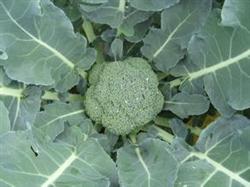 Plug-tray substrate seedling raising. Select medium-early maturing cultivars such as Youxiu and Shanshui. Fill the cells of a 128-cell polyethylene plastic tray with finished substrate, level the tray surface and press gently, place it flat on the bed surface, and water moderately. After 2 to 4 hours, sow 1 seed per cell, then scatter a small amount of carbendazim-treated soil, water thoroughly, and cover with a small amount of culture soil, just enough to cover the seeds. When the substrate is dry, water a small amount; after complete emergence, water once daily at 9-10 a.m. on sunny days, with a moderate amount of water, and do not water on rainy days. Gradually increase ventilation 5 to 7 days before transplanting, and gradually reduce watering 3 to 4 days before transplanting. Spray once with 75% chlorothalonil 800-fold solution one day before the seedlings leave the nursery. For temperature management in the seedling shed, maintain 20-30°C during the day and 15-20°C at night before emergence; after complete emergence, 20-25°C during the day and 15-18°C at night; after the first true leaf appears, 20-25°C during the day and 13-18°C at night; gradually lower the day and night temperatures of the seedbed 5 to 7 days before transplanting, to 15-20°C during the day and 10-12°C at night; when the temperature in the seedling shed is above 30°C, cover with a shade net to cool it down, and gradually remove the shade net 7 to 10 days before transplanting.
Timely transplanting. Plow the land 10 to 25 days before transplanting, apply sufficient base fertilizer, and apply 120 kg of bio-organic fertilizer, 40 to 50 kg of ternary compound fertilizer (20-10-16), 80 kg of superphosphate, and 1.5 kg of borax per mu. Rotary-till the fertilizer into the soil and make beds. Transplant after 3 p.m. on sunny days, or throughout the day on cloudy days. Transplant in staggered rows between rows on the bed surface in a triangular arrangement, planting about 4,200 plants per mu, with a transplanting depth of 4 to 5 cm. Seal the transplanting holes tightly with soil and press lightly to prevent empty spaces where the seedling plug meets the soil. Water thoroughly with rooting water on the day of transplanting, and fully soak the bed soil.
Fertilizer and water management. During summer drought, irrigate moderately; you may use run-through water, only requiring the soil to be moist, and flooding irrigation is not allowed. After each irrigation, cultivate and earth up in time, and weed. Apply the first topdressing 5 to 7 days after transplanting, with 6 to 8 kg of urea per mu; apply the second topdressing 25 to 35 days after transplanting, when the plants have 8 to 10 true leaves, with 15 to 20 kg of ternary compound fertilizer (20-10-16) per mu; apply the third topdressing 45 to 55 days after transplanting, when the plants have 15 to 17 true leaves, with 15 to 20 kg of ternary compound fertilizer per mu. Apply topdressing in holes between two plants, with holes 8 to 10 cm deep, and cover tightly with soil after application.
Pest and disease control. The main diseases of broccoli include damping-off, downy mildew, and black rot, and the main pests include aphids, cabbage caterpillars, beet armyworm, and cutworms. Pay attention to pesticide control. After small curds appear, pesticide use is prohibited.
Timely harvest. Harvest at 9-10 a.m. on sunny days or after 4 p.m., do not harvest on rainy days, and harvest once a day. When harvesting, the cut must be accurate and steady, retaining 3 to 4 leaves. For fresh-keeping export, the curd is required to have a horizontal diameter of 11 to 14 cm and a vertical stem length of 15 to 16 cm; for quick-freezing processing, the curd has a horizontal diameter of 16 to 18 cm and a vertical stem length of 16 cm; for domestic sales, the curd horizontal diameter and vertical stem length do not exceed 12 cm.