Key Technical Points for Autumn Radish and Cauliflower Cultivation and Management
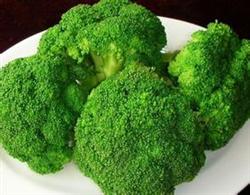
Broccoli is called xilanhua in Guangzhou. It has high nutritional value, bright green color and delicious taste. In the 1980s, it was successfully introduced and cultivated on a large scale in China. It can be cultivated both in coastal and inland areas. It is a new high-grade vegetable and also one of the vegetable varieties for export. The edible part of broccoli is composed of tender flower stalks and countless small flower buds, and is...
 Radish is generally sown directly. You can sow 3 rows per bed, with a hole spacing of 35-45 cm (press a hole with your hand) for dibbling. You can first sow 2-4 seeds in each hole and then water. After the water in the hole dries, cover with a small amount of fine soil (it is advisable that the seeds are not visible). After sowing, cover with black plastic mulch, and pay attention to breaking the mulch open once seedlings emerge.
After emergence, thin the seedlings, keeping two plants per hole. If drought occurs, one topdressing can be applied, using 10 dan of farmyard manure per mu diluted with 50-60 dan of water for one watering. During subsequent cultivation and weeding, another fertilizer application can be made. During the radish growing period, 2-3 times of cultivation and weeding can be carried out.
Cauliflower
Cauliflower has poor tolerance to waterlogging. When planting cauliflower in rainy areas and under environmental conditions with a high groundwater table, technical measures of deep furrows and high beds should be adopted to facilitate drainage. This is the key to whether cauliflower cultivation succeeds or not. Cauliflower also avoids continuous cropping. The previous crop should preferably be cucurbits, solanaceous fruits, or legume vegetables. Fertile loam and clay loam should be selected for field cultivation. Apply heavy basal fertilizer: 3000 kg of decomposed farmyard manure, 50 kg of phosphate fertilizer, 20 kg of potassium fertilizer, and 25 kg of urea per mu, evenly broadcast, then plow and make beds. For autumn cauliflower, beds can be made at 4 m; plant 8 rows for early-maturing varieties and 6 rows for late-maturing varieties.
Cauliflower should be transplanted on cloudy days or in the afternoon on sunny days, and watered thoroughly after transplanting. Transplanting should not be too deep; it is sufficient for the soil of the nutritional cup to be level with or slightly higher than the bed surface, and sufficient rooting water should be applied. If there has been a long period of clear weather and the soil is dry, it is best to fill the furrows with enough water before transplanting and moisten the bed surface, so as to help lower the soil temperature.
After the seedlings recover, cultivate once and water. If there is too much rain and the field is too wet, more cultivation should be carried out to keep the root area dry, loose, and breathable. Many cauliflower fields often suffer slow growth or even stop growing because they are too wet. Cauliflower fields should not only remain moist frequently, but also be loosened and weeded in time.
Cauliflower is prone to downy mildew at the seedling stage and under high temperature and high humidity conditions in the field. It can be controlled by spraying pesticides such as chlorothalonil, zineb, metalaxyl, fosetyl-aluminum, dimethomorph, and anke. During the cauliflower growing period, pests such as cabbage caterpillars, diamondback moths, and striped flea beetles are prone to occur. For control, pesticides such as deltamethrin, bisultap, chlorpyrifos, fipronil, abamectin, Bt, and nongdile can be used.