Key Techniques for High-Quality, High-Yield Broccoli Cultivation
Broccoli, also known as green cauliflower, is valued for its edible head composed of tender, fleshy flower stalks. It has a complete nutritional profile, high nutritional value, a crisp and tender texture, and a fresh, pleasant taste, making it a favorite among consumers. Broccoli prefers mild and cool climates and moist environments; it is intolerant of heat and drought and is not frost-resistant. The optimum temperature for seed germination is 15-...
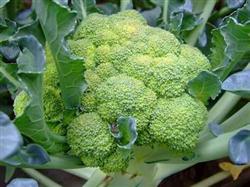
Broccoli, also known as green cauliflower, is valued for its edible head composed of tender, fleshy flower stalks. It has a complete nutritional profile, high nutritional value, a crisp and tender texture, and a fresh, pleasant taste, making it a favorite among consumers. Broccoli prefers mild and cool climates and moist environments; it is intolerant of heat and drought and is not frost-resistant. The optimum temperature for seed germination is 15-30°C, the optimum temperature for plant growth is 20-22°C, and the optimum temperature for head formation is 15-18°C; development is poor above 25°C. It is easy to cultivate and is an excellent vegetable crop for generating income from idle winter fields after the late rice harvest. As an emerging vegetable variety, to achieve high quality and high yield, one should understand its characteristics and growth and development requirements and master the cultivation techniques:
I. Variety Selection
Broccoli can be divided by maturity period into three types: early, mid, and late maturing. Most broccoli varieties currently cultivated in China are introduced from countries such as the United States and Japan, and suitable varieties can be selected according to different cultivation seasons. For summer and autumn production, heat-tolerant, early-maturing varieties should be selected, such as Lufeng, Zhulü, Lilü, and Dalü; for winter production, cold-tolerant, compact, mid-maturing or mid-early-maturing varieties with tight heads should be selected, such as Luling, Fujilü, and Qiulü. II. Sowing and Seedling Raising
For winter cultivation of broccoli, first select varieties with broad adaptability and strong cold tolerance. Sow them on pre-prepared seedbeds, or raise seedlings in nutritional pots. The sowing rate is 20-25 grams of seed per mu.
1. Preparation before sowing: Broccoli can be raised using nutritional cups or seedbed sowing. To raise seedlings in nutritional cups, first prepare nutritional soil by selecting 3 parts garden soil or paddy field soil that has not grown cruciferous vegetables within three years, adding 1 part fully decomposed farmyard manure, then adding 1 kg superphosphate and 0.6 kg potassium sulfate per cubic meter of nutritional soil, mixing thoroughly, and filling the cups. To raise seedlings in a seedbed, select loam with convenient irrigation and drainage, plow and sun it thoroughly, and make beds 1.-1.8 m wide (including furrows) and 20-25 cm high as the seedbed. Apply 10-15 kg decomposed organic fertilizer and a certain amount of phosphorus and potassium fertilizer per square meter of seedbed, then mix the fertilizer and soil evenly, break up clods, and level.
2. Sowing: When raising seedlings in nutritional cups, wet the nutritional soil before sowing, sow 1 seed per cup, cover with a thin layer of soil after sowing, and spray with Duer herbicide. For seedbed seedling raising, first mix the seeds evenly with a certain amount of fine sand before sowing, at a sowing rate of 4-5 grams per square meter (that is, seedlings raised on 5 square meters can supply one mu of field for planting). After sowing, cover with 0.5-1 cm of thin soil, spray with Duer herbicide, and then cover with a thin layer of rice straw. In late summer and early autumn, when the weather is hot and rainy, whether using nutritional cups or seedbed seedling raising, shade nets must be used to provide shade and protect against rain.
3. Management during the seedling stage after sowing: After sowing, pay attention to watering and keep the soil moist at all times. Seedbed-raised seedlings can emerge uniformly in about 3 days, and the rice straw should be removed promptly. For summer seedling raising, special attention must be paid during the seedling stage to controlling damage from striped flea beetles and cabbage caterpillars. Remove the shade net 7-10 days before transplanting so the seedlings receive sufficient light for hardening. About 30 days after sowing, when seedlings are about 15 cm tall and have 5-6 true leaves, they can be planted out. Spray the seedbed once with insecticides and fungicides before planting out.
III. Planting Out
Before planting out, select land with good irrigation and drainage conditions. Plow and prepare the land 7-10 days before planting out, and open furrows to apply base fertilizer deeply. The base fertilizer application rate is 2500 kg decomposed pig and cattle manure per mu, 25 kg compound fertilizer, and an appropriate amount of boron fertilizer and calcium fertilizer. After land preparation, make beds with a north-south orientation, generally 1-1.2 m including furrows for double-row planting, with a bed height of 20-30 cm. The planting spacing is 40 cm x 50 cm, with about 2500 plants per mu.
III. Field Management
1. Watering: Broccoli likes fertilizer and water and is intolerant of heat and drought. Generally, water once every 5-7 days, and water thoroughly. During the rainy season, drain promptly to avoid root rot.
2. Topdressing: The main type of topdressing is nitrogen fertilizer, applied in stages and at the right times. 15-20 days after planting out, apply 7-10 kg urea per mu; 40 days after planting out, when plants have 15 leaves, apply 7-10 kg urea per mu; when plants have 20-21 leaves, apply 5 kg urea, 30 kg calcium magnesium phosphate fertilizer, and 30-50 kg potassium fertilizer per mu. During the head formation stage, apply heavy fertilizer, using 25-30 kg compound fertilizer (preferably organic compound fertilizer) per mu, plus an appropriate amount of magnesium, calcium, sulfur, boron fertilizer, etc., and spray with 0.1% borax 2-3 times. After the head is harvested, for varieties with strong side-shoot sprouting ability, continue topdressing and watering. Each time a side head is harvested, apply topdressing once.
3. Cultivation, hilling, and bud removal: Loosen the soil and weed before fertilizing, and hill up the soil after fertilizing. For varieties grown specifically for the main head, remove side buds before harvesting the main head; for varieties used for both main and side heads, retain 4-5 healthy side shoots and remove thin, weak side shoots.
IV. Pest and Disease Control
The common main pests and diseases of broccoli include black spot, downy mildew, aphids, cabbage caterpillars, diamondback moths, striped flea beetles, and cabbage loopers.
Disease control: In the early stage of black spot, spray with 50% carbendazim wettable powder at 500 times dilution, or 65% zineb wettable powder at 500 times dilution, or 50% thiophanate-methyl wettable powder at 500 times dilution, spraying once every 5-7 days for 2-3 consecutive times. In the early stage of downy mildew, use 58% metalaxyl wettable powder at 600 times dilution, or 75% chlorothalonil wettable powder at 600 times dilution, spraying once every 5-7 days for 2-3 consecutive times. Be careful to alternate medications.
Pest control: Aphids can be controlled with 405 dimethoate emulsion at 1000 times dilution; cabbage caterpillars, diamondback moths, striped flea beetles, and cabbage loopers can be killed by spraying with 80% dichlorvos emulsion at 1000 times dilution, or 2.5% deltamethrin at 2500 times dilution, or 20% fenpropathrin at 2000 times dilution.
V. Harvesting
The suitable harvest time for broccoli is when the terminal head has fully expanded, the flower buds have not yet opened, and the buds feel slightly loose to the touch; it should be harvested promptly. During high-temperature periods, harvest 1-2 days earlier to avoid loose heads or flowering caused by harvesting too late, which reduces product quality. When harvesting, cut off the head together with about 10 cm of the flower stem below it. After the terminal head is harvested, the axillary buds of the plant sprout and rapidly grow side shoots, and heads form again at the tips of the side shoots, namely side heads. When the side heads grow to a certain size and the flower buds have not yet opened, they can be harvested again, generally yielding 2-3 harvests.