Detailed Explanation of Broccoli (Green Sprouting Broccoli) Seedling Cultivation Techniques
Broccoli is a major vegetable export crop of Zhejiang Province, with a stable annual planting area of around 10,000 hectares across the province. However, because the broccoli sowing season falls during the high-temperature and typhoon-active period from July to September, how to make full use of the limited growing season to cultivate strong seedlings has become the key to broccoli production, processing, and export trade. Xiang...
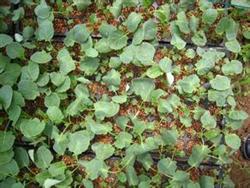
Broccoli is a major vegetable export crop of Zhejiang Province, with a stable annual planting area of around 10,000 hectares across the province. However, because the broccoli sowing season falls during the high-temperature and typhoon-active period from July to September, how to make full use of the limited growing season to cultivate strong seedlings has become the key to broccoli production, processing, and export trade. The Xiangshan County Modern Agriculture Experimental Farm, guided by the purpose of carrying out technical research and services around leading industries, successfully cultivated broccoli seedlings for 140 hectares in 2001-2002, effectively solving the seedling problem for production. The details are introduced as follows:
I. Environmental Requirements for Broccoli Seedling Growth and Development
The growth and development of broccoli seedlings includes three stages: the germination stage, the basic vegetative growth stage, and the rapid seedling growth stage.
Broccoli prefers cool and cold conditions and belongs to semi-cold-tolerant vegetables. The minimum temperature for germination is 3°C, the optimum temperature is 20-25°C, and the maximum temperature is 35°C. The optimum temperature for plant growth is 20-22°C. The curd will suffer freezing damage at low temperatures of -5 to -3°C. Flower bud differentiation has low temperature requirements; early-maturing varieties can complete flower bud differentiation as long as the average temperature is below 20°C. However, encountering low temperatures during the seedling stage will cause the formation of small curds, losing marketability and reducing yield. Growth is slow when the temperature is below 8°C. Mid-to-late-maturing varieties require lower temperatures for flower bud differentiation, so they cannot be cultivated during high-temperature seasons; otherwise, leafy curds, hairy curds, and scorched buds will form. Therefore, broccoli has strict requirements for sowing time.
Broccoli requires ample light but is not strict about day length. It prefers moist conditions but is not drought-tolerant or waterlogging-tolerant, and has relatively strict water requirements. Especially during the seedling stage, drought prevention and waterlogging prevention are the focus of seedling management. The seedbed soil is required to be loose, fertile, and have good water retention and drainage performance.
II. Seedling Raising Methods
The seedling raising method for broccoli is related to its variety characteristics and crop rotation arrangements. In the eastern coastal areas of Zhejiang Province, the method of open-field sowing combined with shade net coverage for cooling and agricultural film coverage for rain protection is generally adopted.
III. Standards for Strong Seedlings
Seedling age of 30-35 days, leaf age of 5-6 true leaves, robust growth, free from pests and diseases, thick stems, short internodes, relatively large and thick leaves, normal leaf color, well-developed root system, abundant fibrous roots, and uniform plant growth.
IV. Seedbed Preparation
1. Seedbed Selection: For broccoli seedling cultivation, select fields with high and dry terrain, good drainage, ventilation and light transmission, loose soil rich in organic matter, and where cruciferous vegetables have not been planted in the past two years as the seedbed. For seedling cultivation, reserve sufficient seedbed at a ratio of 1:20. Plow the soil 1 week before sowing, apply 25 kg of high-efficiency compound fertilizer per 667 sq m with full-depth application. The seedbed width including furrows is 2 m, furrow width of 40-50 cm, height of 15-20 cm, with deep furrows and high beds. The seedbed preparation requires coarse soil at the bottom and loose soil on top, with the bed surface fine, level, and smooth.
2. Seedbed Disinfection: For export broccoli seedling cultivation, the national operating procedures for pollution-free vegetable production should be strictly implemented. For seedbed disinfection, use 25% Ridomil at 500 times dilution plus 40.7% Lorsban at 800-1000 times dilution to spray the seedbed before sowing for sterilization and killing of underground pests.
3. Pre-sowing Chemical Weed Control: To reduce weed damage during seedling cultivation and lower production costs, the dryland herbicide Dual, which has good safety and a broad weed-killing spectrum, can be used. The dosage is 20 mL of 70% Dual emulsifiable concentrate mixed with 15 kg of water, sprayed on the bed surface before sowing, and then water thoroughly to saturate the seedbed.
4. Pre-sowing Soil Moisture Regulation: While completing the above tasks for broccoli seedling cultivation, the seedbed soil moisture must be properly adjusted. Too little soil moisture affects seed imbibition and germination; too high humidity causes soil air blockage and seed rotting. Therefore, the principle for pre-sowing moisture regulation for broccoli is to saturate the bed surface and allow water to seep into the furrows. This not only reduces soil porosity and prevents broccoli seeds from sinking too deep and affecting emergence, but practice has also proven that the degree of soil moisture is directly related to emergence quality.
V. Sowing
1. Determining a Reasonable Sowing Time: The main basis for determining sowing time is variety characteristics, weather conditions, and cultivation purpose. For cultivation in the eastern coastal areas of Zhejiang, the sowing time for extra-early-maturing varieties such as Lufeng and Qingfeng is mid-July to mid-August; for early-maturing varieties such as Youxiu, the sowing time is early to mid-August; for mid-maturing varieties such as LudaiZi and Malasong, the sowing time is late August to early September; for late-maturing varieties such as Meilv 90 and Fuxing, the sowing time is mid-September to early October.
2. Determining a Reasonable Seeding Rate: Broccoli seeds are small. To ensure sufficient seedlings for the field and give seedlings adequate growth space, the field seeding rate must be scientifically calculated. The formula is: Seed quantity (g/667 sq m) = [Number of seedlings/667 sq m x (1 + safety factor)] x 1000-grain weight / germination rate. The germination rate of qualified seeds is above 85%, and the safety factor for raising seedlings is 80%. Currently, the 1000-grain weights of main varieties are: Youxiu 3.17 g, LudaiZi 3.6 g, Meilv 90 5.56 g, Chaoli 2.96 g, Fuxing 3.94 g. Calculated, the seeding rate per 667 sq m of field is: Youxiu 12 g, LudaiZi 15 g, Meilv 90 20 g, Chaoli 12 g, Fuxing 15 g.
3. Sowing: Sowing must be uniform. For seedling cultivation, the method of mixing seeds with fine sand or mud and direct dry seed sowing is often used, evenly sowing broccoli seeds on the prepared seedbed. Sowing time should be chosen on a sunny evening or an overcast day. Generally, after sowing broccoli seeds, fine soil is not used to cover the seeds; instead, a fine sprinkler head is used to spray water so that the seeds and bed surface are in close contact, and then 2-3 layers of shade net are covered on the bed surface for shading, cooling, and moisture retention.
VI. Seedbed Management
1. Management During Germination and Emergence: Broccoli takes 2-3 days and nights from sowing to emergence. The time is short, but management requirements are high. The focus should be on strengthening observation. Proceeding from the overall environmental conditions of the seedling stage, attention should be paid to regulating the two main factors of temperature and moisture. Throughout the germination period, field observations must be made 3 times a day: in the morning, afternoon, and evening, observing seed sprouting, bed surface soil moisture, sunlight intensity, or field drainage conditions on rainy days. Under sunny and high-temperature conditions from July to September, during the germination and emergence period, watering is mainly relied upon to regulate soil temperature, keeping the soil temperature at the suitable range of 25-30°C to facilitate normal emergence. Watering can be done before noon and in the evening, and try to avoid rainy weather after watering. During this period, cover the bed surface with 2-3 layers of shade net for 2-3 days and nights to cool and protect from rain. When the two cotyledons expand and turn green after emergence, promptly remove the shade net.
2. Management During the Basic Vegetative Stage of Seedlings: From cotyledon greening to the 2-leaf-1-heart stage is the basic vegetative stage of broccoli seedlings. After the cotyledons expand and turn green, broccoli seedlings enter an independent autotrophic stage. During this period, if root growth and absorption are poor, or if the temperature in the seedbed is too high, seedling growth and development are easily adversely affected. With the growth and expansion of true leaves and the enlargement of leaf area, the role of cotyledons gradually diminishes after the 2-leaf-1-heart stage. Management during this period is the key to cultivating strong seedlings. Management should focus on the following aspects: First, promptly set up a small arch shed and cover it with shade net. Cover with shade net for cooling from 8 AM to 4 PM on sunny days, remove the shade net at other times, do not cover on overcast days and light rain, with intermittent net covering lasting 1 week. Second, strengthen water management. After rain, promptly clear furrows and drain water to ensure no water accumulation in the field; on sunny days, water promptly to preserve moisture after the soil surface dries. Third, prevent typhoons and heavy rain. Closely monitor forecasts for severe weather such as typhoons and heavy rain. Before typhoons and heavy rain arrive, carry out various disaster prevention measures. Agricultural film can be placed over the small arch shed, and every 2 m along the bed edge, an arch pole can be used to roll up the film to form a ventilation opening for ventilation and dehumidification. Between every two arch poles, drive a stake to press the film. Place shade net on top of the film and secure it tightly to the stakes with nylon rope or film-pressing wire. After typhoons and heavy rain pass, promptly remove the film, shade net, and other facilities to prevent seedling legginess. Fourth, strengthen pest and disease prevention. From emergence to the 1-leaf-1-heart stage, promptly use 40.7% Lorsban at 800 times dilution plus 3% Jinggangmycin at 500 times dilution to prevent damage from flea beetles and to prevent damping-off and seedling blight. At the 2-leaf-1-heart stage, use 75% chlorothalonil at 1000 times dilution plus 3% Jinggangmycin at 500 times dilution to prevent damping-off and seedling blight.
3. Management During the Rapid Growth Stage of Seedlings: After the 2-leaf-1-heart stage, seedlings enter the rapid growth stage, during which 90% of seedling growth occurs. At this time, the temperature is still relatively high, and root formation and growth are very rapid. To cultivate strong seedlings, management during this period should focus on control. Management should focus on the following aspects: First, continue typhoon and heavy rain prevention work, with methods referring to the basic vegetative growth stage of seedlings. Second, continue water management of alternate drying and wetting, preferring dry over wet. Third, carry out thinning at the 2-leaf-1-heart stage so that the growth space for seedlings in the seedbed reaches a uniform level of one plant per 10 sq cm, ensuring 50,000 seedlings per 667 sq m. Fourth, control fertilization throughout the seedling growth period, but apply a small amount of urea to weak and small seedlings to promote uniformity. Fifth, strengthen pest control. During pest outbreaks, use 5% Regent at 1500 times dilution to control diamondback moth, cabbage caterpillar, and cabbage webworm; use 20% Mimic at 1000 times dilution plus 10% beta-cypermethrin at 1500 times dilution to control beet armyworm and tobacco cutworm; use 10% imidacloprid at 3000 times dilution to control aphids.
VII. Seedling Removal from Nursery and Management
After management through the above series of measures, seedlings must be promptly removed from the nursery and transplanted into the field when they have 5-6 leaves. Apply a small amount of urea as a starting fertilizer 2 days before transplanting, check and control pests and diseases, and achieve transplanting of strong seedlings with pesticides, fertilizer, and soil blocks. When lifting seedlings, water the nursery thoroughly to prevent root damage, and select large seedlings of uniform growth for removal from the nursery. Water promptly after pulling seedlings to facilitate the growth and development of the remaining small seedlings. After 1 week of cultivation, the small seedlings become strong seedlings and can be removed from the nursery.