Causes of Flower and Pod Drop in Common Beans and Control Methods
There are several causes of flower and pod drop in common beans, along with solutions, for the reference of farmer friends. 1. Variety: Some varieties have poor cold resistance and stress resistance when cultivated in early spring. 2. Climatic effects: There is a lot of cold, overcast weather after the Spring Festival. 3. Cultivation mistakes: (1) Insufficient fertilizer and water supply or excessive watering at the early flowering stage. ...
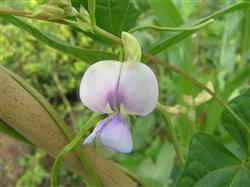
There are several causes of flower and pod drop in common beans, along with solutions, for the reference of farmer friends.
I. Variety: Some varieties have poor cold resistance and stress resistance when cultivated in early spring.
II. Climatic effects: There is a lot of cold, overcast weather after the Spring Festival.
III. Cultivation mistakes: (1) Insufficient fertilizer and water supply or excessive watering at the early flowering stage. (2) Too great a day-night temperature difference inside the greenhouse. Many farmers use cold-proof curtains by "pulling them up early and covering them late," so that the nighttime temperature inside the greenhouse drops to around 10°C, or even lower. Another issue is excessively high daytime temperatures. In managing the ventilation openings, they often pull them fully open at once or close them tightly at once, causing the temperature inside the greenhouse to rise or fall sharply and giving the plants a "cold." The method of "pulling up early and covering early, and opening and closing the ventilation openings gradually" should be adopted, keeping the temperature inside the greenhouse at 18°C-28°C, no lower than 13°C and no higher than 32°C. (3) Not paying attention to root maintenance and root development, only focusing on pod setting. As the saying goes, "The root system is the stomach of the plant." In the process of cultivating common beans, it is necessary both to prevent the soil from being too acidic and to prevent it from being alkaline, and also to pay attention to the rational use of chemical fertilizers. According to relevant information: in all green plants, carbohydrates account for about 96%, while nitrogen, phosphorus and potassium account for about 4%, of which potassium is about 2.2%, nitrogen about 1.4% and phosphorus about 0.4%. Therefore, in the cultivation of common beans, over-reliance on chemical fertilizers is one of the important causes of flower and pod drop. (4) Nutrient regulation is not timely. Many farmers have a mentality of "promoting vines early, worrying about flowers in the middle stage, and fearing pod drop in the later stage." In fact, during the early stage of promoting vines, a weak condition of "thin vines, long vines and thin leaves" has already formed. Therefore, in the management process, attention should be paid to: focusing on nutrient regulation, spraying a certain dilution of humic acid foliar fertilizer (such as Gaomeishi, Huimanfeng, Puer, Zhuangjiahun, etc. at 300-400 times dilution) or amino acid foliar fertilizer (such as Wanwuchun, Nongkexing, etc.). And combine this with light watering and drenching with a biological organic humic acid drenching fertilizer (such as Yangzhuang drenching paste) at 12-15 kg per mu. (5) Pay attention to pest and disease control: Early-spring common beans often suffer from anthracnose, leaf spot, gray mold and stem base rot (or sclerotinia). Pests include whiteflies, aphids, etc., which can be controlled in combination with nutrient regulation.