Cultivation Techniques and Management Key Points for Early-Maturing White Cauliflower
1. Choose varieties with a growth period of more than 220 days, and dress the seeds with New High Lipid Film. 2. When raising seedlings, be sure to shade and keep the seedbed moist. During the seedling stage, treat insects once every 7 days. Spraying New High Lipid Film at the seedling stage can prevent pathogen infection, improve resistance to natural disasters, increase photosynthetic intensity, and protect the seedlings so they grow strong...
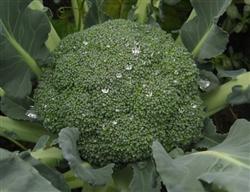 Early-maturing cauliflower comes to market around National Day, is welcomed by consumers, and commands a high price, with a per-mu output value of about 4,000 yuan. However, early cauliflower has a short growth period and very high cultivation requirements. If not managed well, the curds are small and loose, with many hairy florets, and have no commercial value, reducing both yield and income, so many vegetable farmers dare not grow it. How should early cauliflower be grown? The following key measures must be grasped well:
1. Seedling raising under protection
Early cauliflower is sown in late June, and the seedling age must not exceed 35 days. During this stage, Guangdong has high temperatures and abundant rain, so seedlings must be raised under protection. That means covering the top with plastic greenhouse film while removing the side skirts; where conditions allow, use insect-proof netting for the skirts, which both ventilates and avoids rain while reducing pest damage.
1. Seedbed requirements: open drainage ditches around the seedbed, and do not use a previous crop of cabbage-family crops. 7-10 days before sowing, plow deeply and expose the soil to the sun until it turns white, so the soil is fully matured.
2. Apply sufficient base fertilizer: apply 100 loads of decomposed organic fertilizer per mu, and 20 loads of commercial organic fertilizer as surface fertilizer.
3. Sow sparsely: sow 0.5 kg per mu (for imported varieties, raised in plug trays, use about 20 grams of seed), so that seeds are sparse and even, with no thinning needed. After sowing, cover with two layers, non-woven fabric plus shade net, to retain moisture and lower temperature. Water a little every evening to keep the soil moist and ensure full emergence in 3-4 days. After full emergence, remove the non-woven fabric and shade net as soon as possible.
4. Small transplanting: 17-18 days after emergence, the seedlings can be transplanted, with a density of 4 cun square. The seedbed for transplanting should also be well prepared. The bed surface must be level, fertilizer must be sufficient, and the ditch system must be unobstructed. Transplanting should be done after 4 p.m. Before pulling up the seedlings, water thoroughly first and injure the roots as little as possible. Immediately after transplanting, water again to settle the roots, cover with a shade net, remove it at night, water again the next morning, cover with the shade net, water again in the evening, and remove the shade net. Repeat the same operation for three days, watering evenly to ensure survival. After the plants have established, the shade net can be removed.
2. Field planting
1. Field preparation: apply sufficient base fertilizer, with 100 loads of decomposed organic fertilizer per mu, plus 100 jin of special fertilizer for vegetables, or 150 jin of 15﹡15﹡15 compound fertilizer. The bed width is 2 meters, with deep ditches and high beds, and one cross ditch every 25-30 meters. When planting cauliflower, the ditch system must be unobstructed, and the ditches should dry after rain stops.
2. Field planting: 16-17 days after transplanting, the seedlings can be planted in the field. The seedling age must not exceed 35 days, and it is best to keep it at 30-33 days. Overaged early cauliflower seedlings seriously affect curd quality and yield. Plant four plants on a 2-meter bed, with a plant spacing of 45-50 cm. When transplanting, carry soil with the roots. Water the seedbed thoroughly in the morning before lifting the seedlings, and plant in the afternoon. Within three days after planting, water once in both the morning and evening to promote establishment.
3. Field management
1. Cultivation and weeding: after planting, because of repeated watering, the bed surface becomes compacted and should be loosened in time so the bed surface is loose, which helps the plants grow. After that, loosen the soil another 1-2 times before the rows close.
2. Topdressing: cauliflower has a high fertilizer requirement. After field planting and establishment, topdress once to promote growth. At the early budding stage, that is, when the curd differentiates and the new leaves meet in the center, apply a heavy fertilizer, with 20 kg of 15﹡15﹡15 compound fertilizer per mu. After that, depending on the growth of the cauliflower, another application of compound fertilizer can be made at the small bud stage.
3. Pest and disease control: soft rot, black rot, and downy mildew are the main diseases of cauliflower, and they become severe under high temperature and high humidity. Pests mainly include aphids, cabbage caterpillars, diamondback moths, and cabbage armyworms, among others. Vegetable farmers should carry out control in time, especially pest control at the seedling stage, which must be eliminated.
4. Harvest in time: early cauliflower has a short maturation period and is grown under high temperatures, so it should be harvested in time.