What are the technical key points for switching to buckwheat cultivation?
Buckwheat has a short growth period and generally matures in 60-80 days. The key points of high-yield cultivation techniques for autumn buckwheat are: 1. Fine land preparation. Buckwheat seedlings have weak emergence ability, so attention should be paid to fine land preparation to create an environment conducive to seedling growth and development, so as to ensure full stands and strong seedlings. 2. High-quality sowing. Buckwheat is sown around the Beginning of Autumn, and sweet buckwheat can be sown until before the End of Heat, with a sowing rate of 3.5 kg per mu. Do not use old seed kept from the previous year. Before sowing, seed can be soaked in 30-40°C warm water for 10-15 minutes and then sown, which has a significant effect on earlier emergence and uniform, strong seedlings.
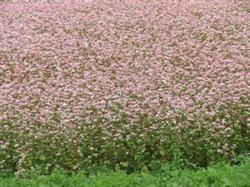
Buckwheat has a short growth period and generally matures in 60-80 days. The key points of high-yield cultivation techniques for autumn buckwheat are:
1. Fine land preparation. Buckwheat seedlings have weak emergence ability, so attention should be paid to fine land preparation to create an environment conducive to seedling growth and development, so as to ensure full stands and strong seedlings.
2. High-quality sowing. Buckwheat is sown around the Beginning of Autumn, and sweet buckwheat can be sown until before the End of Heat, with a sowing rate of 3.5 kg per mu. Do not use old seed kept from the previous year. Before sowing, seed can be soaked in 30-40°C warm water for 10-15 minutes and then sown, which has a significant effect on earlier emergence and uniform, strong seedlings.
3. Skillful fertilizer application. Buckwheat has a short growth period, so base fertilizer should be the main focus, ensuring sufficient basal fertilizer, applying topdressing early, and applying phosphate fertilizer and potassium fertilizer appropriately. Topdressing should be applied according to seedling condition, and should not be applied too much or too late, so as to avoid delaying flowering and seed setting and causing lodging later. During the flowering period, foliar topdressing with potassium dihydrogen phosphate, or trace elements such as boron, molybdenum, and manganese, has an obvious yield-increasing effect.
4. Scientific management. When seedlings are 7-10 cm high, thin them in time in combination with intertillage and weeding. The second intertillage should be combined with earthing up to promote the development of adventitious roots. Intertillage and weeding must be completed before flowering.
5. Pay attention to drought resistance and drainage.