Detailed Explanation of Bitter Melon Cultivation Techniques and Seed Collection Methods
Preparation Before Sowing: 15-20 days before sowing, deep plow and turn the soil. Along with plowing, apply 3000 kg-4000 kg of decomposed barnyard manure per mu, combined with 15 kg-20 kg of ternary compound fertilizer. Sun-dry the field for 7-10 days, then seal and cover the shed for 5-7 days, using sunlight and high-temperature closed-shed treatment to fully sterilize and disinfect the soil and the greenhouse. After leveling the ground...
 1. Site Selection and Land Preparation:
The growth period of bitter melon lasts about 6 months. Spring sowing is preferable, and land should be selected and prepared early. Bitter melon has a well-developed root system, prefers moisture and warmth, tolerates fertilizer but not waterlogging, so plots with deep soil layers, high fertility, and convenient drainage and irrigation should be chosen for planting. Before land preparation, apply 5000 kg of high-quality farmyard manure, 40 kg of nitrogen fertilizer, 50 kg of phosphate fertilizer, and 20 kg of potassium fertilizer per unit. At the same time, deep plowing and fine harrowing are required, with a plowing depth of 30 cm. Level the land and form beds, with a bed width of 1.6 m.
2. Germination Acceleration and Sowing:
1. Germination acceleration generally begins around mid-March. First soak the seeds in warm water at 45°C-50°C. After cooling, soak the seeds for 24 hours. Once swollen, place them under 30°C conditions to accelerate germination. When 50% of the seeds show white tips, sow and raise seedlings.
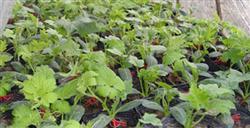
2. Use nutrient pots in a sun-facing seedbed for seedling raising. Roll paper into cylinders with a diameter of 8 cm and a height of 10 cm, fill them with nutrient soil, and arrange them neatly in the seedbed. Sow the germinated seeds in each nutrient pot, then water immediately. After the water seeps through, spread a 1 cm thick layer of fine soil on top, then cover with the sun-facing seedbed plastic sheet.
3. Field Management:
1. Keep the temperature inside the seedling shed at around 30°C during the day and no lower than 15°C at night. To prevent high temperatures from burning the seedlings, ventilate appropriately at noon to lower the temperature. 7-10 days before transplanting and setting out, control water and lower the seedbed temperature.
2. Transplanting and setting out. When the seedlings have 5 leaves and 1 heart, transplant them to the field. Dig holes in the previously prepared beds, two rows per bed, with a row spacing of 1.2 m and a hole spacing of 50 cm. Apply about 20 g of compound fertilizer per hole, and plant one nutrient-pot seedling per hole. Then water the holes. After the water has soaked through the nutrient pots, cover with soil to set the plants. Plant 1600-1700 plants per mu.
3. Set up supports well. When bitter melon begins to vine, set up ""-shaped trellises in time, with the tops connected and fixed with horizontal poles. Use bamboo poles 2.5 m long and 3 cm in diameter for the trellis poles; they must not be too thin. In the early stage, pay attention to manually tying the vines to help the vines climb onto the trellis.
4. Pruning and removing branches. After bitter melon climbs the trellis, no fruits should be kept below 50 cm on the main vine; female flowers should be removed to benefit overall development. As the main vine continues to elongate and 6-7 fruits have set, pinch the top after leaving 5-6 leaves, and at the same time remove the remaining secondary and tertiary vines.
5. Fertilizer and water management. Bitter melon has a long growth period, with a harvest period of more than 3 months, so sufficient water and fertilizer supply must be ensured, especially after late June when it enters the full fruiting stage, when it must not lack water or fertilizer. In case of drought, water once every 7 days. Before watering, apply urea or compound fertilizer in holes at 7-10 kg per mu. In case of continuous rainy weather, pay attention to drainage, and at the same time spray potassium dihydrogen phosphate on the leaves 2 to 3 times.
6. Pest and disease control. The main disease of bitter melon is anthracnose, which mostly occurs in the mid-to-late stage. To control this disease, promptly remove residual leaves, rotten fruits, and diseased leaves. You can also use 50% thiophanate-methyl at 800-1000 times dilution, or 70% chlorothalonil wettable powder at 600 times dilution, spraying daily in the early stage of disease onset. The main pests of bitter melon are aphids and cabbage caterpillars, which can be controlled by spraying leaves with decis emulsion at 1000-2000 times dilution, or 40% dimethoate emulsifiable concentrate at 1500 times dilution.
7. Timely seed collection. Bitter melon is ripe when it turns yellow. The fruits on one bitter melon plant do not ripen at the same time but ripen successively. Therefore, during the peak fruiting period, pick one ripe seed melon every day to avoid overripeness, rot, and seeds falling to the ground. When picking, it is best to use scissors to avoid damaging the vines. At the same time, remove mixed plants and mixed melons, and select and keep seeds with consistent color and melon shape. Seeds should be picked and washed and dried the same day to prevent mold and ensure the seed germination rate.