How to grow bitter melon for high quality and high yield? Detailed explanation of the key techniques
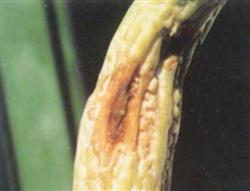
Currently, bitter melon in arched sheds has entered the peak fruiting stage. Recently, many vegetable growers who grow bitter melon have reported that brown spots the size of mung beans have appeared on the fruit of bitter melon in arched sheds. When the humidity inside the shed is high, the lesions become wet rot; in clear weather, the lesions become dry rot. Fruit on plants near both sides of the shed are more severely affected. The current cause of the bitter...
 Bitter melon, also known as "cool melon", is a warm-loving vegetable, with an optimum growing temperature of 20-25°C. In recent years, through variety selection and breeding, it can be planted in spring, summer and autumn, and has gradually become a major cultivated melon variety. To achieve high quality and high yield when growing bitter melon, the following points must be noted:
I. Select good varieties. Choose good varieties that are fertilizer-tolerant, heat-tolerant, storage- and transport-tolerant, with large fruit, thick flesh, high yield and good quality, such as Zaofeng No. 3, Cuilu No. 1, Suiyou, Emerald, Dading bitter melon, Jiangmen bitter melon, Huashen bitter melon, Xiafeng No. 2, Qingyu bitter melon, Xinlu No. 2 long-body oil melon, etc.
II. Germination promotion and seedling raising. The seed coat of bitter melon is hard, so soak the seeds and promote germination before sowing to facilitate emergence. Generally, spring planting is suitable from the end of January to April, summer planting in May-June, and autumn planting in July-August. Before sowing, put the seeds into warm water, rub and wash off the gelatinous substance with a fine sand wheel, then wrap them well in clean thin gauze, put them into clean water and soak for 12 hours, take out the seeds, then wrap them well in gauze or wet paper, wrap them in plastic film to keep warm and promote germination. The temperature should be kept at 28-30°C, with moist germination promotion. They can sprout in about 3-4 days, and when the sprout is 1 cm long they can be sown. Use nutritional cups for seedling raising. Prepare mixed nutritional soil with high-quality decomposed farmyard manure, superphosphate, potassium chloride, garden soil, etc., and compost for 20-25 days, then sow the germinated seeds by dibbling into the nutritional cups, cover with about 3 cm of thin soil, place in the seedbed, then build a shed with bamboo arches, 45-50 cm high, and cover with nylon film for cold protection during seedling raising. When the melon seedlings grow 5-6 leaves, they can be transplanted to the field.
III. Land selection and land preparation. Bitter melon has no strict requirements for soil, but fertile, moist, deep clay soil with convenient drainage and irrigation is best. Choose land where cucurbits have not been planted for more than two years and with strong fertilizer and water retention capacity. Prepare the land and make beds. Generally the bed width is 1.5-2 m including ditches, and the bed height is 30-40 cm.
IV. Apply sufficient base fertilizer. Bitter melon has a long growing period and relatively high yield, and requires a large amount of fertilizer. Apply 1500-2000 kg of decomposed farmyard manure, 80 kg of superphosphate, 15-25 kg of potassium fertilizer, and 10-12 kg of urea per mu as base fertilizer, mix evenly and spread in the ditches.
V. Reasonable close planting. For field planting of bitter melon, single-row double-plant planting can be used with a plant spacing of 60-70 cm; single-row single-plant planting with a plant spacing of 28-30 cm; double-row single-plant planting with a plant spacing of 40-50 cm and a row spacing of 40-50 cm. After transplanting, water lightly to settle the roots.
VI. Water and fertilizer management. Bitter melon likes moisture but is not tolerant of waterlogging. During the seedling stage and the flowering and fruiting stage, sufficient water supply is needed. The bed surface should be kept moist. After heavy rain, accumulated water should be drained promptly to prevent root rot. In addition to applying sufficient base fertilizer at planting, bitter melon should be topdressed in time. During the seedling stage, apply light water-fertilizer 1-2 times frequently to keep the melon seedlings growing early and quickly. Apply once when female flowers first appear and once 3-7 days before the first harvest, and thereafter topdress once after each harvest. Dig shallow ditches on both sides of the bed, apply 40-50 kg of compound fertilizer per mu, or 10 kg of urea plus 30 kg of phosphate fertilizer plus 15 kg of potassium fertilizer, then cover with soil; or apply 500-700 kg of decomposed human manure plus 3-4 kg of urea per mu, mix evenly and pour on, to extend the harvest period.
VII. Pruning and vine training. When bitter melon grows tendrils, insert a herringbone trellis to train the vines onto the frame, avoiding vines and leaves tangling with each other, and tie the top of the frame tightly where it crosses. Bitter melon has strong branching ability, so vine training must be done frequently in the early stage, carried out on sunny afternoons to prevent breaking the vines. After the fruit on the main vine is harvested, the plant shifts to fruiting on side branches. Therefore, after training the vines onto the frame, side branches below 40-50 cm on the main vine stem should be removed, and old leaves that are too dense as well as thin and weak upper side vines should be removed, so that the field is ventilated and receives light, reducing disease and increasing the fruit-setting rate.
VIII. Timely harvest. Bitter melon should be harvested as tender fruit in good time to ensure quality and increase later fruiting. When the fruit grows to a certain length, the wart-like protrusions on the fruit shoulder expand, the wart grooves become shallow, the fruit tip is large and round, the fruit is glossy, and the fruit color is fresh green, it should be harvested and marketed promptly.
IX. Pest and disease control. The main diseases of bitter melon include seedling damping-off, seedling blight, and anthracnose, powdery mildew and fusarium wilt in the middle and late stages. For damping-off and seedling blight, spray with 200 ppm agricultural streptomycin, 25% chlorothalonil 600-800 times solution, or 50% carbendazim 500-600 times solution. For anthracnose and powdery mildew, spray respectively with 50% thiophanate or zineb 500 times solution, or 75% chlorothalonil or ridomil 600-700 times solution; diseased leaves and diseased fruit should be removed, then spray with 50% anthracnose Fumei 300-400 times solution, or 20% triadimefon 1500-2000 times solution for control. For fusarium wilt, spray or drench the roots with 70% dexon 800-1000 times solution; 20-30 days after planting, drench each plant with half a liter of 50% thiophanate 600 times solution, or drench the roots with 10% shuangxiaoling 200-300 times solution, which has a certain control effect.
The main insect pests of bitter melon include aphids, red spider mites, yellow squash beetles, black squash beetles, melon fruit flies, etc. They can be controlled by spraying dichlorvos or trichlorfon 500-800 times solution, dimehypo 200 times solution, or 40% dicofol 800-1000 times solution, or 2.5% cypermethrin or fenvalerate 3000-4000 times solution.