How to Grow Buckwheat for Stable and High Yields: A Detailed Guide to Cultivation Techniques
Buckwheat belongs to the phylum Spermatophyta, class Angiospermae, and the dicotyledonous family Polygonaceae. This crop has health benefits such as high nutritional value, a cooling effect, anti-inflammatory properties, aiding digestion, and delaying aging, with an average yield of about 100 kg per mu. Increasing buckwheat yields per unit area and boosting total production both play a positive role in driving the development of the food industry, processing industry, and the medical and health care industry...
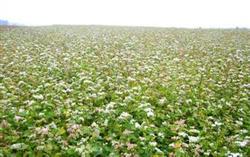
Buckwheat belongs to the phylum Spermatophyta, class Angiospermae, and the dicotyledonous family Polygonaceae. This crop has health benefits such as high nutritional value, a cooling effect, anti-inflammatory properties, aiding digestion, and delaying aging, with an average yield of about 100 kg per mu. Increasing buckwheat yields per unit area and boosting total production both play a positive role in driving the development of the food industry, processing industry, and the medical and health care industry.
1. Soil selection. Buckwheat is not demanding about soil and generally grows best on land of medium to above-average fertility.
2. Fine land preparation to improve sowing quality. A tillage depth of about 20 cm is required, and shallow tillage or no-till should be avoided. Till the soil finely and harrow it level, remove residues from the previous crop and weeds, and make sure the topsoil is loose, which favors sowing and seedling emergence; also pay attention to opening drainage ditches.
3. Rational fertilization
(1) Apply sufficient base fertilizer and increase phosphorus and potassium. Apply 500-1000 kg of decomposed farmyard manure per mu and plow it into the soil during land preparation; at sowing, apply 3-5 kg of urea, 15-20 kg of phosphate fertilizer, and 3-4 kg of potassium fertilizer per mu, or 15-20 kg of compound fertilizer, mixed with 50 kg of fine farmyard manure for seed dressing.
(2) Apply topdressing skillfully. Before flowering, apply 3-5 kg of urea per mu as topdressing according to seedling condition.
4. Seize the best solar term and sow at the right time
(1) Carefully select seeds. According to local conditions, choose sweet buckwheat or bitter buckwheat, and select large, plump, and intact seeds by winnowing, screening, and grain selection. Sun the seeds for 1-2 days before sowing to increase the germination rate, enhance germination vigor, and ensure full and strong seedlings.
(2) Sow at the right time. Provided there is no competition for land with other crops, sow as early as possible to avoid frost damage later. In high-cold and cool regions, sowing should be finished before the Beginning of Autumn; in other regions, no later than August 20. The usual sowing rate is 5-8 kg per mu, using drilling or dibbling so the seeds are evenly distributed in the furrows, with row spacing kept at about 20 cm.
5. Strengthen field management and promptly control insects and weeds
(1) Weeding. When the seedlings grow to 6-8 cm, carry out the first manual weeding; the second before flowering, combined with hilling soil, which can prevent buckwheat lodging and favor high yields.
(2) Insect control. Focus on insect control at flowering, with seedling-stage control as a supplement. Use pesticides such as Kung Fu and Decis diluted with water at 600-700 times and spray 2-3 times, once every 6 days.
(3) Pollination. Buckwheat is a cross-pollinated crop. At flowering, pollination is mainly by insects and wind, combined with artificial supplementary pollination to improve the seed-setting rate. For artificial supplementary pollination, on a sunny morning from 9-11 o'clock, use a long rope with two people pulling it back and forth gently along the wind direction over the buckwheat flowers, so the plants sway lightly and pollination is achieved; generally do this once every 2-3 days, for 2-3 times.
6. Harvest at the right time. Buckwheat has an indeterminate inflorescence, flowering while setting seeds, and it sheds grain easily, with uneven ripening. Generally, it can be harvested when 70% of the grains on the whole plant have matured. Harvesting in the early morning is recommended; cut and place gently, and thresh on the spot or move to a drying yard for threshing.