Buckwheat needs little fertilizer, and the key to fertilizing lies in technique
Buckwheat has a short growth period, grows rapidly, has slender stems, and a poorly developed root system, making it a crop that needs relatively little fertilizer. Generally, for every 100 kg of buckwheat grain produced, about 3.3 kg of nitrogen, 1.5 kg of phosphorus, and 4.3 kg of potassium need to be absorbed from the soil. The specific amount of fertilizer applied will vary depending on soil texture, cultivation conditions, climate characteristics, ...
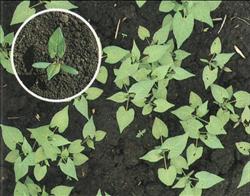 Buckwheat has a short growth period, grows rapidly, has slender stems, and a poorly developed root system, making it a crop that needs relatively little fertilizer. Generally, for every 100 kg of buckwheat grain produced, about 3.3 kg of nitrogen, 1.5 kg of phosphorus, and 4.3 kg of potassium need to be absorbed from the soil. The specific amount of fertilizer applied will vary depending on soil texture, cultivation conditions, climate characteristics, harvest time, and yield capacity. But for arid and barren land and high-cold mountain land, increasing fertilizer application is the foundation for high yield. Buckwheat fertilization should follow the principles of "base fertilizer as the main part, seed fertilizer as the supplement, and topdressing for additional supplementation," "organic fertilizer as the main part and inorganic fertilizer as the supplement," and "combined nitrogen and phosphorus."
Skillful application of base fertilizer: Base fertilizer is the foundational fertilizer applied into the deeper soil layer before buckwheat sowing in combination with tillage and land preparation, also called bottom fertilizer. Generally, 2000-3000 kg of fully decomposed farmyard manure is applied per mu. The base fertilizer can be evenly applied to the topsoil before the final plowing and land preparation. Skillfully applying base fertilizer can not only enrich the soil, mature the soil layer, and create conditions for high yield, but also effectively promote root growth and development and improve root absorption function. At the same time, by making use of the "complete nutrition" and "steady strength" characteristics of organic fertilizer, it can achieve balanced nutrient supply throughout the growth period and ensure steady growth.
Skillful application of topdressing: Topdressing is a rapid fertilizer supplementation measure taken during the growth and development of buckwheat to make up for the deficiencies of base fertilizer and seed fertilizer. At different growth stages, the absorption and accumulation of nutrient elements differ. After budding and flowering begin, large amounts of elements are needed, while at this time the soil's nutrient supply capacity is very low, so skillfully applying topdressing to timely supplement a certain amount of nutrient elements plays an important role in promoting the growth of buckwheat stems and leaves, the differentiation and development of flower buds, and the formation of grains. For "bud-promoting fertilizer," generally 3-6 kg of urea is applied per mu as topdressing according to seedling condition. Note: do not apply it to vigorously growing plants. The flowering stage is the period when buckwheat needs the most nutrients. For those growing only moderately, attention should be paid to timely supplying quick-acting nitrogen fertilizer such as urea to increase the rate of healthy flowers and seed setting. For "flower-promoting fertilizer," generally 3-6 kg of urea can be applied per mu as topdressing according to seedling condition. Fertilization is best carried out on cloudy days or in the early morning or evening. In addition, for those with insufficient fertility in the middle and late stages or showing signs of fertilizer deficiency, 1-2 foliar sprays can be applied, generally using 50 kg of 0.2% potassium dihydrogen phosphate solution per mu to evenly spray the stems and leaves.