Detailed Explanation of Rice Fertilization Characteristics and Principles
Crop production is influenced by many factors, and fertilization conditions vary endlessly. Understanding crops' fertilizer requirements and fertilization principles allows you to adapt to local conditions, and it is recommended to keep fertilization within a reasonable range. The basic principles include other agricultural measures, intended to help farmers broaden their thinking when analyzing and solving practical problems...
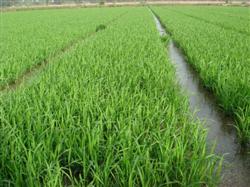
Crop production is influenced by many factors, and fertilization conditions vary endlessly. Understanding crops' fertilizer requirements and fertilization principles allows you to adapt to local conditions, and it is recommended to keep fertilization within a reasonable range. The basic principles include other agricultural measures, intended to help farmers broaden their thinking when analyzing and solving practical problems and carry out integrated management of crop production. This article intends to systematically discuss China's main crops on this topic, and below we first discuss rice.
The growth and development of rice can be divided into different stages: seedling, tillering, booting, heading, flowering, and maturity. Its fertilizer requirement characteristics and fertilization principles are as follows:
Fertilizer Requirement Characteristics
There are two nutrient absorption peaks. The tillering stage and the young panicle differentiation stage of rice are the two nutrient absorption peaks, but single-season rice and double-season rice differ. Single-season rice has a longer growth period, and the two fertilizer absorption peaks are clearly separated, making them key times for topdressing; double-season rice has a shorter growth period, and the two fertilizer absorption peaks tend to overlap, so the fertilization focus is earlier than for single-season rice, but the fertilization amount is relatively less.
It is sensitive to zinc deficiency and prone to "stunted seedling disease." Zinc-deficient soils are mostly calcareous paddy soils, paddy soils in coastal saline areas, and paddy soils in low-lying swamp areas, with winter wheat stubble rice and early rice being especially prone to deficiency; excessive phosphate fertilizer application can also induce zinc deficiency. Increasing organic fertilizer application and applying phosphate fertilizer reasonably can prevent zinc deficiency; applying zinc fertilizer as a basal soil application or foliar spray can correct zinc deficiency.
It is a silicon-loving crop. Rice is the crop that absorbs the most silicon. Silicon can promote rice respiration and root growth, improve photosynthetic efficiency, strengthen stems, and enhance lodging resistance and disease resistance. For high-yield rice, potassium fertilizer and silicon fertilizer should especially be appropriately increased.
The root zone soil has a special oxidation-reduction layer. Rice grows under flooded conditions for a long time, and the soil layer is divided into an oxidized layer near the water body (from a few millimeters to 1 cm in the upper part of the plow layer) and a reduced layer below. The reduced layer lacks oxygen. If nitrate nitrogen fertilizer is applied, in addition to leaching loss with water, it will also be converted into gaseous nitrogen and lost under the action of denitrifying microorganisms. Therefore, nitrate nitrogen fertilizer should not be used or should be used with caution.
Nutritional diagnosis should not use the nitrate nitrogen test method. Rice grows under flooded conditions, and before transformation, the nitrogen absorbed mainly exists in the plant body as ammonium nitrogen. Therefore, rapid plant nutrient testing mainly uses the chlorophyll colorimetric method rather than measuring nitrate content; under flooded conditions, soil available nitrogen also mostly exists as ammonium nitrogen, so nitrate nitrogen rapid testing is also not suitable for nutritional diagnosis.
The availability of soil nutrients in paddy fields differs from that in dry fields. Under flooded conditions, the availability of phosphate fertilizer and nutrients such as iron and manganese is higher than in dry fields, and sometimes excessive manganese content can even cause toxicity. Therefore, after dry fields are converted to paddy fields, phosphate fertilizer can be appropriately reduced, and deficiencies in iron, manganese, and other elements are also alleviated; after paddy fields are converted to dry fields, the amount of phosphate fertilizer applied needs to be appropriately increased, and attention should be paid to deficiencies in elements such as iron and manganese.
There are special requirements for water management and control. Water is an important raw material for the material composition of rice plants and for photosynthesis. Through transpiration, water can regulate plant body temperature, improve the growing environment, prevent low-temperature freeze damage, and inhibit weed growth. "Irrigating to increase height, draining to grow roots" vividly explains the relationship between water status and crop growth, has important guiding significance for rice water management, and should be flexibly applied according to specific conditions.
Fertilization Principles
Improve fertilization techniques. Advocate increasing organic fertilizer application in combination with land preparation, returning straw to the field, or planting green manure; control the total amount of nitrogen fertilizer, shift the focus of nitrogen fertilizer later, and appropriately reduce the proportion of nitrogen fertilizer in basal fertilizer and tillering fertilizer to reduce ineffective early tillering and prevent later-stage fertilizer deficiency; appropriately increase potassium fertilizer and advocate split application of basal fertilizer and topdressing; advocate the "irrigation carrying nitrogen" fertilization technique to improve fertilizer and water use efficiency; through reasonable application of nitrogen, potassium, and silicon fertilizers and comprehensive measures such as reasonable close planting and water layer management, prevent and control rice lodging and improve disease resistance; in acidic paddy fields, apply an appropriate amount of lime as circumstances require.
Scientifically manage and control water. Rice has different sensitivity to water and different water requirements at different growth stages, so it must be managed and controlled according to the time. During the seedling stage, maintain a shallow water layer or moist soil, and when strong winds and cooling occur, irrigate to protect the seedlings; during the transplanting and regreening stages, stable temperature and moisture conditions are needed, so a certain water layer should be maintained to facilitate "leveling by water" during land preparation and to support and revive seedlings after transplanting; after regreening, as tillering increases, appropriately drain and sun the field to suppress ineffective tillering and promote deeper root growth; the young panicle differentiation stage and the heading and flowering stage are sensitive to water shortage, so rice should be kept in an alternating state of moist soil and shallow water layer; the grain-filling and ripening stage requires neither standing water nor too early water cutoff, and intermittent frequent irrigation can be used to keep the paddy field in an alternating state of waterlogged and drained. Doing so not only helps nutrients in the plant converge toward the grains, but also prevents premature aging of leaves and roots; cut off water 5-10 days before harvest to facilitate crop rotation arrangements and field operations.
Strengthen integrated management. While scientifically fertilizing and irrigating, also do a good job of seed selection before sowing, seed sunning, seed disinfection, and germination promotion. For cold rice seedling cultivation in greenhouses in Heilongjiang and other places, "hardening seedlings" and cultivating strong seedlings should be carried out through timely and moderate opening of the greenhouse and moderate drying of the bed surface. Before transplanting, combine deep plowing with shallow harrowing, improve land preparation quality, and transplant at the right time; the general height difference across the field surface should not exceed 3 cm. Field weeding should be carried out, with key control of rice blast, sheath blight, bacterial leaf blight, and pests such as thrips, rice planthoppers, and armyworms.