Summary of Key Points for High-Yield Cultivation Techniques of Rice with Dry Nursery and Late Transplanting
Since the rice dry nursery technique was introduced to Luoquan Town in the 1990s, it has gone through stages of trial, demonstration and extension. Through nearly 20 years of production practice and sowing trials on different soils and by different methods, many successful experiences have been gained. Dry nursery technique is now a mature new rice seedling-raising technique in our town. After repeated...
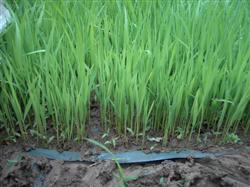
Since the rice dry nursery technique was introduced to Luoquan Town in the 1990s, it has gone through stages of trial, demonstration and extension. Through nearly 20 years of production practice and sowing trials on different soils and by different methods, many successful experiences have been gained. Dry nursery technique is now a mature new rice seedling-raising technique in our town. Through repeated trial comparisons, acidic yellow sandy soil was selected as the most suitable soil for dry nursery. Where such soil exists, it is suitable for large-scale extension. In the rice-producing areas within Luoquan, water source conditions are relatively poor, and in most years water for seedling raising is difficult to obtain, nor can the main field be guaranteed to be transplanted on time, so extending dry nursery is the only choice. Along with the extension of dry nursery technique in our town, its yield-increasing effect has also been well demonstrated. In transplanted fields using dry nursery, whether flatland, hilly land or mountainous areas, because of the rapid growth after transplanting, thick and strong stems, large panicles with many grains and a high seed-setting rate, dry nursery can increase yield by more than 50-100 kg per mu, with obvious yield and income increases, and it is welcomed by farmers. However, another outstanding performance of dry nursery is little known. That is the ability to achieve high yield even with late transplanting, which water-field nursery does not have. It is a new technique that I have explored in production practice.
In the first half of 2007 the drought was severe, and there was basically no rainfall in May, causing many paddy fields to be impossible to transplant. It was not until June (the second day of the fifth lunar month) that a heavy rain fell, but by then the rice transplanting season had long passed. Seedlings transplanted in the normal season had already been in the field for more than 50 days, and the jointing stage was almost over. The seedling age had reached more than 80 days. Seedlings from water-field nursery that had not been transplanted were still growing. Because they were too shaded, the main panicle had already begun booting. If transplanted into the main field again, secondary heading would occur, yield would be low, and it would be of little significance. However, dry nursery seedlings, due to long-term water shortage and repeated wilting, had basically stopped growing, appearing short and small, with the main stem and large tillers having more than 2 nodes, but without booting. By intuition, I thought they still had transplanting value.
On the fourth day of the fifth lunar month (the day before the Dragon Boat Festival), on the basis of applying sufficient fertilizer at one time during field preparation, I hired people to transplant seedlings originally sufficient for 4 mu at the middle-seedling stage into less than 2 mu of field, ensuring at least 12 basic seedlings per hill, with a spacing of 8 cun x 8 cun.
Observed three days after transplanting, the seedlings had grown new roots 1 cm long, and these were relatively thick and strong, with no reviving period. After 7 days they began tillering and grew rapidly.
Twenty days after transplanting, the whole field had basically closed in, and growth vigor was still somewhat excessive. Pests such as rice thrips occurred, so the whole field was treated once, with tricyclazole added to prevent leaf blast.
One month after transplanting, the seedling field successively entered the jointing and booting stage. The main stem did not show earlier heading, and growth was basically uniform. At the early jointing stage, because growth was too vigorous, the leaves of the whole field were cut once, removing nearly one third of the upper leaves. The excessively vigorous seedlings were controlled, development was normal, and at the early booting stage, pesticide was applied once to control stem borers and other pests.
Forty-seven days after transplanting, the field entered the heading stage. At this time, one treatment was carried out against rice stink bugs (stink bugs) and tricyclazole was applied to prevent panicle neck blast. Because fertilizer and water were sufficient, no grain fertilizer was applied.
Ninety-five days after transplanting (the tenth day of the eighth lunar month), the grains reached 90% yellow, and people were hired to harvest. All were weighed, and converted to the measured area, the yield per mu could reach more than 830 jin, less than 100 jin lower than the normal-season yield per mu. The result was satisfactory.
Experiment summary: Looking at the entire growth period, it was in midsummer, with sufficient fertilizer and water, and because dry nursery seedlings were transplanted into paddy fields, various physiological functions were reactivated, growth was rapid, and each developmental stage was advanced, so supernormal growth and high yield could be achieved. Through the experiment, the high-yield cultivation technique of dry nursery with late transplanting is summarized as follows:
1. The variety was Chuanxiangyou No. 2, whose growth period is obviously more than 7 days longer than the Gangyou series, so for late transplanting a variety with a longer growth period should be selected, and it should also have vigorous growth, strong tillering ability, tolerance to fertilizer and water, resistance to lodging, and high resistance to rice blast (because high temperature and high humidity in midsummer make leaf blast likely).
2. Dry nursery and sparse planting to ensure basic seedlings: Dry nursery is the key factor ensuring high yield under late transplanting. In water-field nursery, even if the field surface cracks, its growth and development cannot be stopped. When transplanted at a seedling age of more than 75 days, secondary heading will inevitably occur, harvesting becomes troublesome, individual development is poor, and yield is low. In contrast, dry nursery seedlings, when drought is severe, grow slowly or even stop growing, have great flexibility in seedling age, are not easily aged, and after entering water have the explosive power of rapid growth, while water-field nursery does not have this function. This is also the greatest advantage of dry nursery. Advancing each growth stage can promote early maturity. Therefore, where normal-season transplanting cannot be guaranteed, dry nursery can only be used to ensure transplanting. Sowing should increase seed by more than 50%, and sparse sowing and good weed removal should ensure basic seedlings in late-transplanted fields.
3. Apply basal fertilizer and topdressing at the same time, and cut leaves to control excessive growth. The growth period of late-transplanted fields is very short, so the required nitrogen, phosphorus and potassium fertilizers must be applied sufficiently at one time, with nitrogen fertilizer slightly heavier to promote rapid tillering. The fertilizer should be high-quality compound fertilizer plus urea. This is even more necessary for paddy fields with poor soil. In fields with excessive fertilizer, leaf cutting can be carried out once at the early jointing stage to control excessive growth. Leaf cutting to control growth is a necessary supporting technique for late-transplanted fields, unless there is absolute certainty of controlling the fertilizer amount. Leaf cutting should be done from the late tillering stage to the middle jointing stage, and at the latest at the early booting stage. Cutting too late affects yield. About one quarter of the top leaves can be cut from the whole field to reduce shading, enhance photosynthesis, and lower the incidence of pests and diseases.
4. Vigorously strengthen pest and disease control: Because late-transplanted fields have sufficient water and fertilizer and the seedlings are tender and green, rice thrips, stem borers and planthoppers, and stink bugs cause concentrated damage, so control must be strengthened, otherwise high yield is hopeless. In addition, attention should be paid to the prevention and control of rice blast and sheath blight. When leaf blast occurs, immediately cut about one third of the leaves and apply pesticide.