Summary of the Key Points of the Dry-Raised Sparse-Planting Rice Cultivation Technique
Dry-raised sparse-planting rice is one of the agricultural technique measures promoted; the annual rice cultivation area is 9315 mu, and the per-unit yield was low. With the continuous development and progress of science and technology, the yield has increased significantly, and especially since the promotion of wide-narrow row strip planting and dry-raised sparse planting, the results have been even better, and farmers have achieved increased production and income. Dry-raised sparse-planting rice...
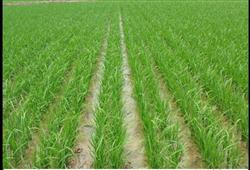
Dry-raised sparse-planting rice is one of the agricultural technique measures promoted; the annual rice cultivation area is 9315 mu, and the per-unit yield was low. With the continuous development and progress of science and technology, the yield has increased significantly, and especially since the promotion of wide-narrow row strip planting and dry-raised sparse planting, the results have been even better, and farmers have achieved increased production and income.
The dry-raised sparse-planting rice technique is one of the key agricultural technology extension projects of the national "Ninth Five-Year Plan". Since the Zhaotong Prefecture on-site meeting on dry-raised sparse planting was held in Baihetan Town in 1996, the area has gradually increased and the per-unit yield has risen markedly. By summarizing experience, we adopted the approach of publicizing to the groups, conducting training in advance, and training to the household, so that the technique was passed on to thousands of households. Just after the Spring Festival, we began on-site demonstration operations, assigned specific tasks to villages and households, and the two committees of each village took the lead in demonstrations and did a good job in extension and publicity, clarifying the planting tasks. Baihetan Town completed a total of 9315 mu of dry-raised sparse-planting rice, distributed across 16 villages, 111 cooperative groups, and 4547 households, accounting for 101% of the task. At present, the dry-raised sparse-planting rice is growing well, and it has already reached the stage of "yellow in the ninth month and harvested in the tenth", and farmers have obtained high yields. The extension of this technique is summarized as follows:
1. Seed selection. We uniformly selected Shanyou 63, Gangyou 22, etc., which have strong heterosis and high disease resistance and high yield. Before sowing, soak the seeds in Duojunling or lime water for 1-2 days, then wash them clean with clear water, sprout them until the white tips show, and sow.
2. Strictly select the land and cultivate age-appropriate strong seedlings
1. Land selection: choose neutral or acidic dry land sheltered from the wind and facing the sun as the seedling bed; it is best to choose vegetable land, potato land, etc.
2. Land preparation and fertilization: achieve a level bed, fine soil, and evenly mixed fertilizer. For each square meter, mix 10 kg of dry farmyard manure and 0.15 kg of ordinary calcium superphosphate evenly, open furrows and bury them in the soil bed, keep the bed surface level, and after watering, sow and then water.
3. Sowing, covering with soil, and covering with film
(1) Dense sowing with sparse planting: cultivate age-appropriate strong seedlings. For each square meter, use 0.08-0.1 kg of sprouted seed, sow by hand back and forth, then cover with 1 cm of fine soil. On the soil surface, use the chemical herbicide butachlor, 0.25 g per square meter mixed with 0.15 kg of water, and spray the soil.
(2) Film covering and removal: after covering with soil, immediately cover well with an arched film to protect the seedlings, and ventilation is needed. When there are 1.5-2.5 leaves, uncover the film at both ends during the day for ventilation, and cover tightly at night. After the three-leaf-one-heart stage, ventilate and harden the seedlings all day. After one week, the best time to remove the film is in the morning before the sun comes out, and removing the film at noon must be avoided.
3. Fertilization measures: apply tillering fertilizer early, and topdress according to the seedlings. Apply 1000-1500 kg of farmyard manure, 25-50 kg of ordinary calcium superphosphate, and 10-15 kg of urea per mu, and apply the middle-layer fertilizer well. According to the characteristics of seedling regreening, 5 days after transplanting, apply 15-20 kg of urea per mu, and in the later period, topdress according to the seedlings, adding 3-5 kg at the booting stage.
4. Reasonable dense planting: transplant 15000-2000 hills per mu, with 1-2 seedlings per hill, or one seedling per hill, and more than 200,000 effective hills per mu.
5. Strengthen scientific management and timely control of pests and diseases
(1) Chemical weeding: 6 days after transplanting, use 5 g of Xindeli per mu mixed with 25 kg of fine soil and broadcast evenly on the transplanted field surface, keeping a shallow water layer for one week.
(2) "Prevention first, integrated control" to keep pests and diseases at the lowest loss level. For armyworms, use 20% fenvalerate emulsifiable concentrate 20-30 ml/mu. For bacterial leaf blight, use 25% wettable powder 100-150 g/mu. For stem borers, use 3% carbofuran granules 500-5000 g mixed with 3-5 kg of soil and apply in furrows or broadcast for control.
6. Carry out timely harvest, "yellow in the ninth month and harvested in the tenth", and bring every grain into the granary.
In summary, dry-raised sparse planting has the advantages of saving seed, saving seedling-bed area, saving labor, saving fertilizer, enhanced stress resistance, well-developed plant root systems, and upright, sturdy, firm leaves with good elasticity. Combined with local conditions, dry-raised sparse-planting rice has achieved very good results.