How to Grow Sorghum for High Yields? A Complete Guide to Cultivation Techniques
Sorghum is one of the main dryland crops in Haicheng City, with characteristics such as drought and waterlogging tolerance, salt and alkali tolerance, and strong adaptability. Due to changes in people's dietary structure in recent years, sorghum grain has once again become "favored" and is one of the staple foods people prefer. Appropriately expanding the sorghum planting area can achieve crop rotation and stubble succession, balance...
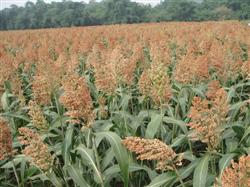
Sorghum is one of the main dryland crops in Haicheng City, with characteristics such as drought and waterlogging tolerance, salt and alkali tolerance, and strong adaptability. Due to changes in people's dietary structure in recent years, sorghum grain has once again become "favored" and is one of the staple foods people prefer. Appropriately expanding the sorghum planting area can achieve crop rotation and stubble succession, balance soil nutrients, and reduce the occurrence of pests and diseases. The main cultivation technical measures are:
I. Land Selection
Sorghum has strong adaptability to soil, but soil analysis of high-yield plots in various regions shows that they all share characteristics such as deep topsoil, good structure, rich soil organic matter content, and suitable soil texture and pH.
II. Land Preparation and Ridging
According to sorghum's soil requirements, land preparation and ridging should be carried out promptly after the previous crop is harvested in autumn, to facilitate water storage and moisture conservation, extend the soil maturation time, and achieve the goal of "preserving autumn moisture for spring, nurturing spring seedlings in autumn." The plowing depth should be 20 cm, and ridging should be completed in autumn if possible, with a ridge spacing of 55-60 cm. If ridging is not completed in time, ridge formation should be done promptly in spring before the soil dries, to conserve the large amount of moisture accumulated in the topsoil during winter for seed germination.
III. Selection of Excellent Varieties
Based on the soil and climatic conditions of our region, Xiongza No. 2 was selected as the main variety. This variety has characteristics such as good grain quality, uniform kernels, well-developed root system, thick and sturdy stems, resistance to leaf rust, resistance to lodging, and high yield.
IV. Seed Treatment
1. Germination Test A germination test before sowing is the basis for determining the sowing rate. Seeds can only be used if the germination rate is above 95%.
2. Seed Selection and Sunning Before sowing, seeds should be winnowed or screened to select large, plump seeds for planting, and then sunned. This results in a high emergence rate, fast germination, uniform emergence, and robust seedling growth after sowing.
3. Seed Soaking and Pre-germination Soak seeds in warm water at 55-57°C for 3-5 minutes, then dry and sow. This helps supplement soil moisture, preserve seedlings, and prevent diseases.
4. Chemical Seed Dressing To prevent sorghum smut, seed dressing with Shuang (a seed treatment fungicide) can be used, applying 5 grams per kilogram of seed.
V. Single Sowing for Complete Seedling Establishment
Generally, sowing is appropriate when the soil temperature within 5 cm is stable at 12-13°C and soil moisture is 16%-20%. In the Haicheng area, May 5-10 is the suitable sowing period. The sowing rate is related to the germination rate and the target seedling density per mu; when the germination rate is above 95%, Xiongza No. 2 should have a target density of about 6,000 plants per mu, with a sowing rate of 1.5-2 kg per mu. Sowing depth should be 3-4 cm. When sowing, keep the depth consistent, press the seedbed well, cover with soil of uniform thickness, and compact to conserve moisture.
VI. Formula Fertilization
According to sorghum's growth requirements, apply 2,500 kg of farmyard manure per mu plus 10 kg of monoammonium phosphate and 5 kg of potassium fertilizer as base fertilizer in one application. For seed fertilizer, use 4-5 kg of ammonium sulfate, keeping seeds and fertilizer separate to prevent seed burning. Topdressing should be applied once at the jointing stage and once at the heading stage. At the jointing stage, apply 20 kg of urea per mu uniformly across the field. For ear fertilizer, apply 8-10 kg of ammonium sulfate.
VII. Strengthening Field Management
1. Thinning and Final Thinning Thin seedlings when 3-4 leaves have emerged, and establish final spacing at 5-6 leaves. This reduces water and nutrient consumption and is one of the effective measures to promote steady seedling growth and early development of strong seedlings.
2. Cultivation Cultivate twice during the seedling stage. The first cultivation is done together with final thinning, and the second 10-15 days later. This conserves moisture, raises soil temperature, promotes root development and strong seedlings, and also eliminates weeds to reduce weed damage. After jointing, if vegetative growth is excessive, cultivation and earthing up should be carried out to promote early and rapid development of aerial roots, enhancing wind resistance, lodging resistance, and drought resistance and moisture conservation.
3. Seedling Hardening Generally from final thinning to the end of jointing. Loosen the soil around the seedling roots to expose the underground stem nodes, and carry out soil removal and root exposure. This helps raise soil temperature, promote downward root growth, make sorghum grow robustly, enhance drought and lodging resistance, and achieve higher yields.
VIII. Integrated Pest and Disease Control
The main pests and diseases of sorghum in our city include sorghum smut, aphids, and underground pests. To control underground pests, use 1.5 kg of 5% phorate mixed with 15 kg of fine soil, and spread evenly in the furrows at sowing. The effectiveness can last up to 40 days. To control aphids, use 3% dimethoate powder at 2.5 kg per mu for foliar spraying, or use 1.5 kg of 5% phorate mixed with 15 kg of fine soil and broadcast in the field.
IX. Timely Harvest
The suitable harvest period for sorghum is the late dough stage, when the grains are plump and starch content is high. In Haicheng City, harvesting is generally carried out around October 1.