What Fungicide Works Best for Controlling Chinese Cabbage Root Rot
Causes of the Disease: Chinese cabbage downy mildew is a fungal disease that mainly affects the leaves, though the stems and flowers can also be affected. After infection, water-soaked chlorotic spots appear on the upper surface of the leaves, later turning yellowish-brown. As the lesions expand, they are often restricted by the leaf veins and become angular in shape. When the weather is humid, a sparse white mold layer forms on the underside of the leaves, and the disease...
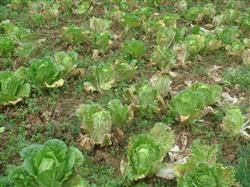
In the early stages of Chinese cabbage root rot, it is best to remove the diseased plants from the field, seal off the affected areas with quicklime or lime water, and then apply a general treatment across the whole field. Considering that the pathogen has already invaded some plants that are not yet showing symptoms at this point, it is best to choose a highly effective systemic fungicide.
This is a bacterial disease that spreads over large areas of the field mainly through rainwater or irrigation water. Understanding this pattern, choosing a good planting plot, and paying attention to prevention during disease-prone seasons (such as rainy seasons, especially under waterlogged conditions) are key. For preventive application, any general chemical for controlling bacterial diseases can be used, such as agricultural streptomycin, Yeqingshuang, Tonggaoshang, thiodiazole-copper, thiosen-copper, and so on.
Yeqingshuang and the organic copper formulations thiodiazole-copper (Longkejun) and thiosen-copper all have a certain degree of systemic activity and can be selected, preferably used in alternating rotation. Chemicals such as Tonggaoshang (basic copper sulfate) have no systemic action, so their effect on infected plants will be somewhat poorer after application. If the disease incidence in the field is very high, it is better to just pull the plants up.