Symptoms and Control Methods of Sorghum Anthracnose
Symptoms This disease is an important disease of sorghum and occurs in all sorghum-producing areas. It can infect plants from the seedling stage to the mature plant stage. Infection at the seedling stage damages the leaves, causing leaf blight and resulting in dead sorghum seedlings. Leaf lesions are spindle-shaped, reddish-brown in the center with purplish-red margins, and dense small black dots appear on the lesions, which are the pathogen's acervuli. Anthracnose...
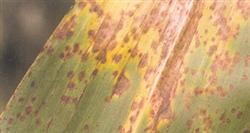
Symptoms This disease is an important disease of sorghum and occurs in all sorghum-producing areas. It can infect plants from the seedling stage to the mature plant stage. Infection at the seedling stage damages the leaves, causing leaf blight and resulting in dead sorghum seedlings. Leaf lesions are spindle-shaped, reddish-brown in the center with purplish-red margins, and dense small black dots appear on the lesions, which are the pathogen's acervuli. Anthracnose often starts from the leaf tip, measuring 2-4 x 1-2 (mm), and in severe cases causes localized or extensive leaf death. Lesions on leaf sheaths are larger, elliptical, and also densely covered with small black dots in the later stage. After sorghum heading, the pathogen can also infect the young panicle neck, forming relatively large lesions at the affected site, which also bear small black dots and easily cause lodging and breakage of the diseased panicle. In addition, it can also damage the rachis, branches, or stems, causing rot.
Pathogen Colletotrichum graminicola (Cesati) Wilson, called the grass-infecting anthracnose fungus, belonging to the Deuteromycotina fungi. Acervuli are black, scattered or clustered on both sides of the lesions, 30-200 um in diameter. Setae are straight or slightly curved and mixed, brown or black, relatively pointed at the tip, with 3-7 septa, measuring 64-128 x 4-6 (um), scattered or arranged in rows in the acervuli. Conidiophores are unicellular, colorless, cylindrical, measuring 10-14 x 4-5 (um). Conidia are sickle-shaped or spindle-shaped, slightly curved, unicellular, colorless, measuring 17-32 x 3-5 (um). In addition to damaging sorghum, it can also damage wheat, oats, corn, and other grass family plants.
Transmission routes and disease conditions The pathogen overwinters with seeds or diseased residues. After disease onset in the field the following year, infection at the seedling stage can cause dead seedlings. At the mature plant stage, large numbers of conidia are produced on lesions and spread by airflow, causing multiple re-infections, continuously spreading and expanding or causing an epidemic. There are obvious differences in disease incidence among sorghum varieties. It commonly occurs in rainy years or in low-lying, highly humid fields, causing leaves to dry up and die prematurely. In northern sorghum-producing areas, when anthracnose occurs early, lower temperatures and above-average rainfall in July-August can lead to epidemic damage, causing large areas of sorghum to die prematurely.
Control methods (1) After harvest, promptly handle diseased residues and carry out deep plowing to turn diseased residues into deep soil layers to reduce the primary infection source. (2) Implement large-scale crop rotation, apply sufficient fully decomposed organic fertilizer, adopt formula fertilization technology for sorghum, and apply ammonium nitrate etc. during the third intertillage and weeding, so that fertilizer is not lacking in the later stage and disease resistance is enhanced. (3) Select and promote disease-resistant varieties suitable for the local area and eliminate susceptible varieties. (4) Chemical seed treatment: dress seeds with 50% thiram powder or 50% seed dressing double powder or 50% carbendazim wettable powder at 0.5% of seed weight, which can control seedling-stage seed-borne anthracnose and northern anthracnose. (5) In years when the disease is epidemic or in individual susceptible fields, starting from the booting stage, spray 36% thiophanate-methyl suspension concentrate at 600 times dilution or 50% carbendazim wettable powder at 800 times dilution, 50% benomyl wettable powder at 1500 times dilution, 25% Tanteiling wettable powder at 500 times dilution, or 80% Dacen M-45 wettable powder at 600 times dilution.