Why can't sesame be grown in consecutive crops? The reason is here
Using early-season crops such as peas, rapeseed, and barley to plant sesame covers a certain area in our region and is a major advantage in sesame production. However, in terms of management, the same set of management methods for summer sesame is still followed, so the potential advantages of early-season sesame have not been fully brought into play, and the yield is not very ideal. In order to fully leverage its yield-increasing...
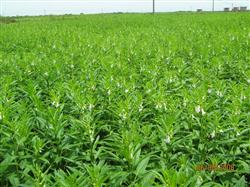 Sesame is an excellent oilseed crop. Sesame oil has a rich aroma, is nutritious, and also has certain medical and health benefits. Therefore, in recent years, demand for sesame has increased, and the area planted with sesame has expanded. When planting sesame, one issue must be given special attention: it cannot be grown in consecutive crops. That is to say, land that has already grown one crop of sesame in the previous year cannot be planted with it again the next year. Otherwise, high yield and high efficiency will not be achieved. Why can't sesame be grown in consecutive crops? There are mainly two reasons:
One reason is that consecutive cropping of sesame will worsen diseases. In the process of sesame production, many pathogenic fungi such as stem spot blight, bacterial wilt, and phytophthora blight remain in the soil after the sesame harvest and overwinter there. If sesame is planted again on the same land the next year, these pathogens will become the source of infection for the repeated sesame crop. The longer the repeated cropping period, the more pathogens there will be in the soil, and the more serious the sesame diseases will become. Infected by diseases, sesame plants will show symptoms such as poor development, shorter individual plants, and fewer flowers and capsules, and in severe cases large areas may even wilt and die.
The second reason is that sesame is a crop with relatively high fertilizer requirements, and consecutive cropping will lead to nutrient imbalance. According to experiments, for every 50 kg of sesame produced, it is necessary to absorb 4.50--5 kg of nitrogen, 1.25 kg of phosphorus pentoxide, and 5--5.50 kg of potassium oxide from the soil, with the ratio of these three elements being about 4:1:4.40. It can be seen that sesame needs relatively more nitrogen and potassium and relatively less phosphorus. If it is grown in consecutive crops, the soil fertility balance will be broken, causing a deficiency of nitrogen and potassium, and making it difficult to increase sesame yield. Therefore, consecutive cropping of sesame is unscientific and should be avoided.