Two High-Yield Techniques for Planting Eggplant in Autumn
Eggplant Verticillium wilt, commonly known as wilt disease, half-side madness, or black heart disease, is one of the important diseases of eggplant. It generally begins to develop after the first fruit sets. The disease usually progresses from the bottom upward or from one side to the whole plant, with yellowing between the leaf veins and wilting of the leaves. In the early stages, symptoms are pronounced at noon and recover to near normal in the morning and evening or on cloudy days; in the later stages, the whole plant...
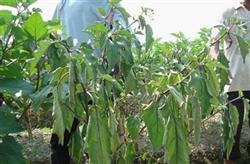 First, the old stump renewal method. Use old spring eggplant stumps to cultivate and rejuvenate them, so they regain vitality, flower, and bear fruit. The specific method is: in early August, when spring eggplants go from peak to decline and have few leaves and flowers, choose a time before or after rain when the soil is moist, first apply a watering of manure water and nitrogen fertilizer, and after two or three days cut off all branches and leaves, leaving only the main branch as the mother branch for new leaves to sprout. After about a week, the mother branch sprouts new branches and grows rapidly. On this basis, thin out weak and overly dense branches, pay attention to pest and disease control, topdressing, and drought resistance, and the new branches will soon flower and bear fruit, with the fruiting period lasting up to two months.
Second, the autumn seedling-raising method. Choose highly disease-resistant varieties, and select loose soil on high ground that does not accumulate water, especially hilly land where solanaceous vegetables have not been grown, which is even better. When sowing, cover with film if it rains, and use a shade net in strong sun. Transplanting can be done after more than 20 days. Transplanting is best on cloudy or lightly rainy days. If it is a sunny day, the evening is preferable, and water the roots well after planting. When preparing the land, make deep furrows and high beds as much as possible, so it can both drain and irrigate, and apply enough base fertilizer at one time. After the plants survive, management is similar to that for spring eggplant, but attention should be paid to pest and disease control and drought resistance. Because autumn eggplant coincides with the high-temperature season, its growth rate is generally faster than that of spring eggplant, and the flowering and fruiting time can also be delayed until late autumn to early winter.