Precautions for Using Pesticides in Pollution-Free Eggplant Cultivation
In cultivating pollution-free eggplant, the guiding principle should be prevention first when dealing with eggplant pests and diseases. If pests and diseases do occur, comprehensive control should be considered first, such as using natural enemies of pests (Trichogramma, seven-spotted ladybugs, etc.), "natural enemies" of pathogens (such as Jinggangmycin, streptomycin, abamectin, etc.), and combining...
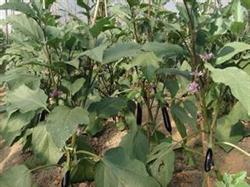
In cultivating pollution-free eggplant, the guiding principle should be prevention first when dealing with eggplant pests and diseases. If pests and diseases do occur, comprehensive control should be considered first, such as using natural enemies of pests (Trichogramma, seven-spotted ladybugs, etc.), natural enemies of pathogens
(such as Jinggangmycin, streptomycin, abamectin, etc.), combined with other highly effective, low-toxicity, low-residue chemical pesticides that are friendly to the surrounding environment. First of all, attention should be paid to avoiding the use of the following pesticides:
I. Pesticides banned from production: 666, DDT, chloropicrin, fluoroacetamide, white arsenic, ethylmercury chloride, and ethylmercury phosphate.
II. Highly toxic pesticides: methamidophos, phorate (3911), sulprofos (Suhua 203), parathion (1605), methyl parathion (methyl 1605), demeton (1059), monocrotophos, phosphamidon, isopropylphosphorus, trithion, omethoate, isocarbophos, chloropicrin, dibromochloropropane, 401, fenvalerate, and isofenphos-methyl.
III. High-residue pesticides: dicofol and chlordane.
IV. Pesticides compounded with the above highly toxic pesticides and high-residue pesticides: such as products compounded or mixed with methamidophos and isocarbophos.
V. Pesticide varieties that have not been verified and registered for use on vegetables.
Next, attention should be paid to the issue of the pesticide application safety interval: What is the pesticide application safety interval? Through the action of enzymes in the vegetable body, the action of soil microorganisms, the isomerization or cleavage of the pesticide itself, as well as photolysis and alkaline hydrolysis, and especially under the influence of climatic conditions, pesticide residues can gradually decrease to below the permitted standard. The number of days between the last application and the harvest date, ensuring that the residues in the harvested vegetables will not exceed the standard, is called the safety interval. Generally, when the temperature is high, it is 7-10 days, and when the temperature is low, it is 10-15 days. If the specific safety interval of a pesticide is not very clear, it is best to carry out the last application half a month before the vegetables are marketed.