Detailed Explanation of Key Points for High-Yield Cassava Cultivation Techniques
Cassava has a wide range of uses. In addition to food and feed, it is also an important raw material for producing industrial products such as starch, modified starch, distiller's grain, glucose, fructose, sorbitol, lysine, citric acid, dyes, coatings, and cosmetics. The products are of high value and in short supply. Cassava is easy to grow and highly adaptable, fertil...
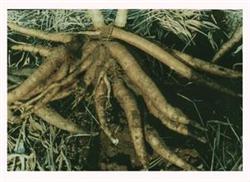
Cassava has a wide range of uses. In addition to food and feed, it is also an important raw material for producing industrial products such as starch, modified starch, distiller's grain, glucose, fructose, sorbitol, lysine, citric acid, dyes, coatings, and cosmetics. The products are of high value and in short supply.
Cassava is easy to grow and highly adaptable. It can also be planted on fertile or poor land and hillside slopes. Under general cultivation conditions, the yield per mu can reach about 2 tons. If management is strengthened, the yield per mu can reach 3-4 tons or more. If intercropped or relay-cropped with watermelon and leguminous crops, the output value per mu can be increased by more than 300 yuan, with an output value per mu of about 1,300 yuan.
I. Site Selection and Land Preparation
Site selection: Cassava is highly adaptable and does not have high requirements for soil conditions. It can be planted anywhere as long as there is no severe waterlogging or drought. However, to obtain a relatively high yield per mu, it is best to choose sandy loam with sufficient sunlight, deep, loose soil, and rich organic matter.
Land preparation: Deep plowing and harrowing are required, with deep plowing of 27-30 cm. If plowing and harrowing cannot reach this depth, the method of raising beds can be used to thicken the soil layer.
II. Selection and Treatment of Seed Stems
Selection of seed stems: The selection criteria for cassava seed stems are preferably the middle and lower sections of the main stem that are fully mature, thick and with closely spaced nodes, fresh and firm, with intact bud points, undamaged bark, not dried out, not overripe and rotten, free of pests and diseases, with green cortex, and with latex flowing out when cut.
Treatment of seed stems: After selecting the seed stems, cut the cassava seed stems into small sections with 2-3 effective buds each (do not let the epidermis split or damage the bud eyes). Soak the cut seed stems in diammonium or lime water for disinfection. The stems should be cut, disinfected, and planted on the same day.
III. Cultivation Methods
1. Pure planting: Cassava is generally planted in pure stands, which is easy to manage, but the land utilization rate is low and the output rate is low.
2. Intercropping and relay cropping: Cassava grows slowly in the early stage, and the space between plants and rows is open and lets light through, making it suitable to promote intercropping and relay cropping. Intercropping and relay cropping do not affect the growth and development of the main crop, and are also beneficial to the growth of cassava, increasing the multiple cropping index per unit area, improving the utilization of light energy and land, increasing the yield per unit area, and improving economic benefits. Intercropping and relay cropping mainly focus on short-duration, short-stalked crops such as watermelon, small pumpkin, hairy gourd, red melon seeds, peanut, soybean (4476,19.00,0.43%), and mung bean. Early corn (2323,5.00,0.22%) can also be intercropped, or intercropping and relay cropping can be carried out in young fruit tree orchards.
3. Plastic film cultivation
Plastic film mulching cultivation improves the ecological conditions of the tillage layer, coordinates the relationship among water, heat, air, fertilizer, and soil microorganisms, and plays a role in raising temperature, preserving water, conserving soil, preserving fertilizer, and preventing weeds. It allows earlier planting at the end of February and the beginning of March, promotes early sprouting and early growth, reduces soil moisture evaporation, keeps the soil moist and loose, is beneficial to cassava growth and tuber root enlargement, and increases yield by more than 30%.
The method is: on plowed and harrowed land, raise beds according to row spacing (1 m), apply the required fertilizer all at once in the middle of the bed and mix it evenly with the soil (generally apply 500-750 kg of farmyard manure, 25 kg of compound fertilizer, 20 kg of nitrogen fertilizer, 25 kg of potassium fertilizer, and 25 kg of phosphate fertilizer per mu), cover the bed surface with 1 m wide plastic film (about 5 kg of film per mu, market price 6.6 yuan/kg, input about 33 yuan per mu), compact the edges of the plastic film with soil, then insert cassava seed stems into both sides of the bed film according to plant spacing (0.8-1 m), with the seed stems exposed 3-5 cm above the ground. Note that film-covered planting should be carried out after rain or when the soil is moist to ensure the germination rate of the seed stems.
IV. Main Cultivation Techniques for Open-Field Planting
(1) Select good varieties. Cassava King, South China 124, Selected 124, Luyute, GR911, Nanzhi 199, Brazil No. 7, Brazil No. 2, Nanzhi 105, Xinxuan 056, Xinxuan 01, etc. Tests have shown that these varieties all increase yield by more than 16% compared with the original main variety, and they are currently relatively high-yielding varieties in our city.
(2) Apply sufficient base fertilizer. The suitable application ratio of the three elements nitrogen, phosphorus, and potassium for cassava is N:P:K=2:1:2-3. Potassium fertilizer has a clear yield-increasing effect on cassava. The basic principle of fertilization is to apply sufficient base fertilizer, apply seedling-strengthening fertilizer early, apply tuber-setting fertilizer heavily, and apply appropriate tuber-strengthening fertilizer. For base fertilizer, generally apply 25 kg of phosphate fertilizer, 500-750 kg of farmyard manure, and 15-25 kg of compound fertilizer per mu.
(3) Sow at the right time. Sowing can be done when the daily average temperature is above 15°C. If the temperature is too low, the seeds will not germinate in the soil for a long time after planting, and will dry out or mold, losing germination ability. In our city, planting is generally done in early to mid-March.
(4) Planting methods. Cassava planting methods include flat placement, slanting insertion, and vertical insertion. The three methods each have advantages and disadvantages. In production, the slanting insertion method or flat placement method is used. The flat placement method saves labor and is fast, with tubers forming shallowly and distributed horizontally, making harvesting easy, but germination is slower and missing plants are likely. This method is suitable for soil with shallow, poor topsoil and sticky, compact subsoil. The slanting insertion method emerges quickly and neatly, with a high emergence rate, and tubers extend in one direction, making harvesting more convenient, but wind resistance is poorer and lodging is likely.
(5) Reasonable close planting. The planting density of cassava depends on soil fertility and variety. The general planting density is 600-1,000 plants/mu. Plant spacing and row spacing are 0.8-1 m × 1 m. For fertile soil or varieties with strong branching, the planting spacing can be wider; for soil with poorer fertility or upright plant-type varieties, appropriate close planting can be used.
(6) Field management
1. Replanting. To ensure a full stand, replant missing plants in time when found. This usually starts 20 days after planting and is completed within 30 days. For all replanted seedlings, topdressing should be carried out immediately after survival so that they catch up with normal growth.
2. Thinning. After planting, cassava usually has 2-4 or more young shoots emerging. If allowed to grow freely, each hole will have multiple main stems, causing shading and consuming nutrients. Generally, thinning is carried out after full emergence when the seedlings are 15-20 cm high, and it is suitable to keep 1-2 seedlings per hole.
3. Cultivation and weeding. Cassava tuber roots need loose, well-aerated topsoil to develop well. Therefore, cultivation and weeding within three months after planting are the key period for promoting tuber root growth and increasing yield per plant. Generally, 30-40 days after planting, when the seedlings are 15-20 cm high, the first cultivation and weeding can be carried out to promote seedling growth. The second cultivation and weeding can be carried out 60-70 days after planting. At 90-100 days after planting, if needed, a third cultivation and loosening of the soil can be carried out.
4. Topdressing. At 40-60 days after planting, when the seedlings are 20-30 cm high, apply seedling-strengthening fertilizer early, with 7.5-10 kg of urea and 5-7 kg of potassium fertilizer per mu, to promote neat and sturdy seedling growth; from May to July, when the seedlings are 60-90 cm high, combine with cultivation and weeding and heavily apply tuber-setting fertilizer to promote tuber formation and increase tuber number, with 10 kg of urea and 15 kg of potassium fertilizer per mu. From September to October, when the seedlings are 100-130 cm high, combine with earthing up and wind protection, and appropriately apply a small amount of tuber-strengthening fertilizer, with 5-7 kg of potassium sulfate (or potassium chloride) per mu. The fertilization method is to open furrows, apply, and cover with soil.
5. Spray paclobutrazol according to seedling condition. For cassava with sufficient fertilization and excessively vigorous seedling growth, at seedling heights of 30-50 cm, 80-100 cm, and 130-150 cm respectively, use 2 packets of paclobutrazol + 1 liang of potassium dihydrogen phosphate mixed with 30 jin of water and spray on the top and young tender parts of cassava, preferably wet but not dripping. This can increase yield by about 20-30%.
(7) Pest and disease control
Carry out timely control according to the occurrence of pests, diseases, and rodent damage.
(8) Timely harvest and seed stem storage
1. Cassava harvest. The signs of cassava maturity are that the leaf color turns slightly yellow, the old basal leaves fall off, the tuber cortex becomes thick and rough, the external color darkens, and the tuber skin easily separates. This indicates maturity and it can be harvested.
2. Seed stem storage. Burial method: seed stems should be harvested and stored before frost. The method is to choose a sheltered, sunny place with higher position and no water accumulation, dig a pit 30-50 cm deep with a hoe, with width depending on the length of the seed stems and length depending on need, generally not exceeding 15 m, and height about 1 m. Stack the seed stems neatly in the pit, cover with 5-10 cm of soil, form an arched back shape, and leave 3-5 ventilation holes.