Which fungicides give good control of tomato leaf spot?
★Symptoms: Tomato leaf spot, also known as white star disease. It can occur at all growth stages of tomato and attacks leaves, petioles, stems, calyxes and fruits. When leaves are infected, water-soaked small round spots first appear on the underside of the leaf, then numerous small spots with dark brown edges and grayish-white, round or nearly round, slightly sunken centers appear on both the upper and lower surfaces of the leaf. The lesions...
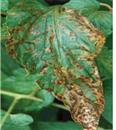
★Symptoms: Tomato leaf spot, also known as white star disease. It can occur at all growth stages of tomato and attacks leaves, petioles, stems, calyxes and fruits. When leaves are infected, water-soaked small round spots first appear on the underside of the leaf, then numerous small spots with dark brown edges and grayish-white, round or nearly round, slightly sunken centers appear on both the upper and lower surfaces of the leaf. The lesions are 1.5-4.5 mm in diameter, with a few small black dots scattered on the surface. The small spots then merge into large blighted patches, and sometimes the diseased tissue falls out, causing shot holes. In severe cases, all the middle and lower leaves dry up, leaving only a few healthy leaves at the top; stem and fruit lesions are nearly round or oval, slightly sunken, brown, with scattered small black dots on them..
★Pathogen: Septoria lycopersici SPeg., called tomato shell needle spore, a fungus of the subphylum Deuteromycotina. The pycnidia are spherical or flattened spherical, black, initially embedded under the host epidermis, later partly breaking through the epidermis and appearing as small black dots. The shell wall is relatively loose. Some mycelium often adheres to the outside of the wall, measuring 49-122.5 x 49-128.6 microns; the outer wall of the ostiole is relatively thin, 7.5-57.5 microns in diameter. Conidia are borne at the bottom of the flattened spherical pycnidium in large numbers and escape through the ostiole when mature. Individual conidia are colorless, needle-shaped, straight or slightly curved, with 3-9 septa, measuring 45-90 x 2.3-2.8 microns.
★Transmission routes and conditions for disease development: The fungus overwinters as mycelium and pycnidia in diseased plant residues, on perennial solanaceous weeds or attached to seeds, becoming the primary infection source the following year. Generally, after the pycnidia absorb water, the gelatinous material inside dissolves, the conidia escape, and they are spread by wind and rain or splashed by rainwater onto tomato plants, entering through the stomata. Pycnidia and conidia are then produced on the diseased parts, expanding the damage. The optimum temperature for fungal development is 22-26°C; development is poor below 12°C and above 27.8°C. Conidia are killed after 10 minutes at 52°C. High humidity favors the release of conidia from the pycnidia, with a suitable relative humidity of 92-94%; if the humidity does not reach this level, the disease does not occur. If there is frequent rain, especially when it clears up after rain, and tomato plants are weak and fertilizer is insufficient, the disease is likely to occur. At an air temperature of 20-25°C, the incubation period is 4 days.
★Control methods:
(1) Use new soil or a sunny seedbed or plot that has not grown solanaceous vegetables within two years for raising seedlings, and practice a 3-4 year rotation in the planting field.
(2) Keep seed from disease-free plants, soak the seed in warm water at 52°C for 30 minutes, remove, dry and then germinate and sow.
(3) Choose disease-resistant varieties such as Puhong No. 1, Guangqie No. 4 and Shuz
(4) Use high-ridge cultivation, plant at a moderately close spacing, and pay attention to field drainage to reduce humidity.
(5) Strengthen field management, apply fertilizer rationally, increase the application of phosphorus and potassium fertilizers, and spray a 4000-fold dilution of Duoxiaohao or a 6000-8000-fold dilution of 1.4% sodium compound of nitrohumic acid aqueous solution to improve disease resistance; avoid planting too densely, and keep the field well ventilated and lit with a dry soil surface; after harvest, bury diseased plant debris deeply or burn it.
(6) In the early stage of the disease, spray a 400-500-fold dilution of 64% oxadixyl mancozeb wettable powder, or a 500-fold dilution of 58% metalaxyl mancozeb wettable powder, a 600-fold dilution of 75% chlorothalonil wettable powder, a 500-fold dilution of 50% mixed sulfur suspending agent or 40% sulfur multi-suspending agent, or an 80-100-fold dilution of 27% high-fat film emulsion, once every 10 days or so, for 2-3 consecutive treatments depending on the severity of the disease.