Eight Key Factors for Producing High-Quality Malting Barley
The Yancheng area of Jiangsu Province is an important production region for malting barley in China, with annual output accounting for about 15% of the country's total malting barley production, but its yield and quality are often subject to great variation due to climatic conditions. Here is an analysis of the main factors affecting high-quality malting barley production and the countermeasures that should be taken. 1. Soil...
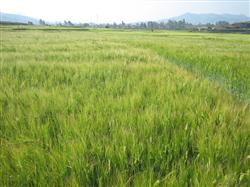
The Yancheng area of Jiangsu Province is an important production region for malting barley in China, with annual output accounting for about 15% of the country's total malting barley production, but its yield and quality are often subject to great variation due to climatic conditions. Here is an analysis of the main factors affecting high-quality malting barley production and the countermeasures that should be taken.
1. Soil: First, do a good job of basic farmland water conservancy construction, ensuring that ditches, canals, roads and shelterbelts are all in place to form a relatively complete agricultural ecosystem; second, persist in returning all crop straw to the field to improve soil structure and increase soil organic matter content; third, in fields with relatively heavy salinization, adopt a cropping system of alternating paddy and dryland cultivation.
2. Variety: High-yielding, high-quality varieties are the primary guarantee for improving returns. Currently, the malting barley varieties in production still need further improvement in both appearance and intrinsic quality, which requires breeding institutions to increase investment in this area and breed malting barley varieties with stronger adaptability and better quality.
3. Sowing date: The optimal sowing period for malting barley in this region is from October 25 to November 5. Before sowing, the barley seed should be soaked in fresh water to promote germination; provided soil moisture permits, direct sowing after rotary tillage with a rotary tiller not only advances sowing by 2-3 days but also saves sowing costs.
4. Basic seedlings: For malting barley sown at the appropriate time, the suitable basic seedling number is about 2.25 million per hectare; for early sowing at the appropriate time, it should be reduced by 10-15%, while for late sowing, the seeding rate can be increased and row spacing narrowed to raise the basic seedling number and ensure sufficient ears. For example, for Supi No. 3 with a yield of 6,375-7,125 kg per hectare, the basic seedling number and tiller dynamics for a 1,000-grain weight above 42 grams are: basic seedlings 2.25-2.55 million per hectare, seedlings at the beginning of overwintering 8.10-8.55 million per hectare, and peak seedlings 18.00-19.50 million per hectare, about twice the expected number of ears.
5. Fertilizer management: According to the growth and development patterns and characteristics of barley, fertilizer management should follow the principle of "heavy at the front, controlled in the middle, supplemented at the end": basal fertilizer should be applied sufficiently, tillering fertilizer appropriately early, and jointing-booting fertilizer should be applied when 2 leaves remain in leaf age, otherwise grain protein content will increase markedly, which is unfavorable for quality and also increases the risk of lodging. For the ratio of basal to topdressing fertilizer, nitrogen fertilizer should be 60-65% basal, 20-25% for strong tiller fertilizer, and 15-20% for jointing-booting fertilizer; phosphorus and potassium fertilizer should be 75% basal and 25% for jointing-booting fertilizer.
6. Water: A high-standard field ditch network should be established, with three types of ditches supporting each other: furrow-surface ditches, cross-waist ditches and drainage ditches, all connected to one another. Vertical ditches on the furrow surface should be 3.6 m apart, with a depth of more than 20 cm, and cross ditches 50 m apart, with a depth of more than 30 cm, so as to truly drain water as soon as it appears and ensure vigorous root activity of malting barley.
7. Pesticides: Pesticides with high efficiency, low toxicity and low residue should be selected, organophosphorus pesticides should be avoided, and biological pesticides should be actively adopted. During the peak period for disease and pest control in malting barley, timely control should be carried out against powdery mildew, fusarium head blight and aphids, and highly toxic, high-residue pesticides must not be used within 1 month before harvest.
8. Harvest time: Harvesting at the right time can improve both the yield and brewing quality of malting barley, and it is best to harvest promptly when the grains enter the fully ripe stage. After harvesting, spread the grain out to dry promptly so that when the grain moisture content falls below 13% it can be safely stored, maintaining a relatively high germination rate and improving processing quality.