How to seek advantages and avoid disadvantages in malting barley production
Affected by the warm winter climate, malting barley tillering increases, the population becomes larger, growth is ahead of schedule, jointing is earlier, and it is prone to late spring cold damage, and the risk of lodging rises. Based on the reality of winter climate warming, adopting measures in malting barley production to prevent possible freeze damage and lodging can maximize the pursuit of advantages...
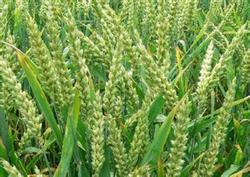
Affected by the warm winter climate, malting barley tillering increases, the population becomes larger, growth is ahead of schedule, jointing is earlier, and it is prone to late spring cold damage, and the risk of lodging rises. Based on the reality of winter climate warming, adopting measures in malting barley production to prevent possible freeze damage and lodging can maximize the pursuit of advantages and avoidance of disadvantages.
Select varieties according to local conditions. According to the climate characteristics and planting habits of each area, choose suitable malting barley varieties. Generally, winter-type varieties are selected between the Huang-Huai region, semi-winter-type varieties are selected in the northern Jianghuai region, spring-type varieties are mainly used in the southern Jianghuai region, and spring-type varieties are suitable for planting south of the Yangtze River. In the southern Jianghuai region and south of the Yangtze River, continuous rainy weather often occurs from April to May, so varieties with strong waterlogging tolerance and good lodging resistance should be selected.
Appropriately delay the sowing date. Under the climate conditions of a warmer winter, appropriately delaying the sowing date of malting barley can prevent plants from jointing before winter and suffering freeze damage. The specific sowing time should aim at overwintering with strong seedlings, according to the indicators of active accumulated temperature before overwintering (December 20) of 400°C for spring-type varieties, 450°C for semi-winter-type varieties, and 500°C for winter-type varieties, and should be reasonably determined in combination with local climate characteristics. In normal years, the winter barley region in the middle and lower reaches of the Yangtze River is sown from mid-October to mid-November. In warm winter years, sowing should be appropriately delayed by 7-10 days to avoid freeze damage caused by too early sowing and advanced growth.
Reduce seeding rate to control the population. In malting barley production, it is necessary both to make full use of the advantage of relatively high winter temperatures in a warm winter to increase tillering and ear formation, and to maintain a reasonable malting barley population to reduce the risk of lodging. The seeding rate can be appropriately reduced to control a reasonable starting population. The suitable seeding rate is 8-10 kg per mu, and the basic seedlings per mu should be kept at 120,000-150,000.
Adaptive management to ensure a bumper harvest. Under warm winter climate conditions, for wheat fields with a tendency to excessive growth, promptly adopt agricultural measures such as winter compaction, irrigation with river mud slurry, and row thinning of overly dense seedlings to control them and ensure a reasonable population. At the green-up stage, 40-50 g of paclobutrazol per mu can be sprayed to control height and prevent lodging. Before a spring cold wave arrives, appropriately carry out soil-moisture piercing and soaking irrigation to improve heat preservation and moisture conservation. For weakly growing wheat seedlings, appropriately apply balanced fertilizer to improve the plant's cold resistance. After freeze damage occurs, apply additional fertilizer according to the degree of freeze injury to promote plant recovery. For fields where the rate of freeze injury or death of main stems and tillers is below 20%, apply 5-7.5 kg of urea per mu; for fields where the rate of freeze injury or death of main stems and tillers is 30%-60%, apply 10-15 kg of urea per mu to promote tillering and ear formation and reduce disaster losses.