Good results with plastic film mulching cultivation of spring peanuts
Applying film mulching cultivation technology in peanut production can raise temperature, ensure full stands, retain water and preserve fertilizer, thereby achieving the goals of increased yield and income. In 2002, the author conducted a comparative experiment on film mulching cultivation of spring peanuts, achieving a plot yield of 402 kg per mu, a field yield of 367 kg per mu, and...
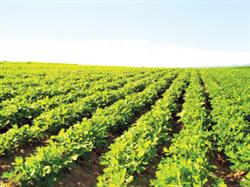 To achieve high yields of spring peanuts, in addition to selecting suitable improved varieties, cultivation techniques are also very important. The sowing period for spring peanuts is generally from "Awakening of Insects" to "Spring Equinox," when cold waves are frequent, temperatures are low, and rain is plentiful, which is unfavorable for peanut emergence and full stands. Promoting plastic film mulching cultivation technology for peanuts not only overcomes the problems of slow and uneven emergence and difficulty in achieving full vigorous stands, but also yields significantly higher than open-field cultivation. According to comparative experiments, film mulching cultivation compared with open-field cultivation reaches 310-358 kg per mu, an increase of more than 20-25%. Four main techniques should be mastered:
First, fertilization and land preparation. Film mulching cultivation of peanuts is not convenient for topdressing, so sufficient base fertilizer should be applied. When plowing for sowing, apply 1000 kg of farmyard manure, 40 kg of superphosphate, and 30 kg of lime per mu as base fertilizer. Then plow by beds, making the soil layer and fertilizer finely and evenly mixed, and level the bed surface, with a bed width of 70 cm and a bed height of 16-18 cm, then wait for sowing.
Second, timely early sowing. The sowing period can be 7-10 days earlier than open-field cultivation, so as to emerge early, which is conducive to early maturity and high yields. In order to advance the season and extend the growth period, use seed soaking and sprouting before sowing; after sowing, full emergence occurs in 5-8 days, more than 7 days earlier than sowing dry seed. Use wide and narrow rows to take advantage of light sources, with wide rows of 40 cm, plant spacing of 15 cm, two seeds per hole, sowing about 18,000 plants per mu. After sowing, cover the seed with ash fertilizer mixed with an appropriate amount of decomposed stable manure and wet sand.
Third, timely film covering. When covering with film, pull it tight and lay it flat, pressing it closely against the ground, then compact the edges of the film with soil, so as to raise soil temperature and control adverse effects such as weeds pushing up the film and wind damage. After the peanuts have emerged uniformly, puncture the film, and press the film around the holes.
Fourth, strengthen field management. After sowing peanuts, frequently inspect and promptly repair tears in the film to prevent rodent damage and the film being lifted or torn by wind. After clearing the seedlings, let the two cotyledons receive sunlight to promote early and rapid growth of the first pair of lateral branches; where seedlings are missing, use sprouted seeds to fill in promptly. Generally no topdressing is needed; if during the seedling stage fertilizer deficiency is found and the seedlings are too weak, foliar spray with monopotassium phosphate plus 1% urea solution 1-2 times. Other field management is the same as open-field cultivation.