What are the methods for controlling aphids on mung bean vegetables?
① Resistant varieties: Within the same vegetable species, different varieties have different resistance to insects. For example, aphids generally dislike feeding on some hairy varieties, and these can be selected according to local conditions. ② Clean the field: Clear weeds from the field promptly and repeatedly, especially when weeding in early spring and late autumn, which can eliminate many sources of insects. During the growing period, promptly pull out plants with more insects...
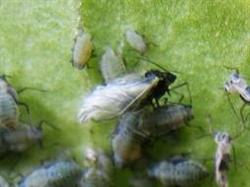
(1) Resistant varieties: Within the same vegetable species, different varieties have different resistance to insects. For example, aphids generally dislike feeding on some hairy varieties, and these can be selected according to local conditions.
(2) Clean the field: Clear weeds from the field promptly and repeatedly, especially when weeding in early spring and late autumn, which can eliminate many sources of insects. During the growing period, promptly pull out seedlings with more insects to reduce the insect population.
(3) Use of natural enemies: Aphids have many natural enemies, which should be protected and used. When applying chemical control, pesticides that harm natural enemies as little as possible should be used.
(4) Gauze net seedling raising: Using gauze for cultivation can block aphids from invading and causing damage.
(5) Eliminate overwintering insect sources: In overwintering spinach; cruciferous seed-bearing plants; peach trees and other places where aphids overwinter, when aphids have not yet migrated in spring, use stronger pesticides for control to reduce the insect sources for that year. In areas with developed protected cultivation, be sure to promptly eliminate aphids inside the facilities to prevent overwintering aphids from migrating into open fields.
(6) Sow early at the appropriate time: Sowing appropriately earlier allows the damage period to occur after the plants have grown larger, which can reduce the severity of aphid damage.
(7) Silver-gray film repellency: Vegetable aphids have a negative tropism toward silver-gray. During the vegetable growing season, hanging silver-gray plastic strips in the field; or inserting silver-gray supports; or laying silver-gray plastic film, etc., can all reduce aphid damage.
(8) Yellow sticky boards for aphids: Taking advantage of aphids' strong tropism toward yellow, some wooden boards 60-80 cm high and 20 cm wide can be inserted in the field and coated with yellow grease to stick and kill aphids.
(9) Chemical control: At present, aphid control is mainly chemical control. In chemical control, the principle of early prevention should be followed. Commonly used agents include 50% pirimicarb wettable powder or water-dispersible granules at 2000-3000 times dilution, which has a special effect on vegetable aphids and does not harm natural enemies, or 50% malathion emulsifiable concentrate, or 20% diazinon emulsifiable concentrate, or 25% quinalphos emulsifiable concentrate each at 1000 times dilution, or 40% dimethoate emulsifiable concentrate at 1000-1500 times dilution, or 50% dichlorvos emulsifiable concentrate at 1000 times dilution, or 70% menazon wettable powder at 2500 times dilution, etc., or 10.8% caesar emulsifiable concentrate at 10000-20000 times dilution. The above pesticides are sprayed. In protected cultivation, 22% dichlorvos smoke agent can be used, with 0.5 kg per mu (666.7 sq m), and fumigated in a closed space.