How to prevent premature aging in ginger? Master these prevention methods
Ginger has a long seedling stage and grows slowly. When the weather turns cool in autumn, its above-ground stems and leaves and underground rhizomes enter a vigorous growth period at the same time. On the one hand, a large number of branches form above ground; on the other hand, the underground ginger rhizome expands rapidly, and the growth rate speeds up greatly. Therefore, this period is the key period for cultivation management. According to ginger's...
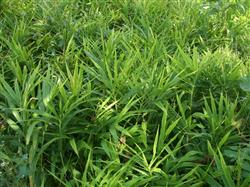
Ginger has a long seedling stage and grows slowly. When the weather turns cool in autumn, its above-ground stems and leaves and underground rhizomes enter a vigorous growth period at the same time. On the one hand, a large number of branches form above ground; on the other hand, the underground ginger rhizome expands rapidly, and the growth rate speeds up greatly. Therefore, this period is the key period for cultivation management. According to ginger's growth pattern, in order to increase yield and prevent premature aging, the following measures should be taken in management:
Sufficient topdressing To promote ginger tillering and rhizome expansion, a "major topdressing" should be applied in autumn. The fertilization standard is: per mu, use 3000 kg of decomposed chicken manure, 70-80 kg of cake fertilizer, and 20 kg of ammonium sulfate (the cake fertilizer can be replaced by 75 kg of cooked black beans or soybeans, and the ammonium sulfate can be replaced by urea). For plots that have already been topdressed with "diammonium phosphate" and urea, chicken manure can be supplemented with irrigation. When the ginger seedlings have more than 6 branches, apply topdressing again, with 20 kg of ammonium sulfate (or urea) and 10 kg of potassium sulfate per mu, to prevent loss of vigor and premature aging.
Water according to the weather When ginger branches heavily and its rhizome expands, its water demand increases significantly. To meet the water requirements of this period, water in a timely manner according to weather conditions. However, if watering is too heavy and too frequent, it can also cause root rot, seed rot, and premature aging of stems and leaves. Therefore, generally water once every 4-6 days (for ginger intercropped under fruit trees, water less or not at all depending on the specific situation), following the principle of keeping the soil moist.
Timely weeding Ginger's seedling stage occurs in the hot, rainy season, when weeds grow in abundance; during the vigorous growth period, water and fertilizer conditions are good, and weeds also grow strongly. If weeding is not timely, weeds compete with ginger seedlings for fertilizer, water, and sunlight, and the ginger seedlings are prone to poor growth. Therefore, carry out timely intertillage and weeding to prevent weeds from overtaking the seedlings and causing premature aging of the plants.
Hill up soil at the right time The growth of ginger rhizomes requires dark and moist conditions. To prevent the rhizomes from being exposed above the ground after expanding, hill up soil in a timely manner. In early autumn, carry out the first hilling in combination with weeding and the "major topdressing," hilling the soil from the ridge backs onto the base of the plants and turning the furrows into ridges; afterward, carry out the second and third hillings in combination with watering. The interval between the two hillings is 10-15 days, with 5-6 cm of soil added each time, gradually making the ridge surface thicker and wider and creating suitable conditions for rhizome growth.
Foliar feeding In the middle and late stages of ginger growth, chemical fertilizer essence, special vegetable fertilizer, or urea water solution can be used for foliar spraying to extend the time of leaf photosynthesis, improve photosynthetic efficiency, promote plant growth and development, and prevent premature aging of leaves. Especially for poorly growing ginger seedlings (including weak seedlings and yellowing ginger seedlings), foliar feeding can be carried out earlier and the number of sprayings increased.
Gently lift the seed ginger According to market conditions, the seed ginger can be harvested and sold during ginger's vigorous growth period (also called "digging old ginger"). The method is: dig open the soil layer along the sowing direction to expose the seed ginger, press the stem base of the ginger seedling with the left hand, and gently lift the seed ginger with the right hand to separate it from the plant. Be careful not to shake the ginger seedling, to prevent root damage and premature aging. After removing the seed ginger, close the furrow promptly. For weak and small ginger seedlings, the seed ginger should not be removed, so as to avoid causing premature aging artificially.
Cover with a shed for protection To ensure a high yield of ginger, before the first frost arrives, cover with a shed to protect the plants and extend their growth time (according to relevant experts' research and practical experience, for every 1 day the ginger harvest period is delayed, the yield can increase by about 50 kg per mu). For the arched shed, control the daytime temperature at 25°C-28°C and the nighttime temperature at 15°C-18°C. Generally do not water, but pay attention to ventilation to prevent damage from harmful gases. In this way, ginger's growth period can be extended by about 20 days.