Vining management of winter melon should be carried out reasonably according to plant growth.
Winter melon has the effects of lowering blood pressure, protecting the kidneys, reducing weight and blood lipids, and beautifying the skin. Eating winter melon regularly is very beneficial to human health, especially for obese people. Below is an introduction to the cultivation methods of winter melon. 1. Field selection: choose sandy loam soil that faces the sun, drains well, has deep soil, and is rich in organic matter...
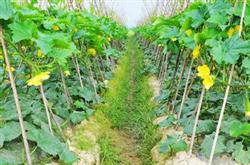 When winter melon fruit setting times are inconsistent, how should vines be lowered and plant growth be regulated? The following points should be done well:
First, plants that set fruit early should have their vines lowered by a smaller extent. Plants that set fruit early often have weaker growth because reproductive growth exceeds vegetative growth, while plants that set fruit late are mostly strong plants. If the vines are lowered to the same height, the vigorous plants will grow faster, and after a period of time the strong plants will shade the weak plants, affecting the weak plants' access to light, thereby making the weak plants grow weaker and weaker. Therefore, when lowering vines, the vigorous plants should be lowered about 10 cm more downward. This will promote more light exposure for the weak plants, help the plants recover and strengthen, and thus encourage consistent growth.
Second, for strong plants that set fruit late and whose fruit-setting nodes are higher up, the main vine should be allowed to climb along the wire. This is mainly because after lowering the vines, the fruit will touch the ground and develop deformed fruit. At the same time, the lower the fruit is, the less light it receives, the worse its coloring will be, and the fruit turning white will affect its marketability. Therefore, for such plants, do not rush to lower the vines. If the vine growth height exceeds the wire, the main vine should be allowed to climb along the wire in a north-south direction. At this time, the tendrils of the winter melon above the wire do not need to be removed; instead, let them naturally twine around the wire to prevent the main vine from bending and drooping, which could cause the winter melon vine to bend and break, affecting the growth of the winter melon.
Third, for weak plants, the lower fruits should be thinned out, first promoting the plants to recover and strengthen, and allowing them to set fruit at upper nodes. For late-fruiting strong plants, try to keep fruit near the lower part of the plant. By regulating the plants through early or late fruit setting, make their growth consistent, and then after picking the fruit, lower the vines uniformly and retain fruit uniformly, so that the height of the fruit above the ground is consistent, making future plant management easier.