Detailed Explanation of Greenhouse Cilantro Cultivation Methods and Technical Points
I. Sowing Cilantro is generally sown from late October to early December. After sowing cilantro and before emergence, apply 250 to 300 grams of 25% nitrofen wettable powder, or 100 to 200 grams of 50% prometryn wettable powder, per mu, mixed with 75 to 90 kg of water, stir evenly, and spray on the bed surface, which can achieve good weed control...
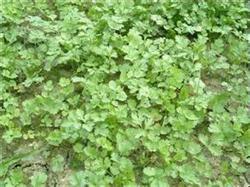
I. Sowing Cilantro is generally sown from late October to early December. After sowing cilantro and before emergence, apply 250 to 300 grams of 25% nitrofen wettable powder, or 100 to 200 grams of 50% prometryn wettable powder, per mu, mixed with 75 to 90 kg of water, stir evenly, and spray on the bed surface, which can achieve a good weed control effect.
II. Management Cilantro emerges about 8 days after sowing. Before emergence, the temperature should be higher, maintaining 20°C to 25°C during the day and 10°C to 15°C at night. After emergence, maintain 17°C to 20°C during the day and 10°C at night. When the daytime temperature exceeds 25°C, ventilate, and stop when it drops to 20°C. When the seedlings are 4 to 5 cm tall, thin them so that the plant spacing is maintained at 2 to 3 cm. Cilantro is generally not watered during the seedling stage. When the seedlings are about 10 cm tall, they enter the peak growth period. You can choose a sunny morning to water and fertilize, applying 10 to 15 kg of ammonium sulfate or 5 to 10 kg of ammonium nitrate per mu. During the growing period, topdressing is needed once and watering 2 to 3 times. Cilantro grows relatively fast; it can be harvested 30 to 50 days after sowing, when the plants are about 20 cm tall.
III. Pest and Disease Control The main pests of cilantro are aphids and cutworms. For aphid control, use 50% pirimicarb or 50% biaphthrin wettable powder at 2000 to 3000 times dilution, spraying once every 6 to 7 days, for 2 to 3 consecutive applications.