How do you grow asparagus? All the detailed growing methods are right here
Request: Asparagus growing methods, the more detailed the better. Is there anyone who can provide technical guidance? Asparagus is currently one of the highly efficient cash crops, ranking first among the world's top ten famous vegetables, and enjoys the reputation of "King of Vegetables" on the international market. Asparagus is rich in albumin and various amino acids that can inhibit the growth of cancer cells, and is an anti-fatigue...
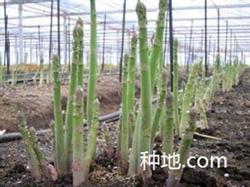
Request: Asparagus growing methods, the more detailed the better. Is there anyone who can provide technical guidance?
Asparagus is currently one of the highly efficient cash crops, ranking first among the world's top ten famous vegetables, and enjoys the reputation of "King of Vegetables" on the international market. Asparagus is rich in albumin and various amino acids that can inhibit the growth of cancer cells. It is a nutritional tonic for anti-fatigue and boosting physical strength, and has medicinal value such as preventing cancer, fighting cancer, lowering blood lipids, and preventing coronary heart disease. Therefore, asparagus is in very short supply in domestic and international markets, with demand exceeding supply, and its development prospects are very broad. Growing asparagus has become a new economic growth point in current crop farming, and is the main content of "three-high" agricultural development. At present, protected cultivation of asparagus in China has just started. The total area of greenhouse asparagus cultivation nationwide is less than 20 hectares, and the daily supply during the harvest period is less than 2,000 kilograms, so the market prospects are promising. The selling price of asparagus is more than ten times the price of other protected vegetables, and a single planting can be harvested continuously for more than 20 years, so the economic benefits are astonishing.
For protected cultivation of asparagus, cold northern regions need winter-warm greenhouses, the Huang-Huai River basin uses large arch sheds, and areas south of the Yangtze River basin use bread sheds or small arch sheds.
1. Asparagus seed selection: first-generation hybrid varieties such as Asparagus Prince, Grande, Champion, and Apollo.
2. Seedling raising time: In northern regions, asparagus can be raised in open fields from March to September, and with a greenhouse it can also be raised in winter; in southern regions, seedlings can be raised year-round.
3. Seed soaking and sprouting: In spring, soak in warm water at 30-35°C for 2-3 days (for summer and autumn seedling raising, soak in cold well water). After pouring off the water, cover with a wet towel to promote sprouting, rinse the seeds with clean water twice a day to avoid seed suffocation, and sow once 10% of the seeds have sprouted white.
4. Sowing method: Choose sandy loam soil and prepare the beds. Sow 50 grams of seed per 20 sq m, water thoroughly to the bottom, draw lines at a row spacing and plant spacing of 10 cm, place a single seed in the center, and cover with 2 cm of sieved fine soil.
5. Transplanting and field planting: Asparagus is best transplanted in June-July, because this shortens field management time, and it can be harvested around the Spring Festival of that same year, giving quick results. You can also transplant seedlings from the previous year; these seedlings are larger and older, and yield more than seedlings raised in spring of the same year.
Greenhouse asparagus uses an east-west orientation for the shed and north-south orientation for transplanting, with a row spacing of 120 cm and a plant spacing of 25 cm, planting 36 plants per row. To ensure asparagus harvest in the winter of that same year, fertilizer and water management should be strengthened in summer and autumn.
6. Summer management: To accelerate asparagus growth, from mid-July to mid-August, apply 50 kilograms of compound fertilizer per 667 sq m, water promptly after application, and strengthen pest and disease management during the rainy season.
7. Clearing the field: In November, water thoroughly once, and after a few days gather up the dried aboveground stems and clear the field.
8. Covering the shed: Use a single-slope large arch shed, surround the north slope with corn stalks, etc., and cover the shed with straw mats. Inside the shed, set up small arch films 70 cm high for each row.
9. Harvesting: According to temperature and growth conditions, when the shoots grow to about 25 cm before the Spring Festival, harvest along the ground for market. In the first year, after harvesting the asparagus field for two months (about 350-400 kilograms harvested per 466 sq m), stop harvesting and let the remaining stems (mother stems) continue to grow. In June-July, harvest summer asparagus for another two months.
As the age of the asparagus increases, the harvest period is appropriately extended, but do not harvest excessively just for the sake of high prices.