How to save celery seeds? Key technical points explained in detail
How do you save celery seeds? What should you pay attention to? Celery is a cold-hardy vegetable; before flower bud differentiation it needs low temperatures below 10°C, and vernalization is completed in about 10-15 days. However, it must grow to a certain size, about 3-4 leaves, before it can perceive low temperatures, and the longer seedlings are exposed to low temperatures, the higher the bolting rate. ...
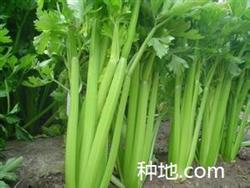
How do you save celery seeds? What should you pay attention to?
Celery is a cold-hardy vegetable; before flower bud differentiation it needs low temperatures below 10°C, and vernalization is completed in about 10-15 days. However, it must grow to a certain size, about 3-4 leaves, before it can perceive low temperatures, and the longer seedlings are exposed to low temperatures, the higher the bolting rate. Celery that has passed through vernalization will only flower and bolt under long-day conditions. Therefore, celery sown in early spring will bolt in the same year, while summer and autumn celery can remain in the vegetative growth stage for a long time, continuously forming new leaves, and only after experiencing winter low temperatures will it bolt and flower the following spring.
Therefore, there are two methods for saving celery seeds: one is the old-root seed-saving method, and the other is the small-plant seed-saving method.
1. Old-root seed saving. The method of overwintering old roots from open-field autumn cultivation, then transplanting them in spring to save seeds, is called the old-root seed-saving method. The advantage of this method is that seed standards allow strict selection, selection of superior plants and purification, and seed yields are relatively high. The disadvantage is that storing the seed plants takes more labor, and if they are damaged by heat or frozen during storage, the survival rate after transplanting is low. ① Cultivation of old roots. There are two methods for growing celery old roots for seed saving: one is, after cutting and harvesting four-groove celery twice, extending the final cutting harvest to around October 20; the other is sowing late in early July, specifically to cultivate old roots. Regardless of the method, around Frost's Descent the celery must be lifted out with the roots, and robust plants with the variety's characteristics selected as seed plants. The selected seed plants should retain 2-3 cm long leaf stalks, have the aboveground part cut off, the fibrous roots removed, and be dried in the sun for 2-3 days. At the end of October, they are placed into a vegetable cellar for storage. ② Storage of old roots. Before and after being put into the cellar, they must be protected from freezing and from heat damage and rotting. Generally, a Chinese cabbage cellar can be used for storage. If the quantity is large, a separate cellar can also be dug for storage. Generally, heap storage is more common, but it is best to store them using sorghum stalk tubes (zhanzi). Make a cylindrical "zhanzi" from sorghum stalks 150 cm high and 50 cm in diameter. Then, put the selected and prepared celery old roots into the "zhanzi". Passageways must be left between the "zhanzi" to allow ventilation and turning. The storage temperature is 0 to -2°C; above 0°C they are prone to damage and rot, and below -4°C they freeze. In the early storage period, turn them once every 3-5 days; from December to February of the following year, when the cellar temperature is relatively low, turn them once every 10-15 days; from March until before transplanting, when the cellar temperature rises, turn them once every 4-5 days. The turning method is for two people to lift the "zhanzi" in place, so the celery old roots fall out from the bottom; then move the "zhanzi" to another position, pick out the rotted old roots, and put the rest back into the "zhanzi". ③ Transplanting and field management of old roots. Generally transplant in early to mid-April, with row spacing of 56 cm and hole spacing of 43 cm, with 2-3 plants per hole. Apply 3000-5000 kg of base fertilizer per mu, form ridges before planting, roll once with a roller, make holes and plant, cover with 1.5 cm of soil, and roll another 1-2 times after planting. Ridge planting is better than bed planting because it facilitates drainage and results in lighter disease. After transplanting, hoe and cultivate frequently. From when the lower branches of the seed plants emerge evenly until before the rows close, mound soil several times to preserve moisture and prevent lodging. Generally, bolting and bud appearance occur in mid to late May, and flowering begins in early to mid-June. Before bolting and bud appearance, and in early to mid-June when flowering begins, attention should be paid to "controlled seedling" before bud appearance, appropriately controlling water to prevent excessive branching, so as to avoid delaying bud appearance and flowering and affecting seed yield. After flowering, strengthen fertilizer and water management, apply quick-acting phosphate fertilizer and nitrogen fertilizer 2-3 times, and irrigate 3-4 times. When most inflorescences have set seed, pinch off the growing tips to make the seeds plump. During the rainy season, drain water and prevent waterlogging in time, and spray pesticides in time to control aphids, root maggots, and so on. In late May, set up trellises to prevent lodging. ④ Isolation. When saving seeds among celery varieties, attention should be paid to isolation. For saving stock seed, the distance from other celery varieties and same-family crops such as carrots must be more than 1000 m; for saving production seed, the distance must be more than 500 m. ⑤ Seed harvesting. In mid to late August, harvest in time when most flower heads on the plants turn yellow. Celery has a long flowering period, and inflorescences appear unevenly, so the seed ripening period on the same plant is very uneven. To ensure seed quality, harvest in stages. Generally, 75-100 kg of seed is harvested per mu; the 1000-seed weight is 0.4 g, and the usable life is 1-3 years. Old-root seed saving gives pure varietal characteristics, plump seeds, and a high germination rate. When propagating stock seed, old-root seed saving must be used. In areas where open-field overwintering is not possible, seed plants can be stored in cellars and used after overwintering.
2. Small-plant seed saving. Generally sown after August, the small plants are harvested in winter, stored in a cold frame or vegetable cellar, and used for seed saving in the second spring frost period. The management techniques are the same as for old-root seed saving. Because small-plant seed saving lacks strict selection conditions, using it year after year will cause variety degeneration. It can only be alternated with mature-plant seed saving to maintain excellent varietal characteristics.
3. Control of main diseases and pests. Celery diseases are relatively mild, and there are two relatively common diseases. One is leaf spot disease, and the other is root soft rot. The main pest of celery is aphids. Control of main diseases. Celery leaf spot: also called early blight; in July-August it mainly occurs on leaves, but in severe cases it can also damage leaf stalks. In the early stage, yellow-green water-soaked spots appear on the leaves, and later they gradually become light brown to brown, with round lesions edged in yellow. After these lesions gradually expand, they become angular due to the limitation of leaf veins, and grayish-white powdery pathogen conidia grow on the underside of the lesions and are spread by air. The control method is to promptly spray 800-fold Tuzet solution or 1000-fold copper sulfate solution in the early stage of the disease. Celery root rot. It mostly occurs on stored old roots. The damaged part appears water-soaked, rots, and exudes a light gray viscous juice. When it occurs in the garden, dark brown spindle-shaped lesions first appear on the stem base of the leaf stalks touching the ground, gradually expand, and become soft and rotten. Because the soft rot pathogen remains in the soil and, besides damaging celery, also damages Chinese cabbage, radish, and other root vegetables, avoid planting seed-saving crops in gardens where this disease has occurred, and implement a 2-3 year rotation. For stored old roots, prevent injury during digging and promptly pick out diseased old roots. Control of main insect pests. The main pest of celery is aphids. Damage is generally severe in July-August, and 50% Fuguo 1000-fold solution can be used for control. In individual years, autumn celery is damaged by cabbage armyworm in August-September; spraying with 80% dichlorvos 800-1000-fold solution or 50% phoxim 1000-1500-fold solution is sufficient.
More celery cultivation techniques