How to solve red root in kidney beans? Detailed explanation of prevention and control methods
The kidney bean originated in Mexico and the Americas and began spreading around the world from the 17th century. It is also known as the multiflora bean and the large-flowered kidney bean. It has a long history of cultivation, and because of large export volumes, its area has expanded year by year. It is rich in nutrients and high in protein; it is both a vegetable and a food grain, and can also be used for pastries and bean paste, making it an export earner...
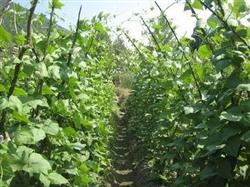 Recently is the high-incidence period for red root in kidney beans. Here we provide a detailed analysis of the causes of red root in beans and introduce prevention and control methods.
1. Symptom characteristics:
Judging from the plant's growth, the lower leaves begin to turn yellow and thin from bottom to top, and the plant's growth vigor is relatively weak. When the kidney bean plant is pulled up, the root system is found to be red or shriveled, with few or no new roots, and some root systems have red strip-shaped lesions on the main root. The kidney bean plant grows slowly, and in severe cases the disease has a major impact on pod setting, causing flower and pod drop.
2. Causes of the disease:
There are many causes of red root in beans, mainly the following.
1. Root suffocation. This is mostly caused by excessive watering, which makes soil moisture too high; the soil has poor water and air permeability, which is unfavorable for normal root growth. The root system grows poorly, resulting in underdeveloped roots, commonly known as "root suffocation," and in severe cases the entire root system peels or the fine roots decrease.
2. Root burn. This is mainly divided into root burn caused by fertilizers and by chemicals. Because too much or unreasonable fertilizer is applied during fertigation, root growth is poor and root burn occurs; in a small number of cases it is related to organic fertilizer in the base fertilizer not being fully decomposed. In addition, when planting, if too much fungicide for preventing red root or nematicide is applied in the planting hole or is not spread evenly, the excessive chemical dose can also cause root burn in the plant.
3. Overdense planting. Because kidney beans are planted rather densely, with some holes even sown with 5-7 seeds, competition for nutrients occurs among plants. In general, kidney bean plants first develop wounds and then become infected by pathogens, which is a more common cause of red root.
4. Soil temperature too low. When the soil temperature is too low, the suitable soil temperature needed for root growth cannot be maintained, leading to poor root growth and difficulty in producing fine roots, and red roots are also likely to appear.
5. Root rot. When bean roots are exposed to excessive moisture, they are easily infected by root rot pathogens, resulting in root disease and red root.
6. Anthracnose. Bean roots develop red root due to infection by anthracnose pathogens. Generally, red sunken spots also appear on the stems above the ground surface, and red linear spots appear on the veins on the underside of leaves.
So how should red root in greenhouse kidney beans be solved?
1. Root irrigation. "Deep roots and luxuriant leaves" - only with good roots can the plant grow well. Therefore, the first priority is to nourish the roots well. It is recommended to irrigate the roots once every half month to 1 month or so, choosing one of the chemicals such as thiophanate-methyl, hymexazol or bromothalonil, adding a rooting agent, and irrigating the roots. This can effectively reduce plant death. Note that the dosage should be relatively large; at the adult plant stage, 4 liang to half a jin of water can be used. Note that plants around diseased plants should be irrigated continuously 2 to 3 times, which can effectively control the development of the disease.
2. Watering and fertilizing. Watering should be done lightly and frequently, and fertilizer should be applied in small amounts many times; among these, the application rate of chemical fertilizers should also be reduced. It is recommended to apply humic acid fertilizers or root-promoting fertilizers, which can ensure normal root growth to the greatest extent. Note that the application rate of chemical fertilizers should be reduced to avoid root injury or root burn, and at the same time it can appropriately reduce poor root growth caused by excessively low soil temperature.
3. Foliar fertilization. Foliar fertilizer containing medium and trace elements such as calcium, magnesium and iron can be sprayed on the leaves, which can promote normal leaf growth and to a certain extent can also improve the plant's resistance to adverse environmental conditions.
4. Remove diseased plants. Plants that have already developed the disease should be removed promptly. At the same time, quicklime can be scattered into the soil around the removed plants to disinfect the soil, kill pathogens, and avoid large-scale infection and damage from kidney bean yellow wilt.
5. Applying chemicals in planting holes. Note that the chemical should be mixed with soil. Generally, mix the chemical with soil at a ratio of 1:10. Note that the dosage should not be too large, which can reduce phytotoxicity caused by applying too much chemical or uneven application.
6. Properly sparse planting. This can reduce root competition in kidney beans caused by overly dense planting, avoid insufficient nutrient supply, and provide a suitable growth environment for the roots.